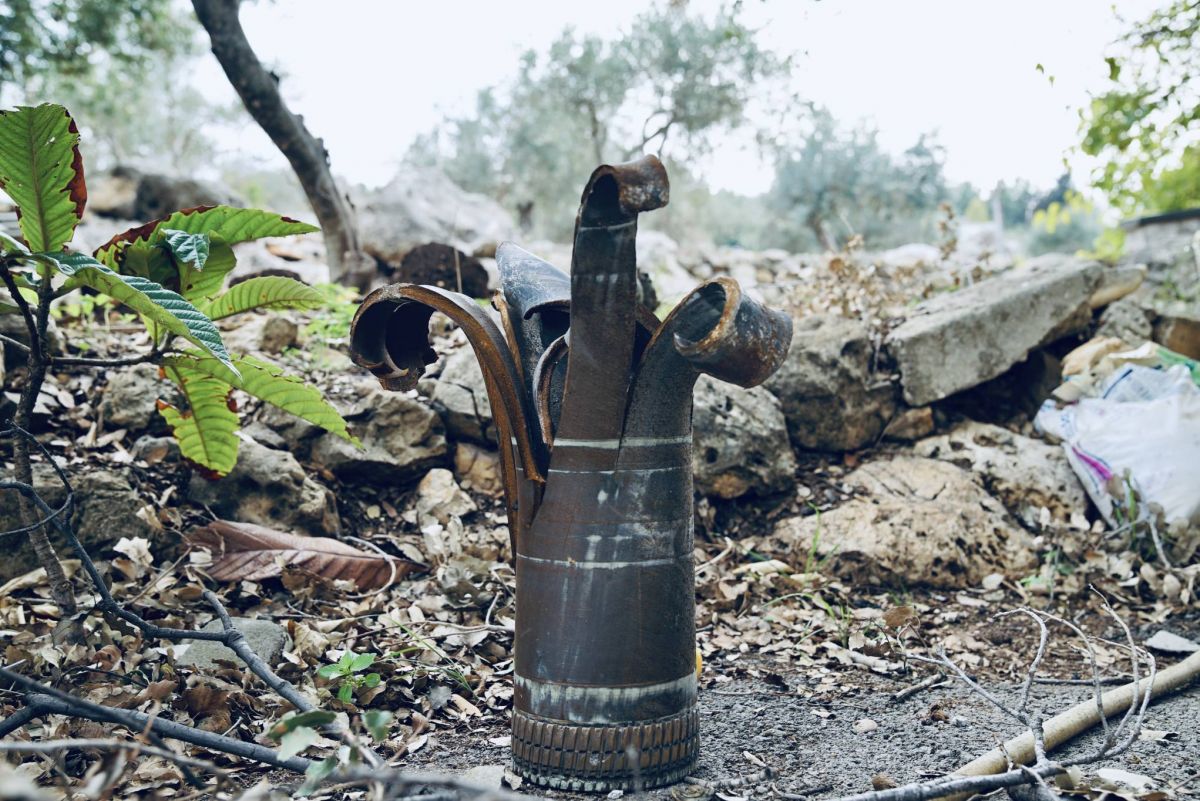
The remains of a shell in a olive grove after a Israeli air strike in the village of Dhayra, southern Lebanon, Saturday Nov. 25. (Credit: Olivia Le Poidevin/L'Orient Today)






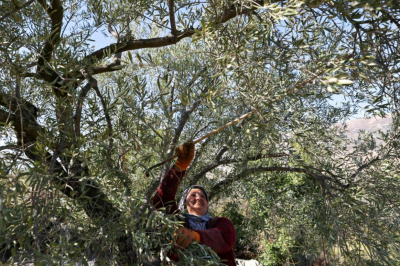
As residents ventured out to harvest olives in the orchards on the outskirts of their village Aitaroun (Bint Jbeil) Tuesday morning, they saw Israeli tanks positioned at the occupied Lebanese border site of Jal al-Deir as well as at the Israeli kibbutz of Malkia across the border with Lebanon, reports our correspondent in southern Lebanon.
Israeli nighttime incursion
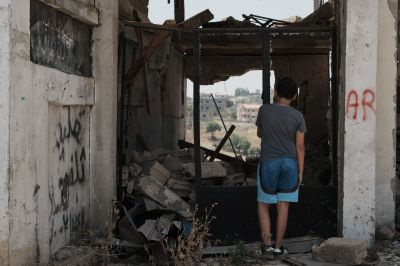
Additionally, the Israeli military advanced further into Lebanese territory shortly after midnight on Monday with three small ATV-type vehicles. They entered the border area of Khallat Warde, heading toward the western outskirts of Aita al-Shaab (Bint Jbeil), our correspondent adds. A month ago, an Israeli army unit also infiltrated Aita al-Shaab and demolished a building belonging to a school for children with disabilities.
With the olive harvest season approaching, municipalities in the southern border villages had called on residents to register with them before heading to their fields, to inform the Israelis of their movements as a precaution. Vast olive groves and farmland in the south have been burned during the war, from strikes but also due to Israel's use of white phosphorus bombs.
The Israeli army carries out daily attacks on south Lebanon and continues to occupy at least six positions on hills in the area.
On the night from Friday to Saturday, Israel carried out massive strikes in Msayleh, south of Saida, destroying hundreds of bulldozers and excavators. Many Lebanese officials have condemned these bombings, especially the fact that civilian infrastructure was targeted.