






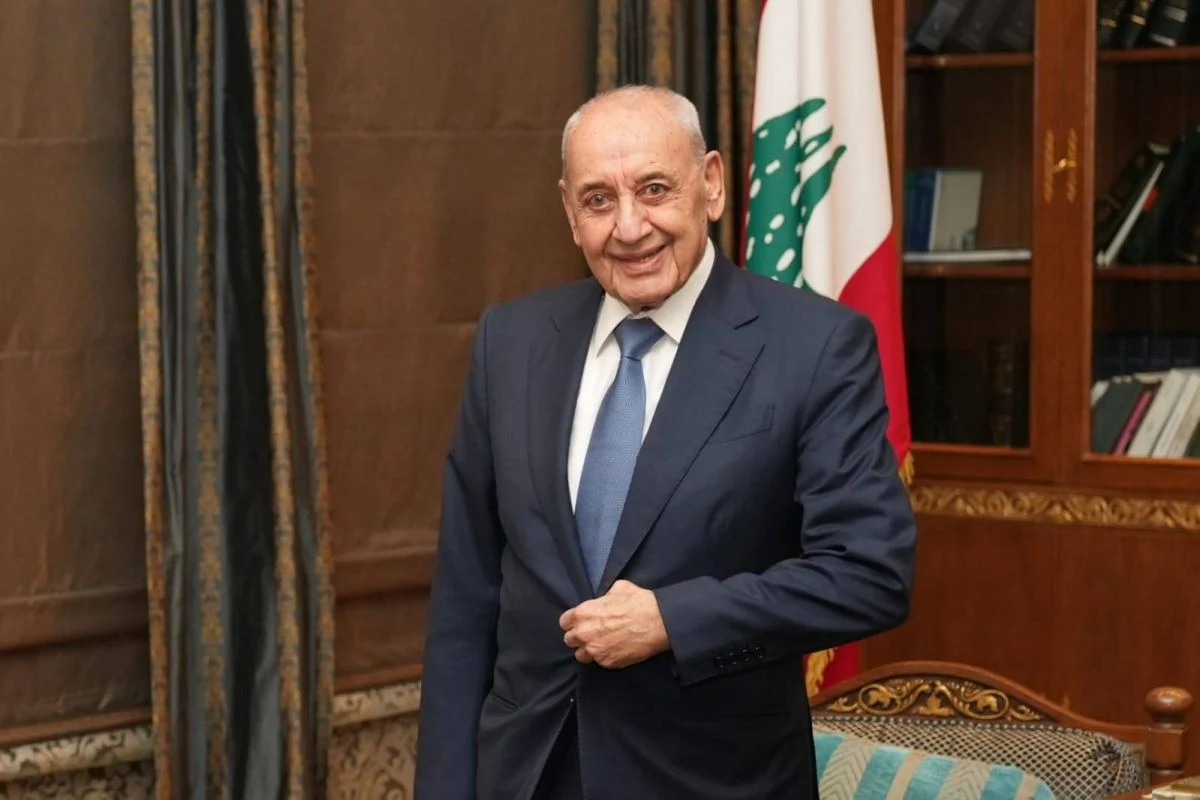
The Speaker of Parliament, Nabih Berri, in his office in Ain al-Tineh, March 5, 2024. (Credit: Mohammad Yassine/L'Orient Today)






BEIRUT — Parliament Speaker Nabih Berri reaffirmed on Friday that "parliamentary elections will take place as scheduled," namely in the spring of 2026, as debate over expatriate voting continues to rage in Parliament, which was unable to meet on Tuesday due to a lack of quorum.
The leader of the Amal Movement also said he was "surprised to see those who once defended the current electoral law now seeking to contest it," emphasizing that "the time remaining does not allow for any amendment."
"I will not sign any extension of Parliament's mandate, and I call on expatriates to register within the deadline," Prime Minister Nawaf Salam said Friday evening in a statement to the press.
On Tuesday, the Ministries of Interior and Foreign Affairs announced that registration for Lebanese expatriates wishing to vote will take place from October 2 to November 20, 2025.
The Speaker made his remarks during a meeting with Télé Liban board chair Elissar Naddaf, who was accompanied by a delegation.
For his part, in his Friday sermon, Sheikh Ali Fadlallah called for the next parliamentary elections, scheduled for next May, to be held "on time," as the vote faces the risk of postponement due to disagreements among Lebanon's various political factions over expatriate voting.
A prominent Shiite religious leader in Lebanon, Sheikh Fadlallah urged Lebanese officials to "promote understanding and avoid political tensions" over the electoral law, warning that "any postponement of the elections would deprive Lebanon of the chance to renew its political life and strengthen citizens' trust in their institutions."
Addressing the domestic situation, Fadlallah denounced "the ongoing attacks against Lebanon, and the raids and assassinations even targeting civilians" by the Israeli army, in violation of the cease-fire that took effect on Nov. 27, 2024. He therefore urged the state to "fulfill its role, stop the bloodshed and destruction, and preserve its sovereignty."
Fadlallah also addressed regional developments, arguing that the plan put forward by U.S. President Donald Trump to end Israel’s offensive in the Gaza Strip "primarily meets Israeli security requirements" and amounts to little more than "a breath of fresh air" for the besieged enclave’s Palestinian population, which, according to him, is "forced to choose between surrender and death."
