



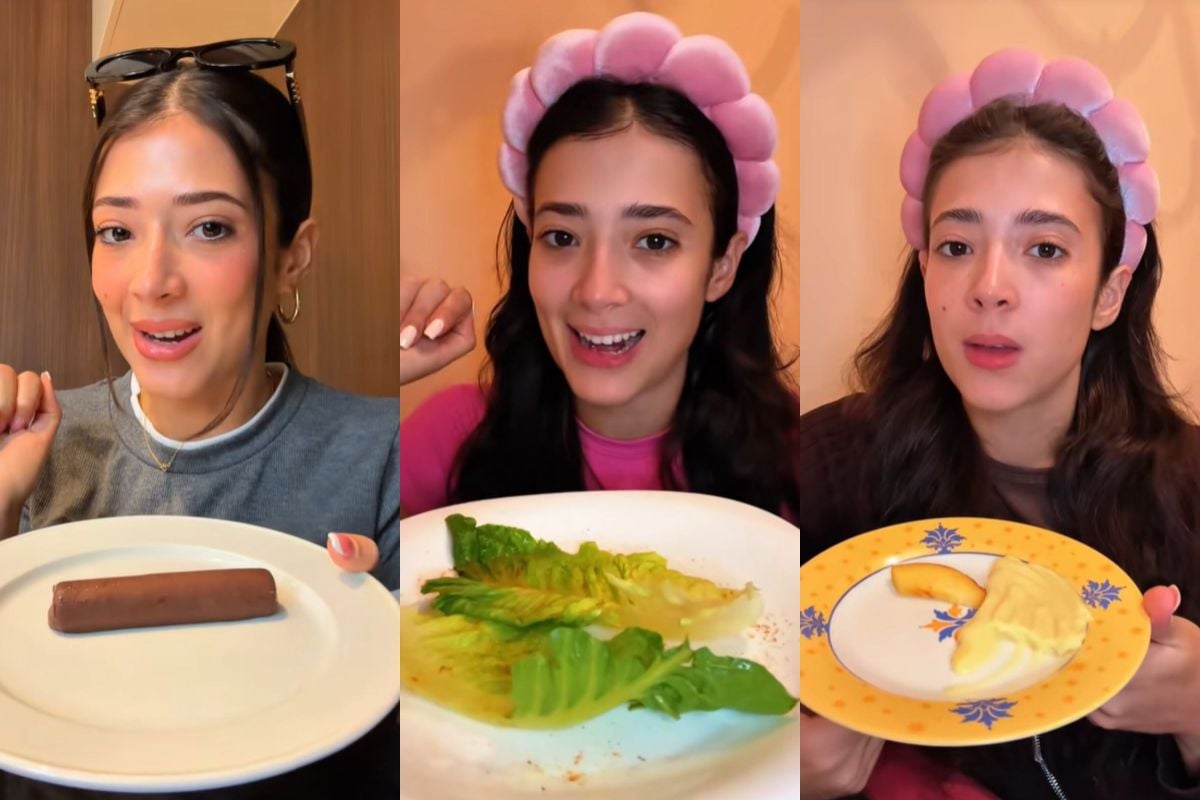
Screenshots of Diana Hamed’s videos on Tiktok






Every other Thursday, Nima invites a viral social media trend back to her place, and dissects it under a Middle Eastern ring light.
Diana Hamed, Miss Egypt Universe 2019, claims to be on a diet. She decided to share her meals of choice on Tiktok, and her videos became viral, for seemingly obvious reasons. Then came the woke people of the internet offering concerned disclaimers for the teenage girls watching her videos: This is not normal. This is disordered eating. Please don’t do this.
As I myself have struggled with body image, I am outraged by the possibility that this diet could simply be an act to gain online traction, and equally horrified that Hamed might actually think she only deserves a proper meal once she’s reached her desired weight.
In another corner of Lebanese Tiktok, an opinionated (and I say this lovingly) influencer criticizes the out-of-touch unboxings of Hermes bags and Van Cleef jewelry. Encouraged by influencer marketing and huge brand deals, this practically vapid content has no purpose other than signalling wealth for the sake of it. This has transformed Tiktok into a place where poor unfortunate souls are allured into watching the rich live their lives and rate their overpriced tomato sandwiches from Em Sherif.
It is not news that the rich get rich at the expense of the poor, and although the 20 something girls with unlimited credit cards are probably not that evil, it's statistically likely that most of their followers can’t afford to imitate their lifestyle. Those who can, do. Those who can’t, watch — probably with that complex, self-conscious emotion we call envy.
This opened up a wider debate. Tens of videos, lawyers getting involved, the works. Should influencers be “allowed” to post whatever they want? Is it okay that a few months ago social media was filled with content promoting a fear of insulin? Do we just scroll past the psychologists attributing lesbianism to lack of self esteem in women, or comparing antidepressants to heroin addictions in front of an amazed “journalist”? Are we unaware of the great impact of these “hot takes” on parts of our society?
Statements like “to each their own” completely ignore the wider social context of our region, and project a highly capitalist, imported way of life onto our behaviour. One that isolates individuals from their communities and renders each person solely responsible for their own self.
Influencers and content creators have a responsibility to, at least, not create content that is harmful. Does this mean we can rely on them to uphold this responsibility? No. The only way to guarantee good content is to make good content. The action plan against right-wing disinformation is saying the bare facts. Ultimately, insulin is just a hormone. Hermes Kelly is just a bag. Influencers are just people, and the algorithms are pure math, which (and I can’t believe I’m saying this) could work in our favor.
Yes, your feed is wildly affected by ads and promotions. However, social media platforms are designed to give you more of what you seem to be watching. The search bar, although inconvenient, is there to be used. If the videos you want to watch don’t exist, then someone should make them. It might as well be you.

 7 p.m. recap: 1 person killed near border with Lebanon; 200 kilos of explosives carried by mules; Riyadh shuts its airspace