



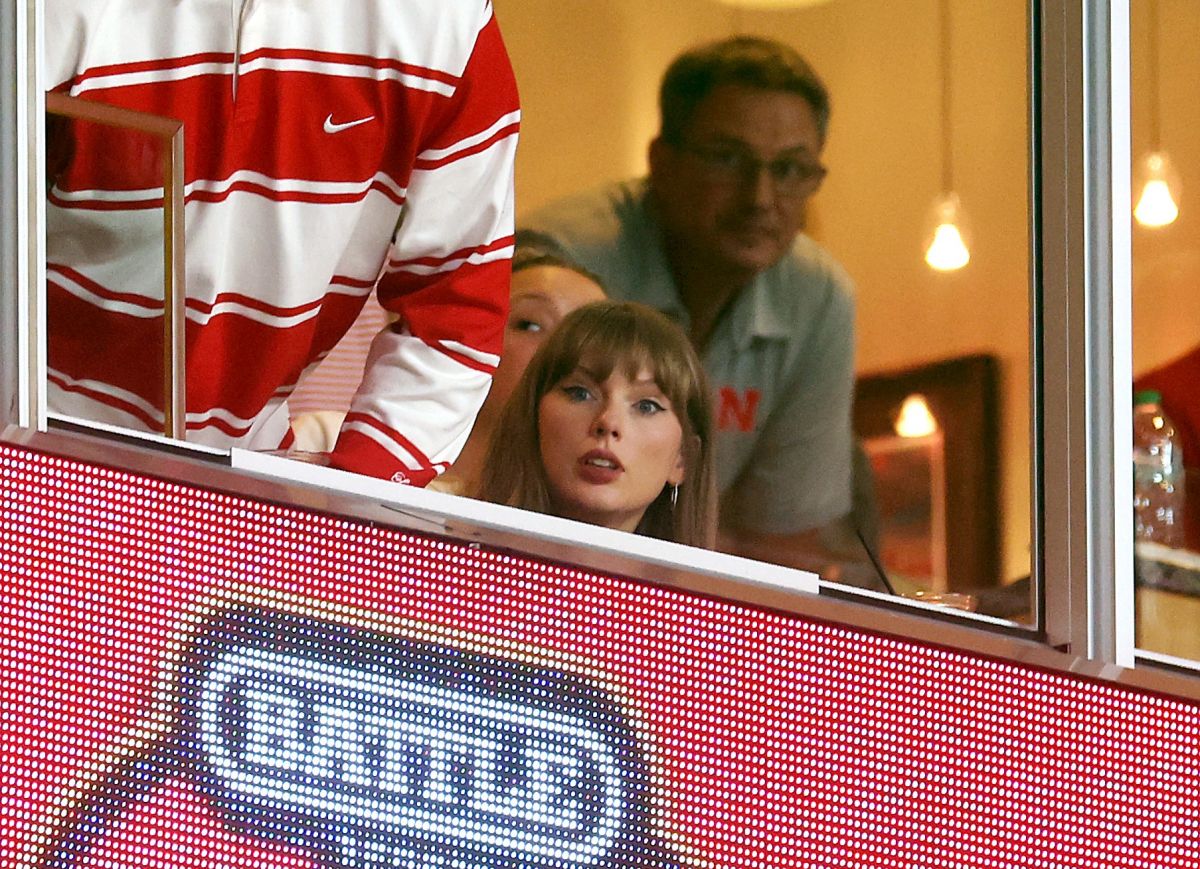
Taylor Swift watches a football game from a suite at Arrowhead Stadium on Aug. 28, 2025. (Credit: AFP)






I was 14 when “1989” came out. I was hanging out with my cousins at my grandma’s house when one of them, a previous hardcore One Direction fan, called the American singer “Taylor zeft.” I remember thinking that was intense, but the nickname stuck either way.
Taylor’s music wasn’t a big part of my teenage years. I didn’t blast “Love Story” in 2009 (I was 9 years old), and I didn’t cry my heart out to “All Too Well” when “Red” came out.
I became interested in her catalogue around 2020. I was impressed when Taylor Swift decided to remake all of her music after her master recordings were sold without her consent. I started listening to the music, reading the lyrics and comparing the old versions with the new ones, all while being totally enchanted by the massive power that this woman wields.
Thanks to the algorithm, this meant that a flurry of Taylor Swift articles would show up on my feed. Even though I was delighted by her use of language and her storytelling skills, I was still aware that this famous white woman was probably not the good girl she portrayed herself to be (pre-“Reputation”).

The headlines still infuriated me. Throughout years of witnessing cancel culture, I have never seen as many headlines attacking a single person for such frivolous reasons. Even the term “fatigue,” recently used to describe Donald Trump with his never-ending surreal statements, was used to criticize the singer for doing too much all at once: The tour, the album, Taylor Swift Has Given Fans a Lot. Is It Finally Too Much?, 2023 Was the Year Taylor Swift Became Insufferable, bla bla bla.
In many ways, Taylor faces backlash and criticism because she is a woman. Even more so because she is a successful woman who writes about horrible things men did to her, and she makes money off of it.
Deep breaths, remember?
Taylor is a brilliant businesswoman with a seasoned PR team. In interviews, award ceremonies and songs, Taylor uses all the hate that exists towards her to build the picture of the perfect victim. The beautiful, skinny blonde who is smart and hard-working and eventually gets what she wants. She feeds this image to her fans, who have now absorbed so much of that narrative that they feel threatened by every critique.
That is what makes this conversation impossible. If the world were split into two kinds of people, they would be those who like Taylor Swift and then everyone the swifties absolutely hate. There is no in-between. It is sexist not to like her. It is homophobic not to listen to “You Need to Calm Down” during Pride Month. It is unacceptable to be indifferent about her engagement.
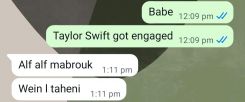
Up until recently, the climate change argument was probably the most solid criticism of Taylor Swift, one that probably applies to all of Hollywood. Whereas sentences like “I just don’t like her” could easily come from a deeply taught hatred of women.

In light of the Israeli war on Gaza that has been ongoing for almost two years, celebrity politics have attracted more attention. Taylor Swift’s fans have been urging her to speak out about Gaza, and for almost two years, she has said nothing.
No matter what she does, Taylor Swift will not stop Netanyahu and his government from bombing Gaza, displacing Palestinians in the West Bank and starving women, men and children alike. That's a reasonable point of view.
However, that by itself is a shitty reason to stay silent while Hozier makes speeches about a free Palestine and calls what is happening a genocide again and again, and no matter how sound the reasoning is, it doesn’t cancel out the disappointment fans feel when someone they think so highly off selectively turns a deaf ear to part of the world.

For someone who speaks so eloquently about feminism, understands intersectionality enough to stand up for gay rights and claims she isn’t afraid of being political, Taylor Swift must know that women’s rights are also threatened under any and all oppression. There is no empowerment in the face of ethnic cleansing, and there is no privilege of “not being political” when forced displacement is inevitable. Allies don’t pick and choose their values, just as feminists don’t only stand for women who look like them.
If you listen to Taylor’s “The Tortured Poets Department” for the storytelling and the anecdotes, Palestinian author and activist Majd Kayyal and composer Faraj Suleiman have a 13-minute masterpiece called Down With London Bridge. If it's for the easter eggs and smart references, pick any of El Rass’ albums and enjoy the hunt.
If you like her because she represents an image of empowerment and liberation, Haifa Wehbe will definitely do the trick, and she just released a new song. At least Haifa has directly expressed solidarity with Palestine.

 7 p.m. recap: 1 person killed near border with Lebanon; 200 kilos of explosives carried by mules; Riyadh shuts its airspace