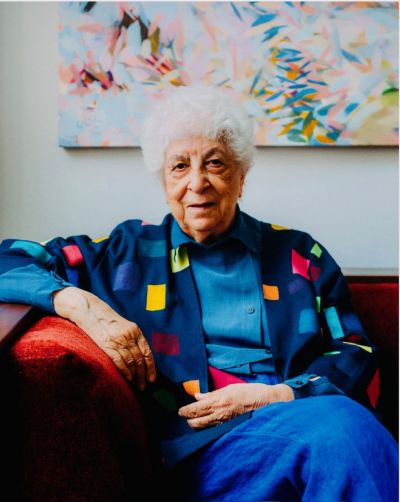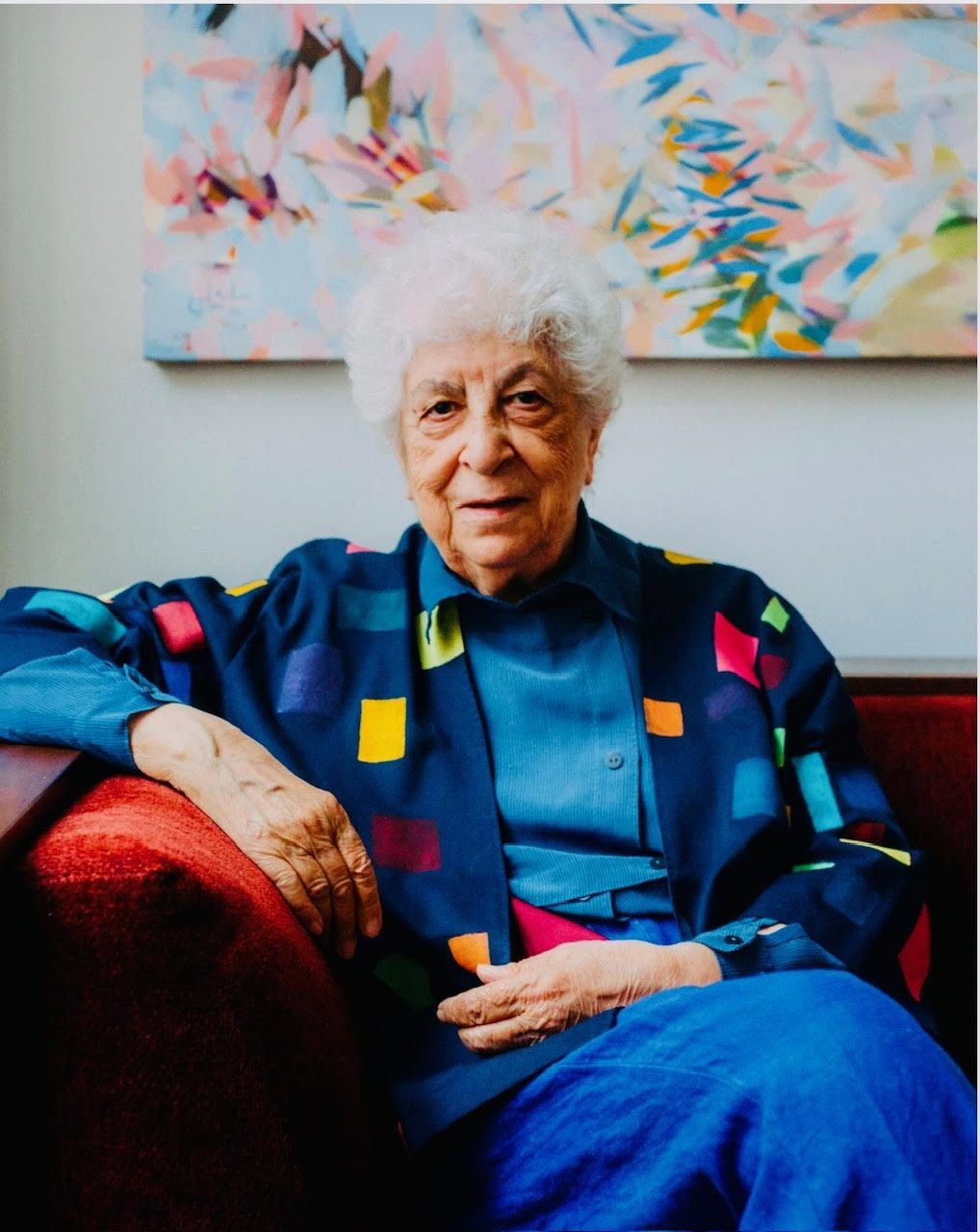
Samia Halaby, free in her art and her convictions. Courtesy of the Sfeir-Semler gallery.






BEIRUT — Samia Halaby, a pioneering Palestinian abstract painter and activist, has been awarded the 2025 Munch Prize by Oslo’s Edvard Munch Museum, recognizing her six decades of innovation in art and her outspoken defense of political and social causes.
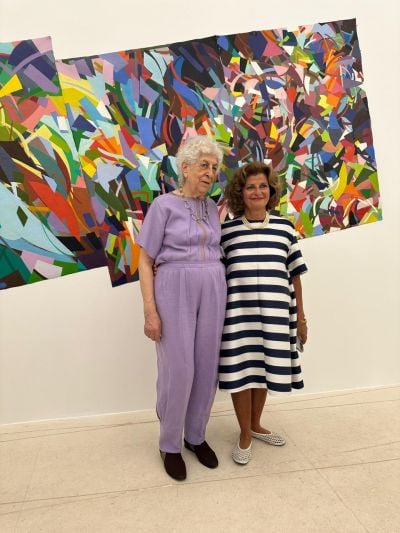
Halaby, 88, is celebrated both for her experimentation with abstraction and digital art and for her unwavering activism. “I was born in Jerusalem, so I am Palestinian. If you say I am American-Palestinian, it will make me angry!” she said last August during an exhibition opening in Beirut, a remark delivered with her trademark blend of firmness and irony.
That sense of freedom — of mind, conviction and artistic practice — defines her work. It also lies at the heart of the Munch Prize, an annual award of 300,000 Norwegian kroner ($27,700) for artists whose practice challenges contemporary thought and contributes to public debate.
A freedom that is evident both in her pictorial approach, always seeking innovative forms, and in her activist commitments. It is this freedom that was recognized by the 2025 Munch Prize, awarded by the Edvard Munch Museum in Oslo. Given each year to an artist or a collective of contemporary artists, the prize recognizes practices that question our times and contribute to public discussion. Endowed with 300,000 Norwegian kroner, the prize reflects a commitment to encouraging conscious and visionary art.

In its citation, the jury praised Halaby as “visionary and lasting,” noting her role in the development of digital art through early computer animation experiments and her lifelong exploration of abstraction. Her paintings, they said, “extend geometric traditions rooted in the Islamic world while linking them to global influences and North Atlantic modernism.”
“Halaby believes that innovative approaches to painting can transform our vision and thinking — not only in terms of aesthetics but also by opening new perspectives on education, technology, and broader social issues,” the jury said. “As an activist, she has advocated for causes related to social class, ethnicity and Palestine since the 1970s. Samia Halaby has openly criticized artistic censorship for decades, censorship she herself has faced and overcome.”
Last year’s prize went to Brazilian feminist contemporary artist Rosana Paulino. By selecting Halaby this year, the museum signaled its commitment to artists who push artistic and intellectual boundaries while keeping political and social engagement at the center of their work.