






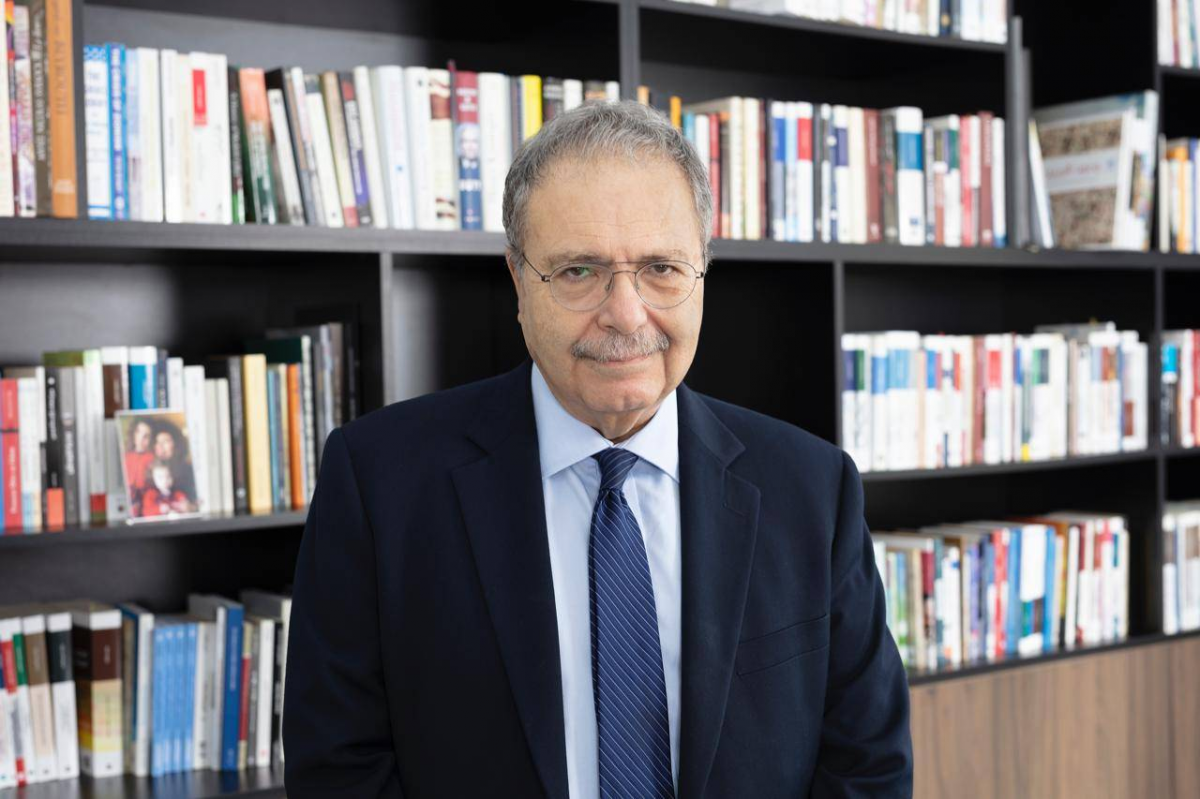
The Vice President of the Lebanese government, Tarek Mitri. (Credit: Mitri)






BEIRUT — In an exclusive interview with Syria TV on Sunday, Deputy Prime Minister Tarek Mitri denied that Damascus had requested the release of Lebanese or other Arab detainees, contrary to reports circulated in some media.
Families of Lebanese detainees have been staging protests recently to call for the release of Lebanese Islamist prisoners, the most notable of whom is Sheikh Ahmad al-Assir, who was arrested in 2015 for leading deadly fighting against the Lebanese Army in 2013 in Abra, a suburb of Saida in southern Lebanon.
Regarding Lebanese-Syrian talks that were held recently, Mitri said that their atmosphere were marked by "notable desire for compromise, a positive spirit and a determination to address contentious issues."
Two Lebanese delegations traveled to Damascus last Sunday to discuss Syrian prisoners in Lebanon and shared border issues. The visit followed a Sept. 1 trip to Beirut by a Syrian delegation, which met with Mitri in the first such encounter since the fall of Bashar al-Assad’s government in December 2024. That meeting covered refugees, detainees in Lebanese prisons, border demarcation and the fate of the disappeared.

The deputy prime minister emphasized that the "friendly nature of the meetings added frankness and moved them away from official formalities," adding that the "Lebanese–Syrian relations have entered a new phase, different from previous stages." Mitri noted that Syrian President Ahmad al-Sharaa’s rhetoric toward Lebanon reassured the Lebanese and opened a new window for rapprochement. He stressed that the "current path of relations is not free of obstacles, but it is based on mutual trust and a desire to move forward." Last month, Sharaa affirmed his desire for a "state-to-state relationship with Lebanon, based on economic solutions, stability and mutual interest."
Regarding criticisms within Lebanon about the Syrian delegation’s level or Damascus’s seriousness in handling the files, Mitri firmly responded that these "doubts are not based on facts but rather on an environment charged with speculation and rumors." "The Syrian delegation was well-informed and included key figures with wide knowledge. We felt genuine seriousness and a commitment to openness," he clarified.
Mitri confirmed that the issue of Syrian refugees returning to their country was raised clearly, and the Syrian side fully welcomed it without imposing any conditions to address it. He explained that "efforts continue to facilitate their return, and the number of returnees is increasing daily."
Regarding smuggling, he said that "most of the border is now controlled by both sides, although smuggling operations have not completely stopped." "Today, the focus is primarily on combating drug smuggling. As for reports about armed infiltrations, these are exaggerations rather than facts," he noted.
Finally, Mitri described the issue of detainees as "simple and difficult at the same time." Mitri explained that resolving this issue requires a "joint legal framework." "We are working seriously and swiftly to draft a judicial cooperation agreement that establishes a legal framework to address the problem. Initially, the issue will focus on Syrians detained for opposing the previous regime, not for committing crimes or misdemeanors," he added. Mitri noted that "talks have not yet reached the stage of discussing specific names or lists, and both sides are committed for now to implementing what is required before moving to that stage."
