






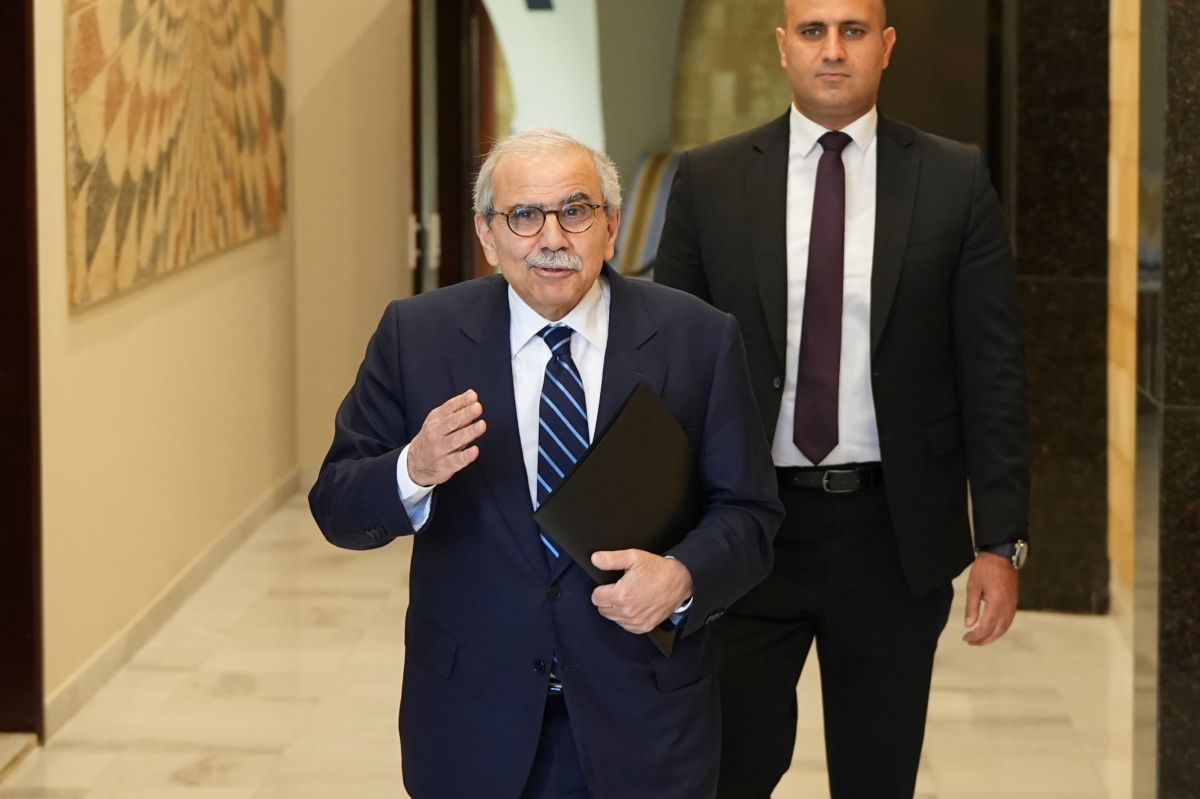
Prime Minister Nawaf Salam, shortly before the Cabinet meeting on Aug. 5, 2025, in Baabda. (Credit: Mohammad Yassin/L'Orient-Le Jour)






BEIRUT — The Lebanese government met on Tuesday for three hours, from 3 p.m. to 6 p.m., and scheduled its next meeting for Thursday, Sept. 11. Among its decisions was the creation of a technology and artificial intelligence ministry. This was the first meeting since last Friday’s approval of the Lebanese Army’s plan to disarm militias in Lebanon — particularly Hezbollah — though no precise timeline was set.
“At the beginning of the session, Prime Minister Nawaf Salam spoke about the positive reactions received at the international and Arab levels following the Sept. 5 meeting, stressing the need to accelerate preparations for the reconstruction and investment conference scheduled for the end of the year, alongside progress on government work regarding the monopoly on arms. He insisted on the necessity of supporting the Lebanese Army on this occasion as well,” said Information Minister Paul Morcos after the meeting.
The Shiite ministers, who had walked out of the last session in protest over the army’s disarmament plan, attended Tuesday’s meeting. Before the Cabinet convened, Health Minister Rakan Nasreddine (Shiite) said: “The army plays an essential role. We are an integral part of it and salute its patriotism.”
Since the beginning of August, Hezbollah and Amal have criticized the government plan to disarm Hezbollah by year’s end. But after the Sept. 5 session, Hezbollah and the Amal Movement cautiously welcomed the Cabinet’s decision, citing the absence of a set timeline — a key demand of Hezbollah, which refuses to surrender its weapons as long as Israel continues to occupy Lebanese territory and violate the cease-fire in Lebanon daily.
Salam also discussed — during Tuesday’s session — his meeting with Parliament Speaker Nabih Berri, with whom he reviewed a set of bills and proposals forwarded to the chamber. The prime minister said that starting next week, the government will review the draft finance law to submit it to Parliament on time. He further specified that the text outlining the distribution of financial losses between the state, the Banque du Liban, banks, and depositors will be presented to the Cabinet next month for finalization and submission to Parliament.
Deputy Prime Minister Tarek Mitri then reported on his meetings with Syrian authorities regarding the return of displaced persons. He announced the preparation of a judicial cooperation agreement between Lebanon and Syria in this context.
Energy Minister Joe Saddi gave an update on the electricity situation and the results of his visit to the United Arab Emirates. He emphasized the need for short-term aid from Qatar, following Kuwait’s support, and underscored the upcoming appointment of the regulatory authority by the Cabinet.
The Cabinet then moved to its agenda and approved most items. Notably, it decided to create a technology and artificial Intelligence ministry — until now the portfolio had been under a minister of state, in this case the minister for the displaced, Kamal Shehadi.
The government also adopted a draft decree establishing the skills and qualifications required to practice as a nurse, and set the calculation method for the annual tax on temporary use of maritime public property — estimated retroactively at $50 million plus $19 million annually. The government also specified the procedures for granting financial aid to non-profit private organizations to ensure transparency in their distribution.
The Cabinet finally announced that the government will meet again on Thursday, Sept. 11, at 3 p.m. at the presidential palace to discuss several issues.
Next meeting's agenda includes: the presentation of the 2026 draft budget by the Finance Ministry; requests for amendments to appointments and the organization of competitive exams by the Agriculture and Interior ministries; continued discussions on developing satellite internet services and on the Jdeideh landfill; review of draft laws regarding consumer protection and the length of studies at the military academy; and the return of properties to the municipality of Aishieh, in southern Lebanon.

