






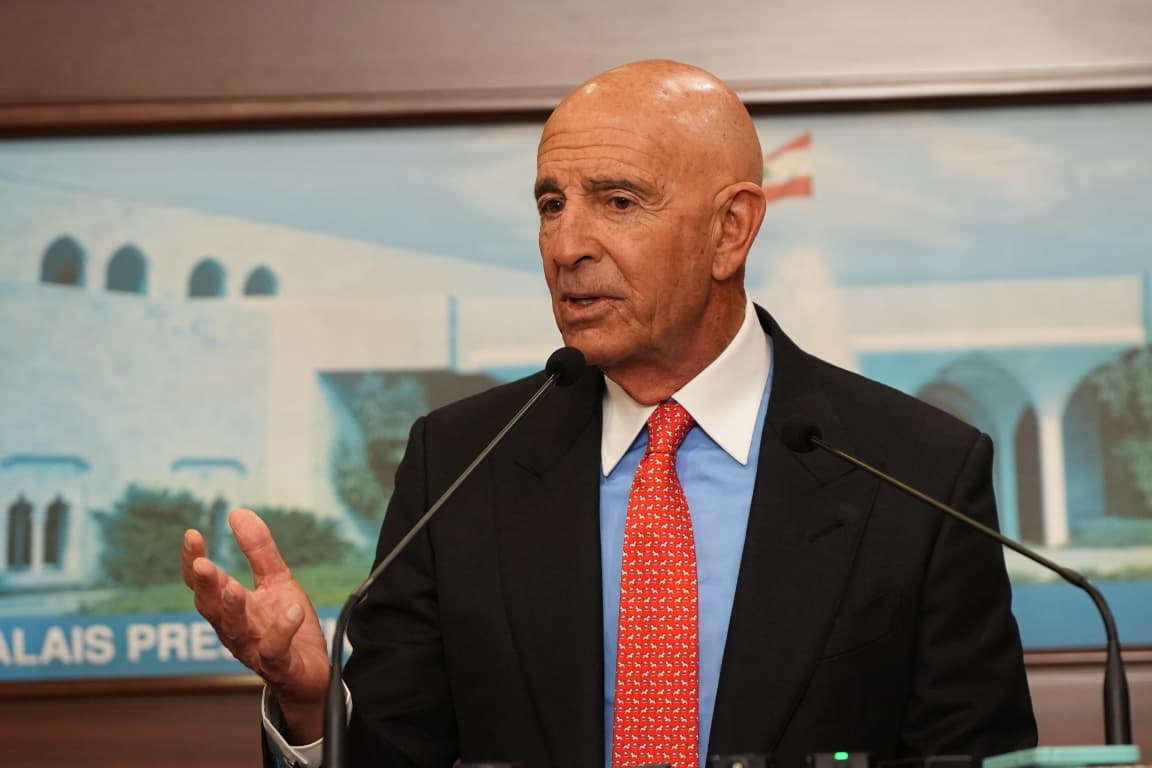
The American envoy Tom Barrack, at the Baabda Presidential Palace, on Aug. 26, 2025. (Credit: Mohammad Yassin/L'Orient Today)






BEIRUT — Benjamin Ballout, a U.S.-Lebanese businessman, sued U.S. special envoy Tom Barrack on Aug. 28 in federal court in Michigan, alleging "defamation, reckless misconduct, and degrading rhetoric," over Barrack’s remarks calling Lebanese journalists "animalistic."
Barrack later apologized for the remarks in an interview.
"When an American Ambassador labels Lebanese journalists 'animalistic' and cloaks diplomacy in colonial arrogance, it is not statesmanship, it is degradation," Ballout said in the lawsuit he filed with the U.S. District Court for the Eastern District of Michigan.
"This case is not about money. It is about dignity, sovereignty, and defending Lebanon's voice at the negotiating table," he added.
Barrack has served as a U.S. emissary in Lebanon-Israel negotiations and has repeatedly called for Hezbollah’s disarmament. Ballout argued that such language "undermines America’s credibility as a mediator. Peace cannot be negotiated only with politicians. Real peace begins with the people. Disrespecting them sabotages the process."
Violation of several acts
The lawsuit cites several violations, including the Vienna Convention on Diplomatic Relations, which states in Article 41 that "diplomats must respect the dignity of host states," and "ambassadors must uphold the highest standards of integrity and conduct and U.S. Constitutional Values, protecting press freedom and equality."
"The dignity of Lebanon and its people is not negotiable. Colonial rhetoric has no place in 21st-century diplomacy," Ballout said in the lawsuit.
Barrack 'hands ammunition' to Hezbollah
The lawsuit also claims Barrack’s words "hand ammunition" to Hezbollah, which portrays the United States as Israel’s proxy.
"When an American ambassador describes Lebanese journalists as 'animalistic' and expects them to remain silent, he is not only insulting individuals — he is degrading an entire nation," Ballout wrote in a post after submitting the lawsuit.
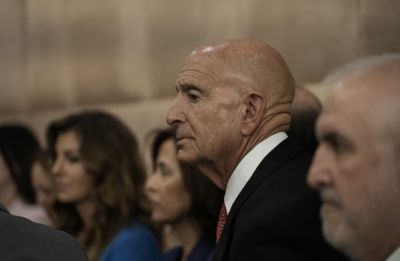
After an intense backlash on Barrack's press conference, the Lebanese presidency also expressed "regrets over remarks made unintentionally from its podium by one of its guests," and extending "full consideration for journalists and press correspondents accredited to it."
Barrack apologized two days after his remarks, saying in an interview that he did not intend the word "animalistic" to be derogatory but acknowledged that the expression was "inappropriate."
Following the backlash, the Lebanese presidency expressed "regrets over remarks made unintentionally from its podium by one of its guests" and extended "full consideration for journalists and press correspondents accredited to it."
At the time, Barrack’s visit came amid domestic tensions, with the Lebanese Cabinet having just tasked the Lebanese Army to prepare an arms monopoly roadmap to disarm militias in Lebanon, including Hezbollah on Aug. 5.
The Cabinet is scheduled to discuss an army roadmap to disarm militias, including Hezbollah, at 3 p.m. Friday. The party has shown no willingness to comply and warned of a "confrontation" if forced to disarm.
