





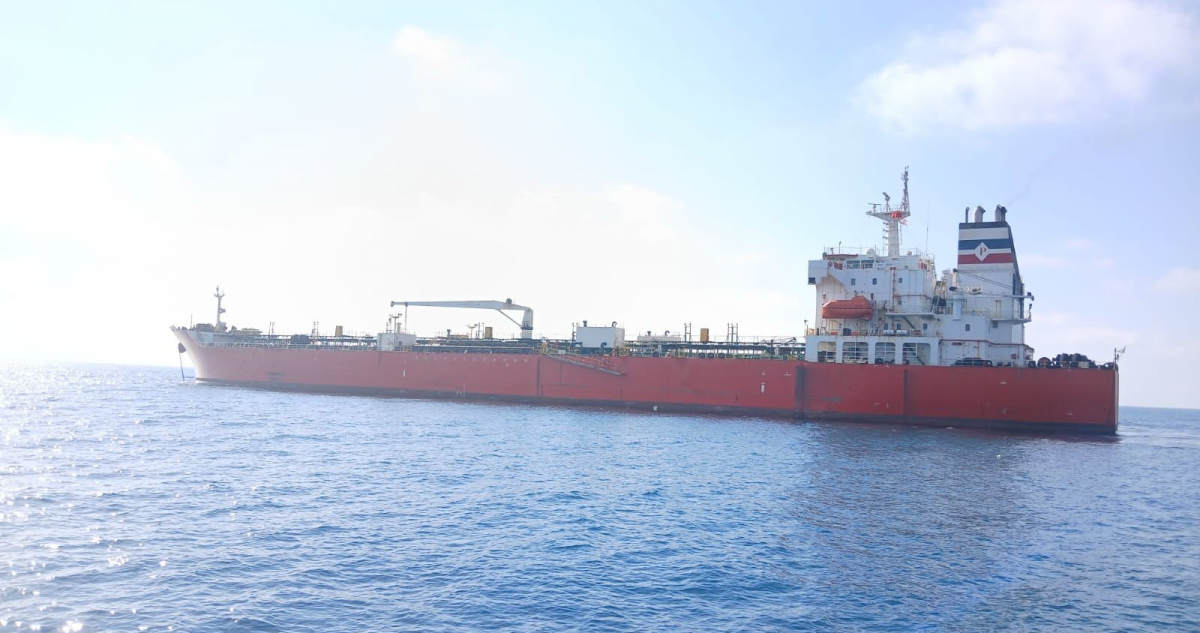
Fuel tanker in the sea. (Credit: NNA)






Lebanon received its first shipment of fuel from Kuwait as part of a significant energy assistance agreement, according to a statement issued by the media office of Energy Minister Joe Saddi, and relayed by the state-run National News Agency Saturday.
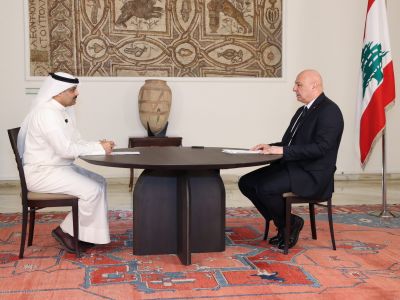
"Earlier this afternoon, the first oil tanker docked in Lebanese territorial waters as part of the generous offer from the sisterly State of Kuwait," the statement read. "The agreement provides Lebanon with 132,000 metric tons of gasoil to supply the power plants of Electricite du Liban, of which 66,000 tons are a donation."
"This means, in practical terms, that the offered quantity is at half its price — significantly lower than any other price that might be proposed."
The statement added that, in line with Saddi's decision to avoid adding any further debt to Lebanon or imposing additional financial burdens on its citizens, "the cost of the Kuwaiti fuel will be paid from the revenues collected by Electricite du Liban."
“We extend our heartfelt thanks to the State of Kuwait for its contribution to facilitating electricity production,” the statement concluded. “This step comes as no surprise from Kuwait, which has always stood by Lebanon and its people in the most difficult times.”
For years, the electricity sector in Lebanon has been grappling with underinvestment, political instability, and structural inefficiencies, resulting in frequent power outages even before the economic collapse
Kuwait is also providing Lebanon with a grant worth $1.5 million to finance studies on the potential construction of new grain storage silos at Beirut's Port, which was ravaged by a massive explosion five years ago, Minister of Economy and Trade Amer Bisat announced in mid-August.
In mid-July, Kuwaiti Interior Minister Sheikh Fahd Youssef Saoud al-Sabah assured President Joseph Aoun of his country's support for Lebanon during an official visit to Beirut on Monday.
The relationship between Lebanon and Kuwait has not been without tension in recent years. In October 2021, several Gulf countries recalled their diplomats from Beirut in response to statements by a Lebanese minister criticizing the Saudi military intervention in Yemen.
Since 2015, a coalition led by Saudi Arabia has supported the Yemeni government against Houthi rebels, killing hundreds of thousands of people, both through a direct bombing campaign as well as through the creation of a mass famine across the country, according to United Nations reports.
Gulf countries also denounced the growing influence of Hezbollah and Iran on the Lebanese government.
However, Aoun's election as president, followed by the formation of Salam's government, parallel to Hezbollah's weakening after its latest war with Israel, appears to have opened a new phase in relations between Beirut and Gulf countries.
Since taking office, Aoun has visited several Gulf states, including Kuwait, making known his willingness to renew ties.

 7 p.m. recap: Aoun rejects leniency toward Hezbollah, Qatar eyes 2 power plants in Lebanon, Gantz bows out