






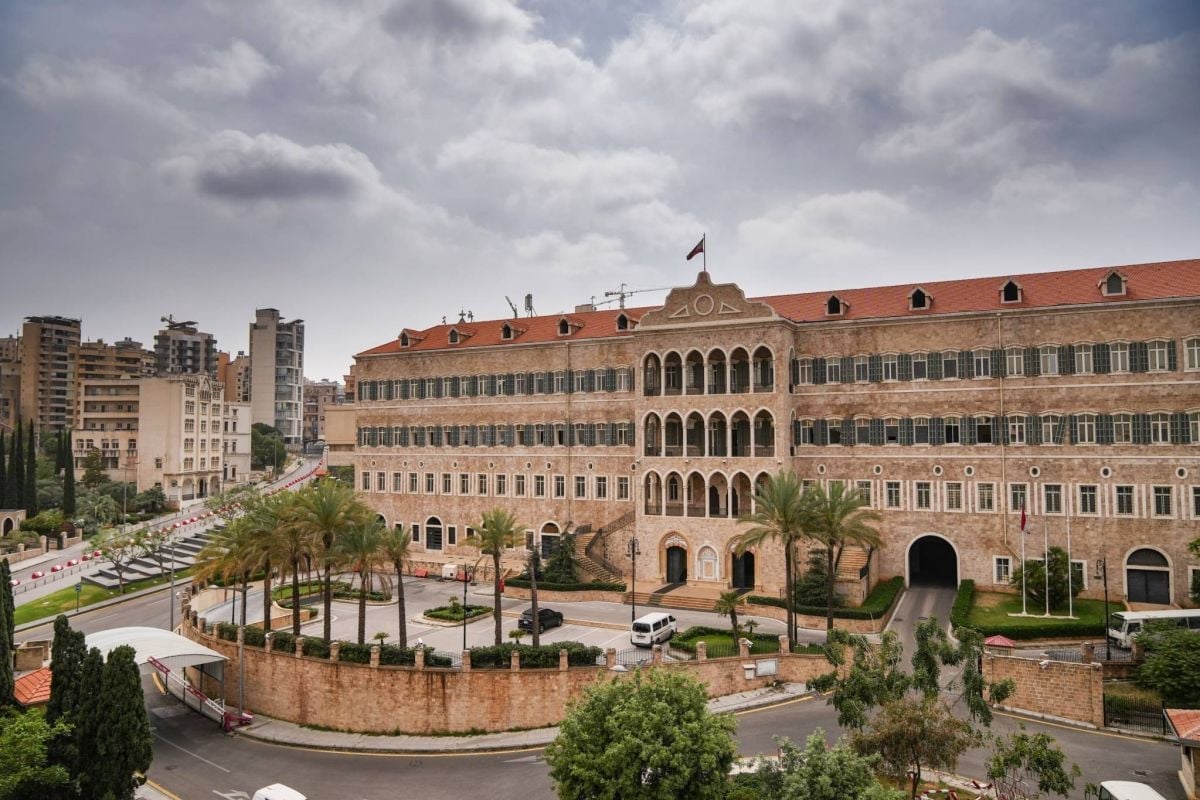
The Grand Serail in downtown Beirut. (Credit: Mohammad Yassin/L'Orient-Le Jour)






During the Cabinet meeting, which began Thursday in the mid-afternoon at the Grand Serail, the government approved "the Environment Ministry’s action plan for waste management, as well as a review of the issue of sanitation and proposed solutions to overcome obstacles and ensure the provision of services," according to announcements made during the press briefing following the meeting by Information Minister Paul Morcos.
This plan aims to prevent the impending saturation of the Jdeideh landfill, in Metn, which serves northern Mount Lebanon and part of Beirut, as well as to organize waste management for the rest of the regions.
By giving its approval, the government also requested that "procedures for appointing the National Committee for Solid Waste Management be expedited." This is an autonomous body overseen by the Environment Ministry, tasked with ensuring coordination and ending the multiplicity of authorities in this sector. This authority was created by the law (80/2018), for which implementing decrees had been adopted. The appointment process has remained stalled.

Updating the strategy
According to Morcos, the Cabinet also requested that the national strategy for integrated solid waste management be updated and that the draft law on cost recovery in this field be finalized. Also provided for in the 2018 law, this strategy was launched in January by Najib Mikati's government, just before it was replaced by Nawaf Salam’s in February.
"The Cabinet also approved a draft decree aimed at ... securing the necessary sources of funding, notably through coordination with donors," to finance several projects, including waste treatment, the minister explained, without further detail.
This was one of two files the Cabinet examined at the session, still according to the minister.
“The first concerned the presentation by the Ministry of Energy and Water on the current state of Lebanon’s sanitation network and proposed solutions,” the Information Minister said.
“The Cabinet reviewed the presentation from the Minister of Energy and Water, which showed that the institutions and agencies responsible for the water and sanitation sector face institutional, operational and financial challenges that limit their ability to fully manage sanitation networks,” he added.
The Cabinet also studied the roadmap to overcome these obstacles, in order to provide services equitably and sustainably. After deliberation, it approved the ministry's action plan for the sanitation sector, presented by the minister, which is aimed at ensuring the sector’s sustainability by strengthening the capacities of water institutions to manage wastewater treatment projects and provide fair and sustainable service, as well as continuing ongoing infrastructure rehabilitation and wastewater treatment projects so they can be used properly and efficiently, while also seeking the necessary funding for unfinished projects.
The debate on these different issues will continue at the next Cabinet meeting, the information minister stated, without giving further details.