






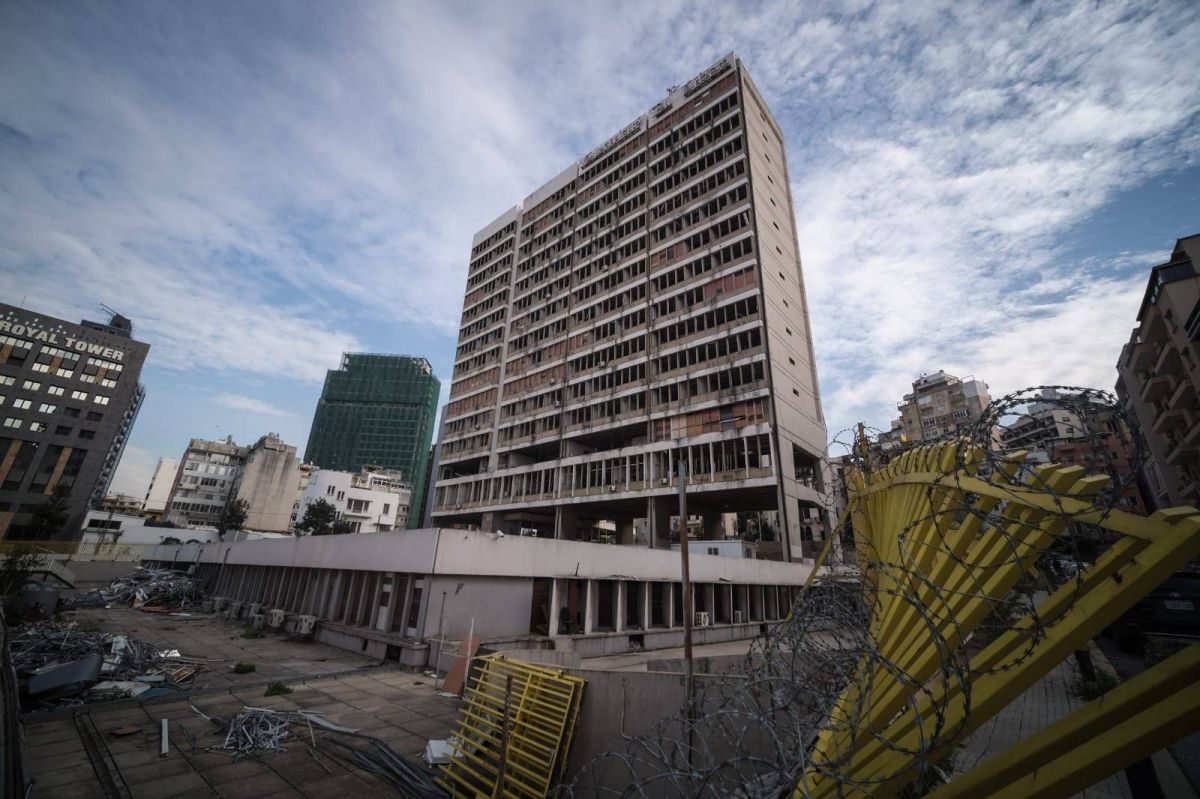
Partially destroyed by the August 4 explosion, the EDL headquarters in Beirut still has not been rehabilitated. P(Credit: João Sousa/L'Orient Today.)






BEIRUT — Lebanon’s state power company, Électricité du Liban (EDL), on Thursday defended itself against criticism over recent blackouts, blaming “exceptional circumstances” and “technical factors beyond its control.”
This week's heat wave even caused a blackout of EDL's high-voltage network over the weekend, while power cuts persisted in some regions at the beginning of the week.
The outages, and the risk that both EDL and private generators would begin rationing electricity, sparked heated exchanges online between supporters of Energy Minister Joe Saddi — a Lebanese Forces (LF) member in Prime Minister Nawaf Salam’s government — and opponents, including Free Patriotic Movement (FPM) backers, whose party long controlled the ministry.
In a lengthy statement, EDL condemned “smear campaigns” and “false accusations and information” circulating on social and traditional media, which it said ignore “the exceptional circumstances the country has faced and continues to face,” citing the financial collapse and the Beirut port blast of Aug, 4, 2020, which destroyed its headquarters.
The company said it has been managing “an acute crisis” for years “under extremely difficult conditions” and with “very limited resources.” Despite this, it has maintained “a minimum electricity supply” to critical public infrastructure such as Beirut airport, prisons, the port, and water treatment facilities — even though many of these entities “do not regularly pay their bills.”
EDL added that since 2020 it has repeatedly warned authorities about the fragile state of the grid, which suffers from recurring blackouts, particularly during summer, due to “technical factors outside the control of Électricité du Liban.” It also pointed to the continued lack of at least 1,000 megawatts of production capacity and the absence of a central control center since the 2020 explosion.
