





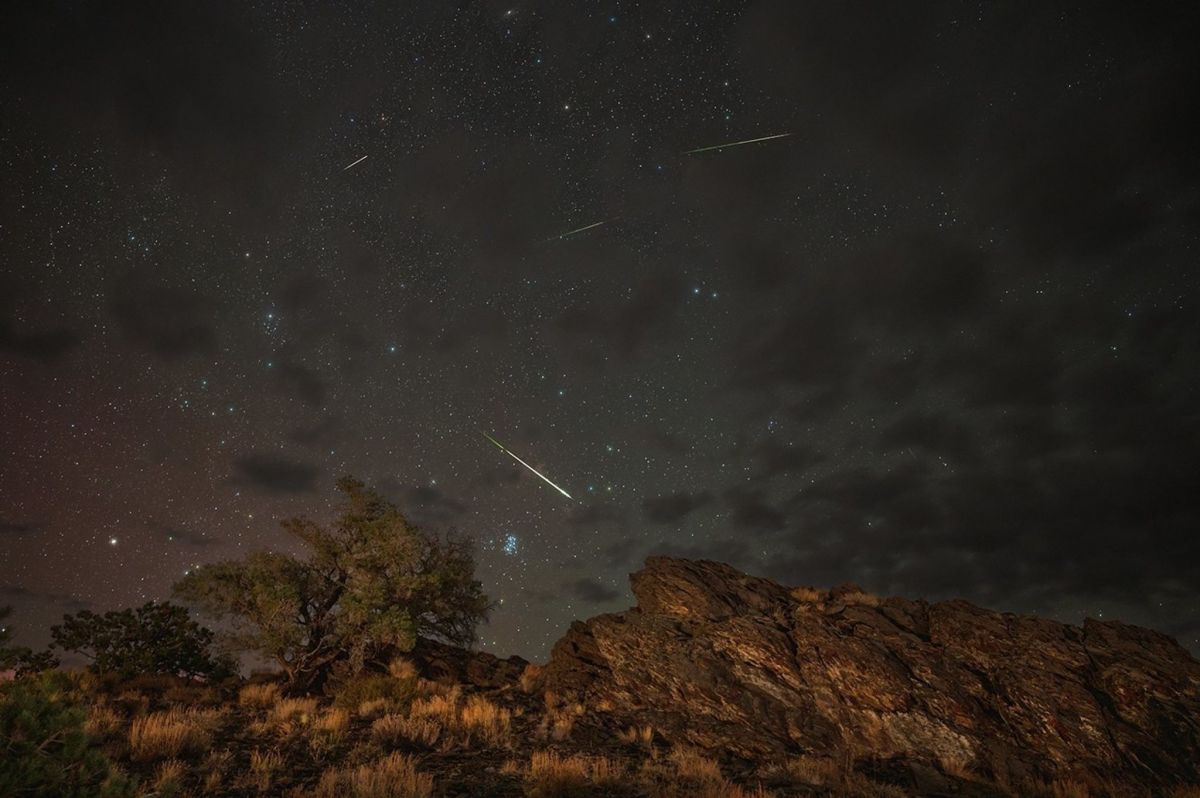
Meteors from the Perseid meteor shower streak across a partly cloudy sky above Inyo National Forest in Bishop, California, in 2024. (Credit: NASA/Preston Dyches.)






From Aug. 11 to 13, turn your eyes to the sky for one of the year’s most spectacular meteor displays: the Perseids. Named after the constellation Perseus, these meteors will streak across the sky between midnight and dawn.While the annual event lasts for most of the month, it will reach its peak on the night of Aug. 12-13. According to NASA, the Perseids are part of the debris stream from the Swift-Tuttle comet, discovered in the 19th century. The comet takes 133 years to complete one orbit around the sun and produces what is considered the most significant meteor shower of the year. Missed this? Where to camp this summer in Lebanon Known for their speed and brightness, Perseid meteors often leave long, luminous and colorful trails as they burn through Earth’s atmosphere. NASA says it is one of the most plentiful meteor showers of...
From Aug. 11 to 13, turn your eyes to the sky for one of the year’s most spectacular meteor displays: the Perseids. Named after the constellation Perseus, these meteors will streak across the sky between midnight and dawn.While the annual event lasts for most of the month, it will reach its peak on the night of Aug. 12-13. According to NASA, the Perseids are part of the debris stream from the Swift-Tuttle comet, discovered in the 19th century. The comet takes 133 years to complete one orbit around the sun and produces what is considered the most significant meteor shower of the year. Missed this? Where to camp this summer in Lebanon Known for their speed and brightness, Perseid meteors often leave long, luminous and colorful trails as they burn through Earth’s atmosphere. NASA says it is one of the most plentiful meteor showers...

 Evening recap: Netanyahu announces West Bank offensive; 7 killed in Jordan church shooting; tents burned in south Lebanon
 US strike on Iran this weekend? ‘Absolutely,’ says Barrack; ‘I have no idea,’ says Trump