





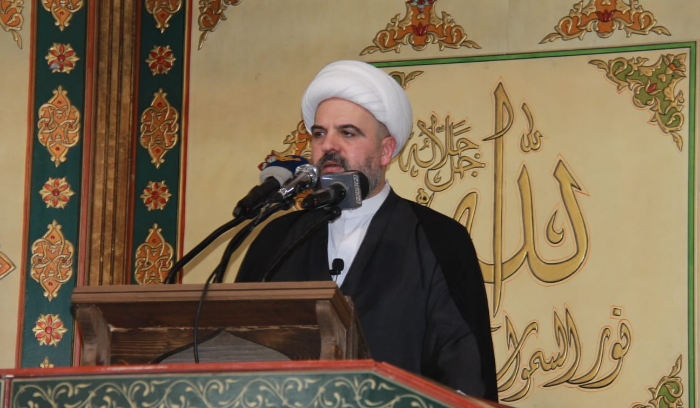
The Jaafarite Shia Mufti Ahmad Qabalan. (Credit: NNA)






BEIRUT — Jaafarite Mufti Ahmad Qabalan, known for his political proximity to Hezbollah, warned Wednesday against "dividing the government over explosive files that could throw Lebanon into the unknown," ahead of a Cabinet meeting scheduled for next Tuesday that is expected to address Hezbollah's disarmament.
Despite increasing international and domestic pressure, Hezbollah, which was significantly weakened in the recent war with Israel, continues to resist international and domestic pressure to hand over its weapons throughout all of Lebanese territory, maintaining only that it would withdraw its military presence from south of the Litani River, as stipulated by the cease-fire agreement.
In a statement, Qabalan warned authorities to "not involve the government in a faceoff with the population," arguing that it is necessary "to forbid any split within the government and any explosive file."
"Cabinet is called upon to refuse to submit or give in to blackmail, because excessive concessions would mean the end of Lebanon," the statement continues. "The time has come to protect the country and to prevent the international community from sowing discord and destruction."
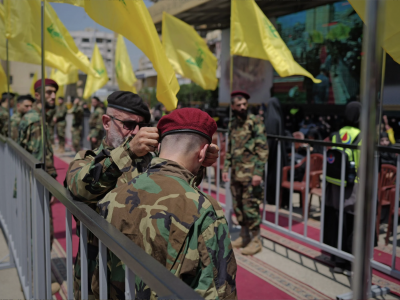
The issue of Hezbollah's disarmament has increased polarization within Lebanon's political landscape as international pressure steadily mounts — with vital funding on the line — since the November 2024 cease-fire between Hezbollah and Israel, the latter which continues to bombard Lebanon, especially its southern villages, and occupy Lebanese territory.
Washington, via its special envoy Tom Barrak, has demanded Lebanon provide a clear timeline — with detailed steps — and position regarding Hezbollah's weapons handover.
The Lebanese Army has already confiscated and dismantled most of Hezbollah's weapons and infrastructure south of the Litani, but is adamant in rejecting a new agreement, stressing the need to compel Israel to first implement the one already concluded.
'The country is weak'
President Joseph Aoun has promoted mostly the use of dialogue to resolve this particularly sensitive issue, fearing that an aggressive or military approach would cause serious security breakdowns in the country, though the president has faced criticism from Hezbollah's opponents — notably Kataeb and the Lebanese Forces — for his approach.
During a visit to Bahrain a week ago, Aoun said that "the implementation of the decision on the weapons monopoly, which is irreversible, is being carried out cautiously, so as to preserve Lebanon's unity and avoid any harm to civil peace."
Of Aoun's approach, Qabalan said that the head of state "knows the value of national strength and its necessity."
"He also knows that the country is weak and is merely prey faced with the incendiary events in the region," he said. "The destruction we are witnessing is nothing other than an international policy aimed at tearing the region apart."
"Any explosive pressure regarding files addressed by the government will strip Cabinet of its legitimacy and threaten Lebanon."

 Evening recap: Netanyahu announces West Bank offensive; 7 killed in Jordan church shooting; tents burned in south Lebanon
 US strike on Iran this weekend? ‘Absolutely,’ says Barrack; ‘I have no idea,’ says Trump