






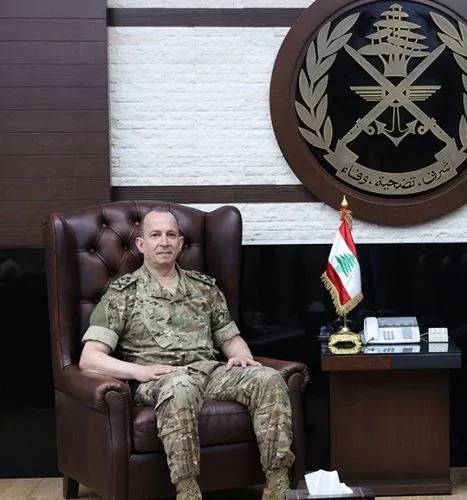
The Commander-in-Chief of the Lebanese Army, Rodolph Haykal. (Credit: Army's website.)






BEIRUT — Army commander-in-chief , Rodolph Haykal, warned on Wednesday, on the occasion of the army's 80th anniversary, that the army "will not tolerate any attempt to undermine security and civil peace or to drag Lebanon into sedition."
This warning comes as several issues are causing tensions in the country, in particular the question of Hezbollah's disarmament and intercommunity problems in neighboring Syria, which spill over into Lebanon.
"The army is continuing to carry out its missions despite its limited resources, notably by working to assert its authority and control throughout the territory, in accordance with decisions by the political authorities, and to implement international resolutions, particularly Resolution 1701, in close cooperation and coordination with the United Nations Interim Force in Lebanon (UNIFIL)," General Haykal said.
This resolution, adopted by the Security Council in 2006 to end the war between Hezbollah and Israel, provides for the deployment of the army south of the Litani River and for the disbandment of militias. The commander thus warned that the troops "will not tolerate any attempt to undermine security and civil peace or to drag the country into sedition."
His remarks come as the international community and several Lebanese parties are calling for the disarmament of Hezbollah after the recent war which opposed it to Israel, between October 2023 and November 2024. The American envoy to Syria Tom Barrack, who has made several trips to Lebanon to set up a roadmap that would lead to this disarmament, said Sunday that "the credibility of the Lebanese government rests on its ability" to regain the monopoly on weapons.
The Lebanese government is expected to address the issue in Cabinet, while President Joseph Aoun favors dialogue with Hezbollah for fear of tensions if he imposes the handing over of its arsenal.
'Preserve national unity'
Haykal also emphasized that "Lebanon faces a set of intertwined challenges, first and foremost the threats and aggressions of the Israeli enemy against our country and the people of the region, its repeated violations of international resolutions, and its attempts to infiltrate our social fabric." After thirteen months of devastating war between Hezbollah and Israel, a cease-fire came into effect on Nov. 27, 2024, but Israel continues its attacks in Lebanon, more specifically in the South and the Bekaa Valley, almost daily.
These strikes and raids have left more than 280 dead, according to a count by the U.N. and L'Orient Today.
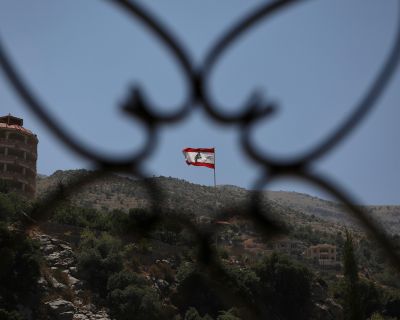
"Added to this are terrorism, which seeks to harm the country's unity and the security of its citizens, as well as the repercussions of regional events on the domestic scene," the commander-in-chief of the army continued, following occasional reports of the dismantling of jihadist cells or the arrest of suspects. He stressed the need to "join efforts to preserve national unity."
Haykal also recalled that the military "continue to carry out missions to maintain order, monitor and protect the northern and eastern borders, control the maritime borders and territorial waters, and fight crime." He finally stressed "the need for the relevant authorities to provide the military institution with the necessary support, in order to develop its capabilities and improve its conditions."
The European Union (EU) launched a week ago a 12.5 million euro project (about $14.7 million), which will be implemented by the United Nations Development Program (UNDP) to support the Lebanese Army in southern Lebanon.