






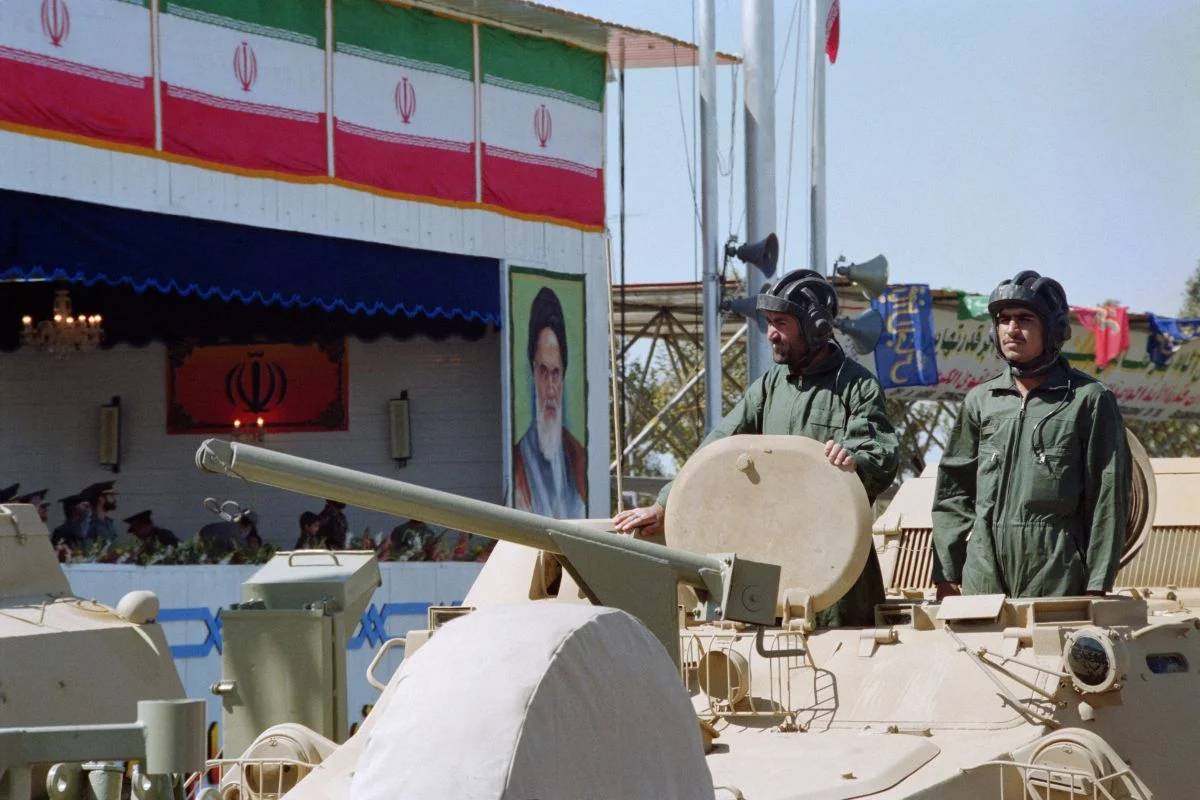
Iranian troops parade on Sept. 22, 1994, in Tehran, before Iranian President Ali Akbar Hashemi Rafsanjani and officials of the Iranian armed forces during celebrations marking the 15th anniversary of the start of the Iran-Iraq war. (Credit: AFP)






Over the past two weeks, an unusual wave of seemingly random fires and explosions across Iran has reignited speculation about possible Israeli involvement, reports the New York Times. These incidents, occurring almost daily, have damaged various infrastructures ranging from major oil refineries to residential buildings and even a highway near a large airport.
Three Iranian officials, including a member of the Islamic Revolutionary Guard Corps, told the NYT they believe these events are acts of sabotage directly orchestrated by Israel. A European official corroborated this assessment, believing recent developments fit Israel’s methods of psychological warfare and strategic targeting.

These suspicions were based in particular on Israel’s well-established habit of carrying out covert operations on Iranian soil: explosions, targeted assassinations of scientists and military personnel, and sabotage of nuclear facilities. Last June, the director of the Mossad, Israel’s external intelligence agency, said that "we [Israelis] will be there, as we always have been," suggesting operations would continue in Iran even after the 12-day war ended.
The debris left by a recent explosion in a residential building in Qom was so widespread that no building in the adjacent block was spared. According to Iranian officials cited by the American newspaper, an apartment had been rented by agents who deliberately caused the blast by turning on the gas appliances before leaving. Another reported target was a complex housing judiciary employees. Authorities say this attack was likely intended to intimidate the judges and prosecutors living there, a direct message that they too could become targets — a tactic similar to those Israel is believed to have used in the past against Iranian scientists.

Iranian authorities, however, continue to downplay the significance of these events. Most of the fires are said to be due to domestic accidents, mainly gas leaks. Tehran’s fire and safety services chief, Ghodratollah Mohammadi, cited "equipment wear and tear," the use of "poor-quality gas appliances," and "failure to follow safety rules" as explanations for the incidents. This is one among several attempts by authorities to prevent panic among the population, in a context of heightened military fragility since the recent war.
‘Mysterious’ death of an Iranian general
Despite these communication efforts, the increase in explosions is fueling growing anxiety. Omid Memarian, a researcher at a Washington-based foreign policy think tank, said that "the Iranian government’s history of cover-ups and lack of transparency has only compounded public fear and mistrust."
These incidents come as suspicion remains high following the mysterious death of General Gholamhossein Gheybparvar, a senior commander in the IRGC. Officially, his death was attributed to the deterioration of old injuries. This event only deepened public distrust. Conservative political leader Mahdi Mohammadi echoed this warning, saying: "We are not even in a cease-fire: we are living in a fragile suspension, which could shatter at any moment and plunge us back into war."
Iranian President Massoud Pezeshkian said Wednesday in an interview with Al Jazeera that his country is "fully prepared for any new Israeli military offensive."
