






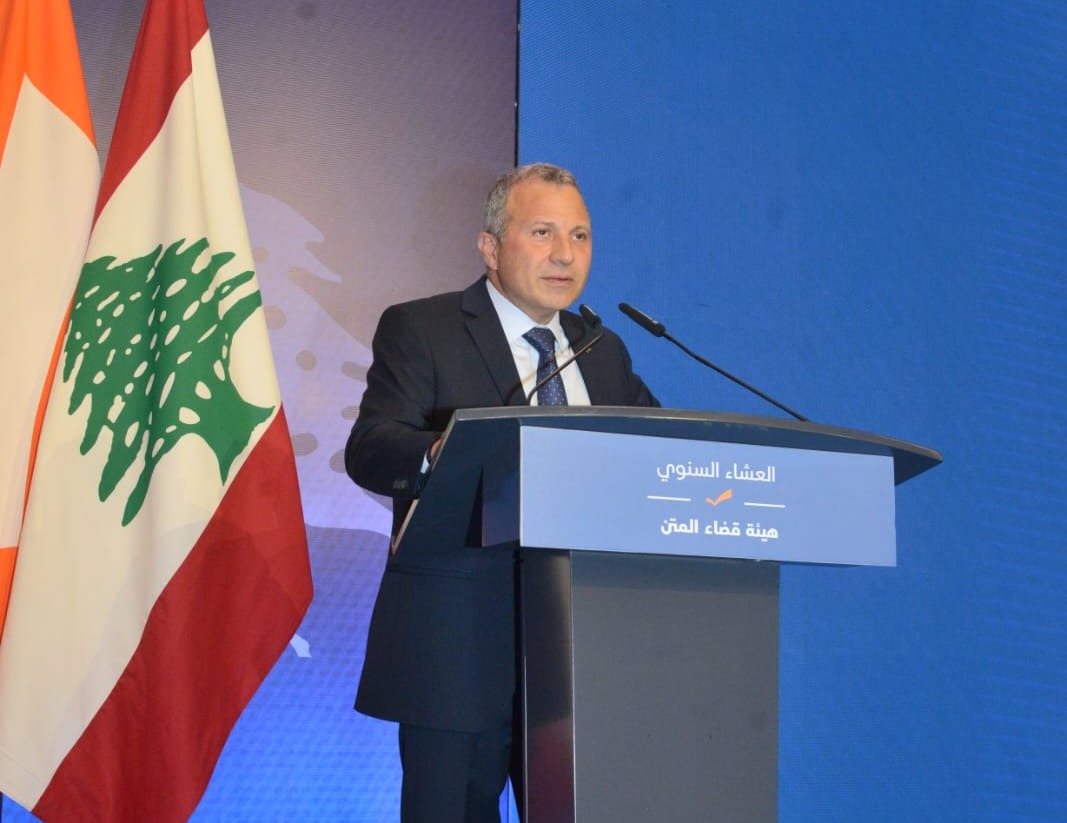
The leader of the FPM, Gebran Bassil, during a party dinner in Metn, on July 22, 2025. Photo taken from the Tayyar.org Facebook account.






BEIRUT — Free Patriotic Movement (FPM) leader Gebran Bassil criticized Prime Minister Nawaf Salam’s government — in which the FPM is not represented — accusing it of being “incapable of achieving anything,” and announced three potential FPM candidates for next spring’s parliamentary elections.
Speaking at a party dinner in the Metn region on Tuesday night, Bassil said, “This government is incapable of achieving anything. They can’t do anything about the issue of weapons [outside the framework of the state], despite external support. They are either accomplices or incapable.”
Bassil’s criticism came shortly after a general policy debate session in which he had called for a confidence vote in the government — a motion that largely favored Salam’s Cabinet. He also accused the cabinet of having no concrete plan to return depositors’ funds frozen in the banking system.
“The government of Hassan Diab [January 2020–September 2021] had put in place the Lazard plan, which fell through. But what is the plan of the current government? If the laws we have proposed are not discussed, it means they know that no funds will be returned to depositors,” he said.
Work on a draft bill addressing the “financial gap” and the return of deposits is expected to drag on for several more months, despite the government’s stated aim to present a proposal within 30 days. The delay has been largely attributed to disagreements between Finance Minister Yassine Jaber and Banque du Liban (BDL, central bank) Governor Karim Souhaid.
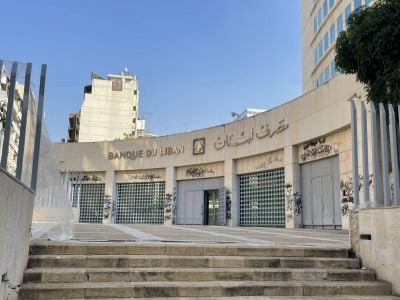
In May 2025, a government source told this publication that Lebanon was preparing to renew its contract with the international financial advisory firm Lazard. The company had designed an economic and financial recovery plan for the Diab government in 2020, a few months after the country’s financial collapse began. That plan, however, became highly contentious — particularly with the Association of Banks in Lebanon (ABL), which categorically rejected it. Its abandonment ultimately derailed the first round of negotiations with the International Monetary Fund (IMF) later that year.
LF partly 'responsible for the government's failure'
Bassil also took aim at the Lebanese Forces (LF), led by his longtime rival Samir Geagea, accusing the party of sharing “responsibility for the executive’s failure” and becoming “Hezbollah's partners” by participating in a government that includes Hezbollah.
“Whoever wants to resign, let them resign today and not deceive the people,” he added, referencing recent statements by LF officials who said they were ready to quit the Cabinet if it failed to set a timetable for Hezbollah’s disarmament. The LF has repeatedly accused the authorities of prioritizing dialogue over confrontation on the issue of arms monopoly.
The Batroun MP argued that “sovereigntists” such as the LF and its allies, who call for a state monopoly on weapons, should also demand “Israel’s withdrawal from our occupied territories and an end to its attacks” on Lebanon.
“A cease-fire has been declared, but it has not been respected,” he said, criticizing the continued Israeli occupation of five positions on Lebanese soil and near-daily strikes on southern Lebanon and the Bekaa.
Three FPM candidates in the Metn
Bassil also lamented what he described as repeated betrayals of his movement. “No political movement has been betrayed as we have,” he said during his speech in Metn, a district that was once a stronghold of former FPM MPs Ibrahim Kanaan — who left the FPM in August 2024 after numerous disagreements with Bassil — and Elias Bou Saab, who was dismissed in June 2024. Only Kanaan and Bou Saab had been elected from the FPM list in this district.
Against this backdrop, the Batroun MP announced three potential FPM candidates for Metn in the parliamentary elections scheduled for next spring, according to the party’s internal selection process: Eddy Maalouf, an unsuccessful candidate in 2022, Hicham Kanj, and Mansour Fadel.
Bassil also addressed developments in post-Assad Syria, emphasizing that his party was “the first not to applaud the arrival of the Jolani regime,” referring to Syrian President Ahmad al-Sharaa, known by his wartime name Jolani. Sharaa, who led a coalition of rebel and jihadist factions, overthrew Bashar al-Assad’s regime on Dec. 8, 2024.
“I understand that Lebanese are pleased with Assad’s downfall, but I do not understand how some rejoice over the arrival of the Jolani regime, which considers anyone who does not adhere to its doctrine — Sunni, Shiite or Druze — as an infidel whose murder is permitted,” he said.
The early months of the new Syrian regime have been marked by killings and clashes in minority-populated areas, including along the Alawite-dominated coast in March and, most recently, in the Druze-majority Sweida region last week. “These events cannot happen on our border with Syria without affecting us,” Bassil warned.
Hezbollah, the FPM’s former political ally, has regularly voiced concerns about rising tensions with the new regime in Damascus and the potential resurgence of terrorist cells — a stance its critics say is used to justify maintaining its arsenal. Since last December, sporadic skirmishes have erupted along the border, particularly between Syrian government forces and “clan” fighters within the Shiite community, though they have largely remained contained.

