





A combination picture shows satellite images over Fordow, before and after the U.S. struck the underground nuclear facility near Qom, Iran, on June 2, 2025 (L) and June 22, 2025. (Credit: Planet Labs PBC/Reuters)






U.S. airstrikes in Iran demolished one of three nuclear facilities struck, U.S. officials told television channel NBC, adding that a more comprehensive airstrike plan had been rejected by President Donald Trump.
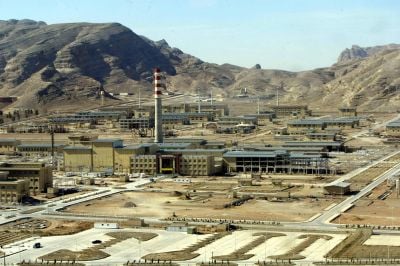
Operation “Midnight Hammer,” launched on June 22 by the U.S. military, attacked three key nuclear enrichment sites: Fordow, Natanz and Isfahan. Trump called the strikes “a spectacular military success,” stating that “Iran’s key enrichment facilities have been completely and totally obliterated," but a recent internal American assessment points otherwise, the report stated.
While Fordow, viewed as the most critical site, was found to be set back by up to two years, Natanz and Isfahan were only slightly damaged, allowing for nuclear enrichment to potentially resume in a matter of months, U.S. officials familiar with the assessment said.
Trump would strike Iran again 'without question'
Highly enriched uranium remains intact underneath the Isfahan site, but was buried so deep by the strikes that it has become essentially unreachable, according to an Israeli government official who met with NBC reporters. Israel also maintains that it will continue to keep an eye on Iran, a sentiment echoed by Trump when asked if he would strike again if necessary: “Without question. Absolutely.”
There have reportedly been talks between the American and Israeli governments about whether or not to strike again if Iran is not open to restarting nuclear negotiations.
The intelligence-gathering process on the aftermath of the strikes is set to continue for several months. Current officials state that as the process continues, greater damage is being uncovered.
Alternative strike plan
An alternative plan, proposed by the head of U.S. Central Command General Erik Kurilla before the war, recently came to light. The proposition was to strike six sites, instead of three, repeatedly as to completely incapacitate the nuclear program, and to target Iran’s air defense.
Trump reportedly was briefed on and then rejected the proposition, as it did not align with his isolationist foreign policy promises and involved a higher number of casualties on both sides.
Yet, Washington officials generally still see the strikes on Iran as successful. In their eyes, the airstrikes created a credible threat to be used in case Iran tries to rebuild its nuclear capabilities, an issue on Trump's agenda since he pulled the United States out of the Joint Comprehensive Plan of Action in 2018.
The U.S.’s departure from the plan, imposing strict nuclear restrictions on Iran in return for the lessening of economic sanctions, left it to build up enough fissile material for around 9-10 bombs, officials told NBC. Since then, Trump has been attempting to forge a new agreement to stop the development of nuclear weapons, despite Iran repeatedly denying these claims.

 Evening recap: Netanyahu announces West Bank offensive; 7 killed in Jordan church shooting; tents burned in south Lebanon
 US strike on Iran this weekend? ‘Absolutely,’ says Barrack; ‘I have no idea,’ says Trump