






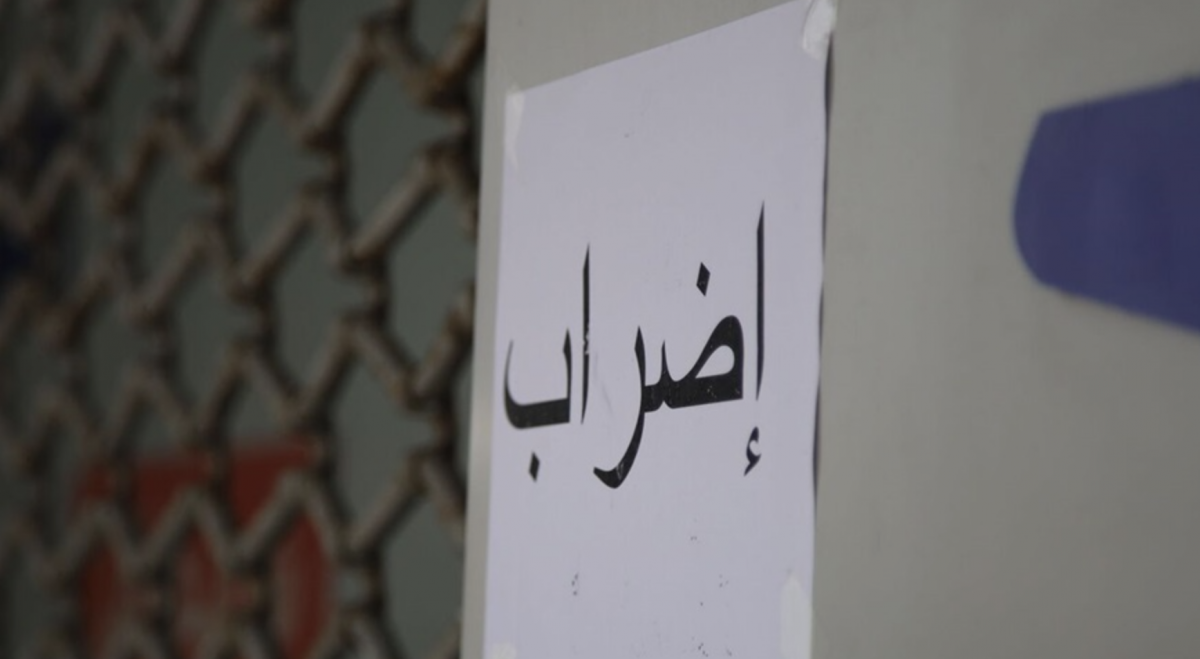
A poster with the word "Strike" printed on it in Arabic. (Illustrative photo by NNA)






BEIRUT — Civil servants from various administrations went on strike on Wednesday in a walkout that is set to last until Friday and was called on Monday by the League of Public Administration Employees protest of the "persistent disregard by the government" of employees' dignity and their rights to a decent living wage.
The strike will continue until "all of our rights are obtained," the League asserted in a statement. Recent unrest follows the signing of a decree last week by Cabinet in which ministers approved a series of salary increases for several high-ranking officials, ranging from 626.5 million Lebanese Pounds ($7,000) to 805.5 million LBP ($9,000) per month.
Unions denounced the decision as "unfair" in light of the fact that all government workers are still only making an average of 25 percent of their pre-crisis wages, meaning that some civil servants still barely earn the equivalent of $500 per month.
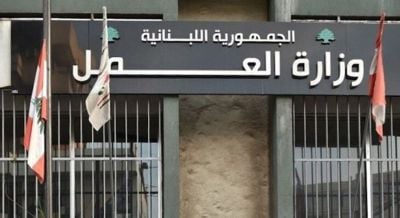
At the governorate buildings in Hermel, in the district of the same name, and Baabda, in Mount Lebanon district, some employees showed up at their offices on Wednesday but refused to process any files, according to the state-run National News Agency (NNA).
In Nabatieh, several government services were not affected by the strike, notably in the offices of the governor, civil status and passport services, urban planning, and education and the Palace of Justice, "for lack of being informed about the strike or coordinated according to the rules by the committees of judicial assistants of Beirut," NNA reports. Employees of the regional directorates of Finance and Economy fully respected the strike in Nabatieh district.
The strike was also observed in various Tripoli administrations and services. Ibrahim Nahal, member of the Association of Public Sector Employees, told NNA, "the full compliance with the call for work stoppage and strike," adding that employees are considering more advanced protest measures, up to "an open strike."
The Associations of Public Education also requested a re-evaluation of their salary on Wednesday, in light of the circular signed the same day by Minister of Education Rima Karami calling for a return to a full five-day teaching schedule per week. They called in a statement to "take protest measures: strikes, sit-ins, refusal to ensure logistical tasks [concerning official exams]."
The economic and financial crisis triggered in 2019, followed by the coronavirus pandemic and the war between Hezbollah and Israel between 2023 and 2024, have severely affected the public education sector in Lebanon. To date, public school students only have classes four days a week.