



The joint parliamentary committees met in Parliament on June 23, 2025, in Beirut. (Photo taken from the Lebanese Parliament's Flickr account)






The joint parliamentary committees approved on Monday a bill to open an additional line of credit in the 2025 budget, intended for monthly subsidies of LL 14 million ($156, at the rate of LL 89,500) for active military personnel and LL 12 million ($134) for retired military personnel. These subsidies will be disbursed starting July 1, 2025, as reported by the state-run National News Agency (NNA).
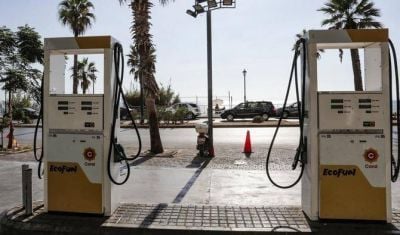
The monthly assistance to the army will be financed by the increase in fuel taxes, decided on May 29 by the Salam government, which consists of levying LL 100,000 on every 20 liters of gasoline sold ($1.1) and LL 174,000 on every 20 liters of diesel ($1.94). This decision sparked an uproar in the country and angered the General Confederation of Lebanese Workers (CGTL) and the Union of Land Transporters.
Retired military personnel have been demanding an increase in their pensions since 2019, severely reduced by the unprecedented devaluation of the national currency.
The committees also approved a bill concerning the reception of a loan from the International Bank for Reconstruction and Development (IBRD) that will be used to finance a green transition project in the agrifood sector, aiming to facilitate economic recovery in the country. A bill aimed at giving more power to municipalities was also approved by the committees, according to the NNA.
The joint committees met at Parliament with Deputy Parliamentary Speaker Elias Bou Saab, and Finance Minister Yassine Jaber, Information Minister Paul Morcos, Defense Minister Michel Menassa, Agriculture Minister Nizar Hani, Minister for the Displaced and Technology Kamal Shehadeh, and several MPs. The director of the Civil Service Council, Judge Nisrine Mashmoushi, the director of the Council for Development and Reconstruction (CDR), Mohammad Kabbani, and the director general of the Ministry of Information, Hassan Falha, were also present.
'The Israeli enemy must also be convinced'
Bou Saab also announced, from Ain al-Tineh, where he met with Speaker Nabih Berri and the Parliament's office, a plenary session next Monday, June 30, to discuss urgent matters, without further details.
Commenting on the situation in Lebanon, he said that the speaker told him "that the resistance in Lebanon has not fired a single bullet since the ceasefire was signed."
"We must therefore convince Israel of the necessity to keep Lebanon out of any escalation," he stated. Bou Saab also said that the recent statements by the president and prime minister "go in the same direction, which is to protect sovereignty and prevent Lebanon from being drawn into confrontation."
In response to a question about the fear of the conflict between Iran and Israel expanding into Lebanon and the assurances given by Berri, Bou Saab replied, "We questioned Berri on this matter, and he reaffirmed that from the cease-fire announcement until today, the resistance in Lebanon hasn't fired a single bullet."
"Berri remains true to his words, and we hope that Lebanon will remain neutral," he said. "But it is not enough for us to be convinced. The Israeli enemy must also be convinced, because it is the Israeli enemy that might seek a way out."
President Joseph Aoun and Prime Minister Nawaf Salam, last weekend, expressed their categorical rejection of any Hezbollah intervention in the conflict between Iran and Israel.
Bou Saab also commented on the suicide attack that targeted a Greek Orthodox church in Damascus on Sunday, calling "for the countries concerned to take the protection of worshippers in places of worship seriously, regardless of their confession or affiliation." This attack, attributed to the Islamic State, resulted in at least 25 dead and 63 injured in the Syrian capital, according to the latest report on Monday.

 7 p.m. recap: Netanyahu seeks mastermind behind Flydubai incident; Washington sanctions 2 French nationals; Ben Gvir's 'I want to kill you' threat