






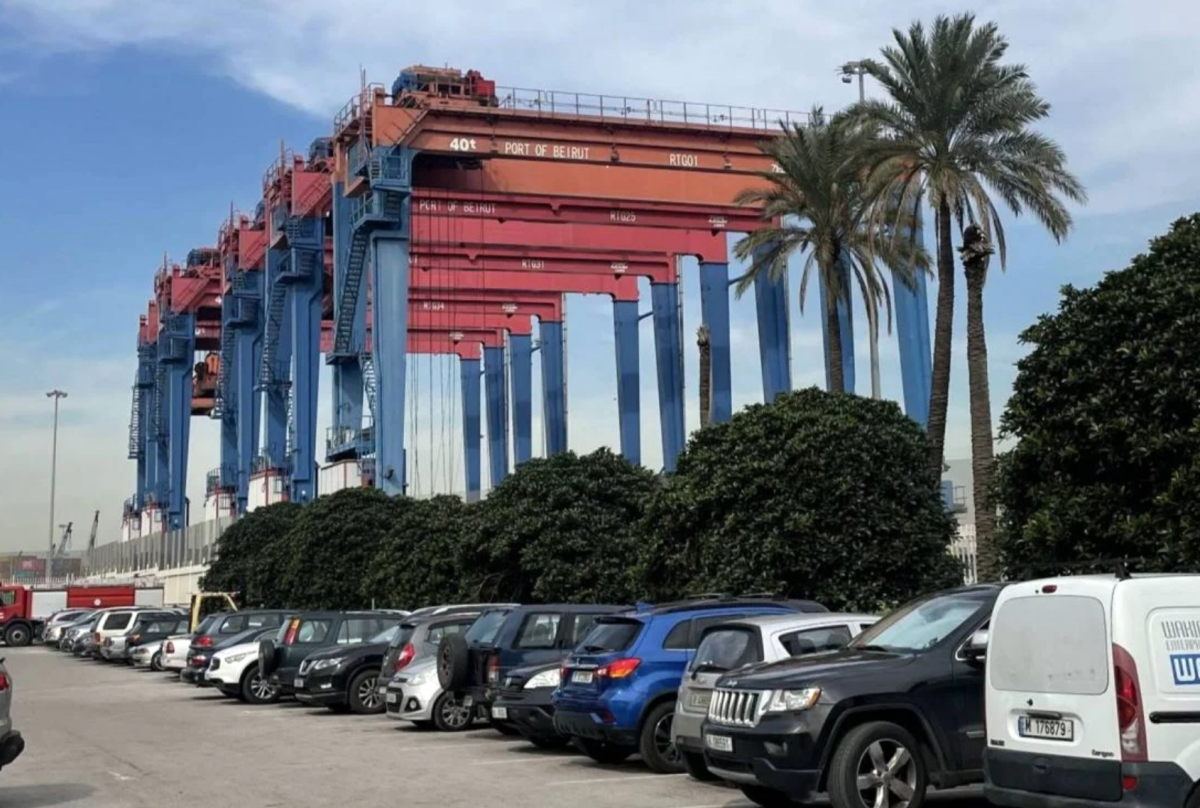
Gantry cranes in the port of Beirut on March 13, 2024. (Credit: Philippe Hage Boutros/L'Orient-Le Jour)






The prices of the many foodstuffs that Lebanon imports to meet its needs will not be affected “in the short term” by the new customs tariffs announced a few days ago by U.S. President Donald Trump, according to the president of the Lebanese Importers' Union, Hani Bohsali. However, he would not comment on medium-term price trends, saying that the situation remained “unclear.”
“Prices of imported food products will remain stable in the short term and have not been affected by the significant increases in customs duties imposed by the United States on goods imported into its market, nor by similar retaliatory measures taken by some of the countries concerned,” he said.
He added that customs duties in Lebanon, which are one of the main factors influencing import prices, had not been increased and that global inflation remained measured.
The FAO food price index published by the Food and Agriculture Organization of the United Nations remained stable in March after falling slightly in February. Lebanon's consumer price index (CPI) posted its smallest monthly increase since September 2024 in February, pending March data due to be published around April 20.
Bohsali also pointed out that the currencies of the main countries from which Lebanon imports its foodstuffs had not recorded disproportionate variations against the dollar, despite the jolts the greenback has experienced in the markets since Trump's announcement on April 2.
However, he acknowledged that “things remain unclear as to the repercussions” of the tariffs in the medium term and that “assessing the situation will take some time.”
