


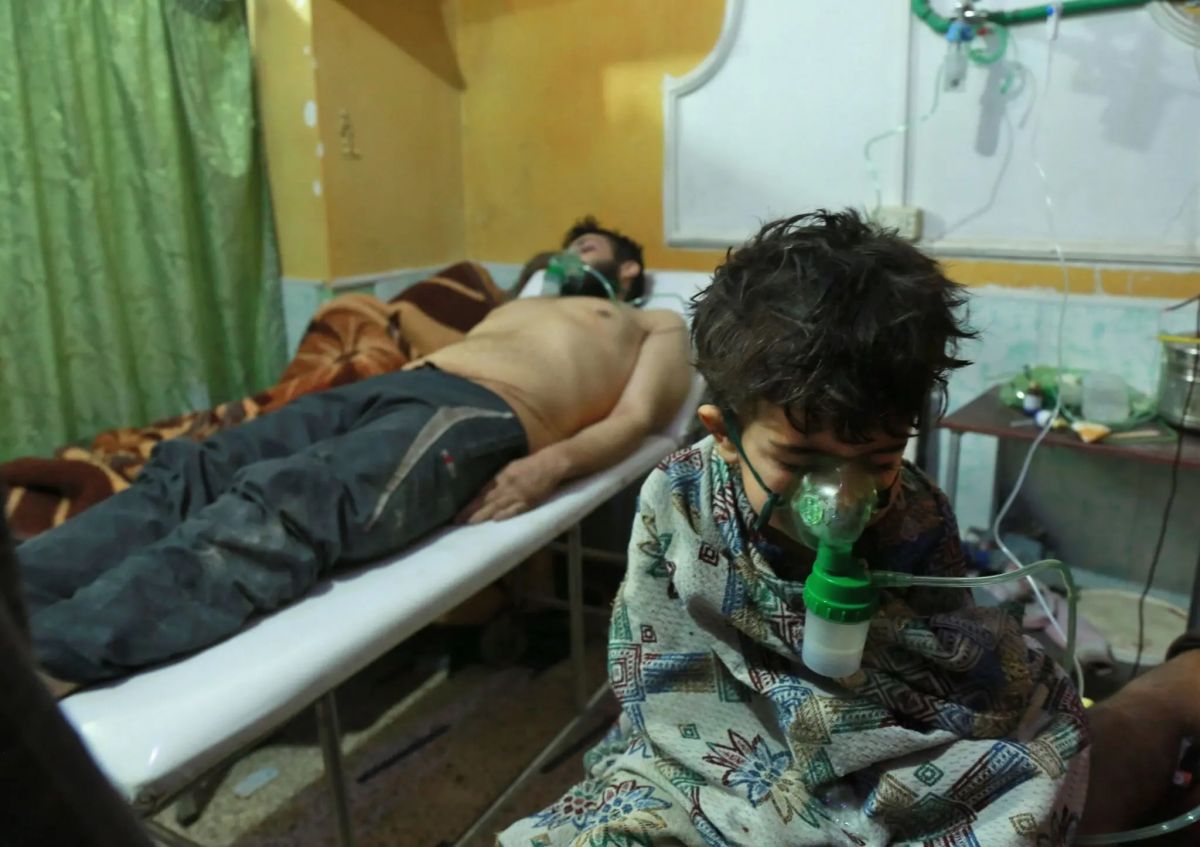
Receiving treatment for a suspected chemical weapons attack in the Ghouta area of Syria in 2018. Syria agreed to get rid of chemical weapons more than a decade ago. (Credit: Hamza Al-Ajweh/AFP)






More than 100 chemical weapons sites are believed to remain in Syria, far exceeding previous estimates, according to new findings from the Organization for the Prohibition of Chemical Weapons (OPCW) quoted in a New York Times (NYT) article published Sunday.
These sites, which include research, production and storage facilities, present a significant security risk as Syria struggles to settle following the fall of President Bashar al-Assad’s regime.
Experts are particularly concerned about the potential for these deadly weapons to fall into the hands of militant groups or be used in future attacks, according to the NYT.
This discovery comes as the world marks the eighth anniversary of the 2017 Khan Sheikhoun chemical attack, one of the most horrific uses of sarin gas during the Syrian Civil War. The attack, which killed over 80 people, was a hard reminder of the ongoing threat posed by Syria’s chemical weapons.
The OPCW’s new assessment suggests that while some sites have been secured, many others remain hidden, and the extent of the remaining stockpiles is still unclear.
Syria’s new government, led by interim President Ahmad al-Sharaa, has pledged to dismantle the country’s remaining chemical weapons and comply with international law.
Raed al-Saleh, leader of Syria Civil Defense, noted to the NYT, “There are many locations that we don’t know about because the old regime was lying to the OPCW.”
As noted by former OPCW staffers, the Assad regime's history of deceit and obstruction raises doubts about their true commitment to full disarmament.
“We were perpetually hamstrung by the government,” one former staff member told the NYT. “There were constant fears that the regime was eavesdropping on us.”
The situation is complicated further by the fact that many key scientists involved in Syria’s chemical weapons program fled the country during the war, though some remain inside Syria. The U.S. has imposed sanctions on over 300 individuals and entities linked to the program, underscoring the ongoing international concern.
A former OPCW inspector recounted to the NYT a 2014 investigation in which a convoy of inspectors was struck by a roadside bomb while approaching a potential chemical weapons site.
“We were told the route was safe, but that turned out to be a lie,” they said. This incident was one of several examples where the regime’s actions hindered the work of international inspectors.
In Zamalka, a town near Damascus, local officials described how the government removed headstones marking the graves of victims from a suspected 2013 chemical attack to cover up the atrocity.
"They didn’t want the world to know about what had happened here," one official told the NYT.

 7 p.m. recap: 1 person killed near border with Lebanon; 200 kilos of explosives carried by mules; Riyadh shuts its airspace