






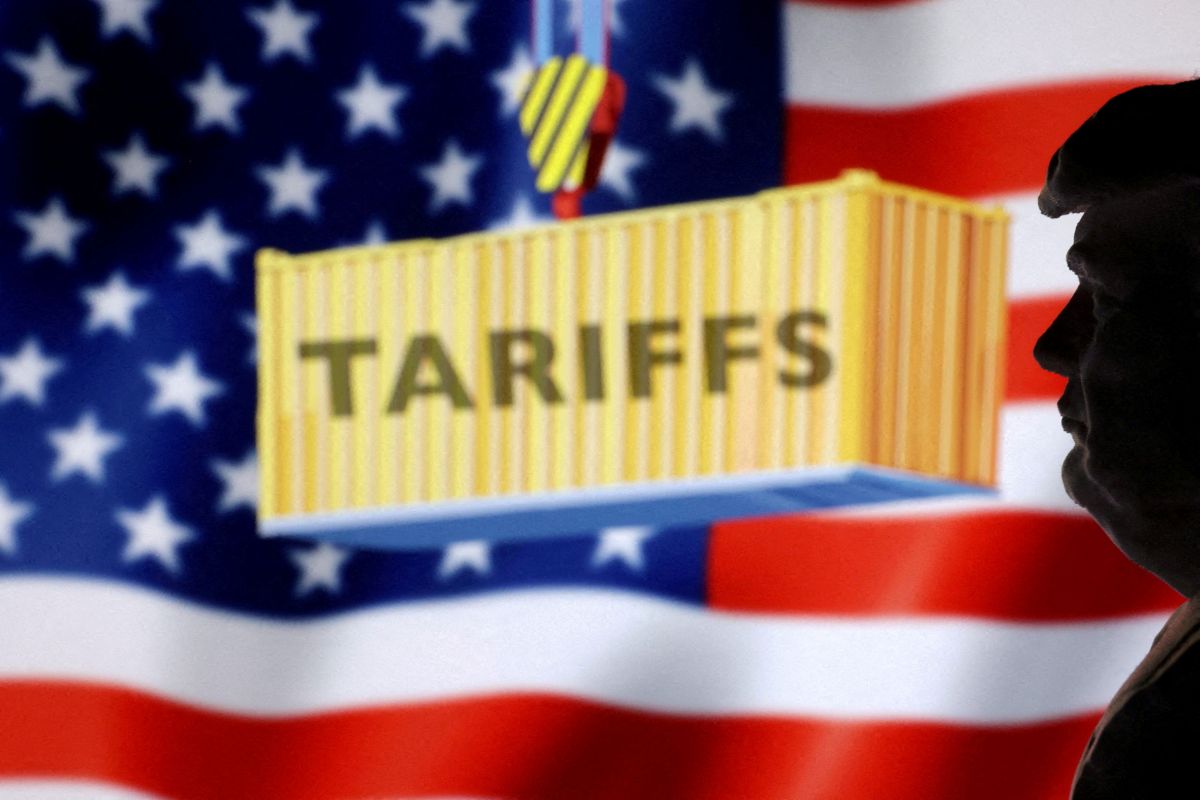
A 3D printed miniature model of American President Donald Trump, the American flag, and the word "Tariffs" are seen in this illustration taken on April 2, 2025. (Credit: Dado Ruvic/Reuters.)






A significant portion of the products that the U.S. imports from the rest of the world have been subject to additional tariffs of 10% decided by Donald Trump since Saturday, a shock to global trade expected to intensify in the following days.
This universal floor of 10%, from which some products are exempt, adds to pre-existing customs duties. However, several goods are currently exempt: oil, gas, copper, gold, silver, platinum, palladium, construction wood, semiconductors, pharmaceuticals, and minerals unavailable on American soil. Steel, aluminum, and imported cars are also not affected, as they are already subject to a 25% customs duty rate.
Canada and Mexico, subjected to a different regime, are already paying a new levy as part of the trade war initiated by the U.S. President. From April 9 onward, the costs will be significantly higher for countries exporting more to the United States than they import from the U.S.: +54% in total for China (targeted in several stages), +20% for the European Union (EU), +46% for Vietnam, +24% for Japan, etc. This will involve about 80 countries and territories, including the 27 EU countries, according to an official document published Friday by the U.S. government.
The list of heavily taxed regions has been shortened: it no longer includes the French islands of Saint Pierre and Miquelon - which the White House had presented as being targeted by +50% tariffs - or the Australian territories of the Heard and McDonald Islands in the sub-Antarctic region, which only house penguin colonies. Their inclusion had sparked a mix of astonishment and ridicule regarding the American administration's methodology.
Trillions gone up in smoke
The U.N. Conference on Trade and Development (UNCTAD) expressed concern on Friday about the continued presence of the world's poorest countries on the list. The international organization highlighted that the least developed countries and small island developing states are responsible, respectively, for only 1.6% and 0.4% of the U.S. trade deficit.
These countries, it noted, “will neither help rebalance the trade deficit nor generate significant revenue.” Trump's announcement, justified by the “national emergency” of reducing the U.S. deficit, has shaken the global economy. Economists predict that the promised customs barriers will be as high as they were in the United States in the 1930s when trade flows were significantly lower and countries were less dependent on one another's production.
Faced with China's announced retaliation (+34% on American products starting April 10) and fears of a negative spiral for the global economy, financial markets have plummeted. In two days, the American market saw over $6 trillion in market capitalization vanish according to the Dow Jones US Total Stock Market Index. “Know that I will never change policy. It's a great time to become rich, richer than ever!” boasted President Trump on Friday on his Truth Social platform. He also urged the Federal Reserve Chairman to lower interest rates, stating it was the “perfect” time given the progress observed on certain prices (oil, eggs) since his return to power in January.
Minutes later, however, the head of the monetary institution painted a rather bleak picture of the prospects for the American economy with the tariffs: potentially more inflation, less growth, and higher unemployment.
