






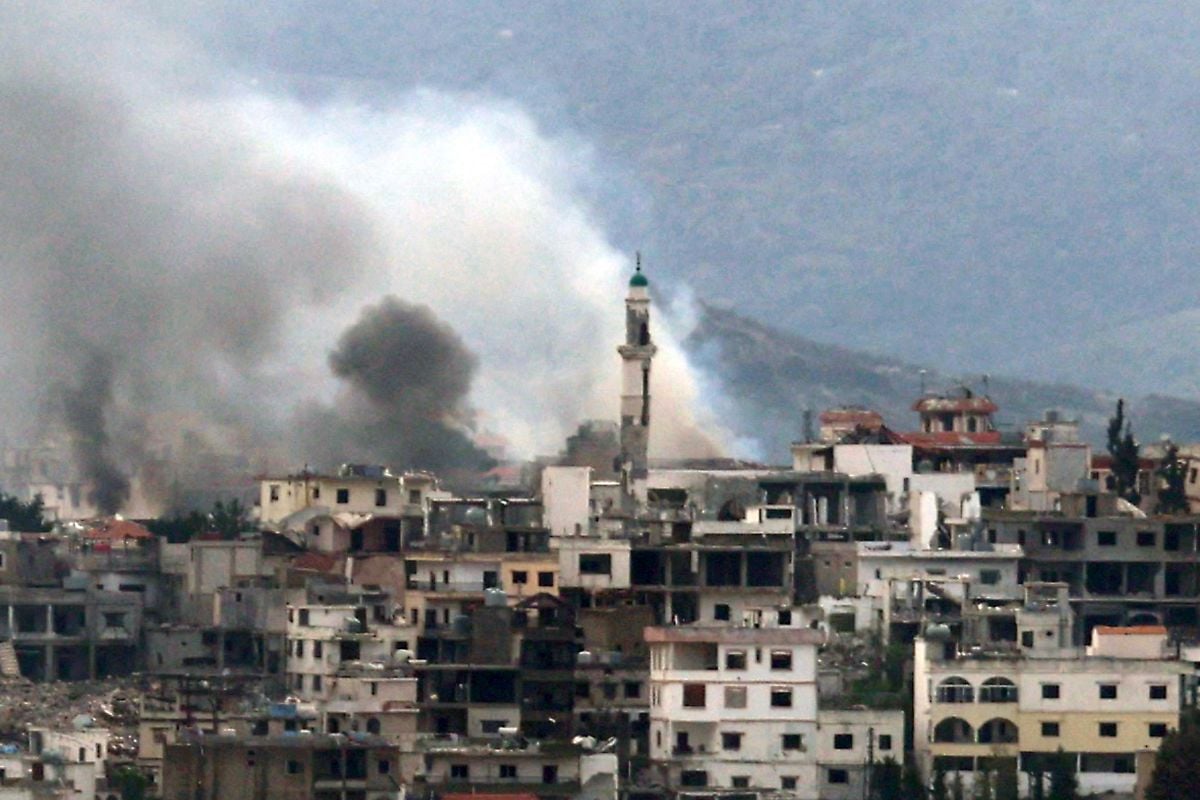
Smoke billows from the site of an Israeli strike in the southern Lebanese village of Khiam, on March 28, 2025. (Credit: Rabih Daher/AFP)






BEIRUT — Israel said on Friday it had detected two missiles launched from Lebanon and threatened to respond forcefully, the latest strains to a shaky truce that ended a year-long war between Israel and Hezbollah. The two rockets were fired around 7 a.m. on Friday, one of which fell on the Lebanese side of the border, and the other which was intercepted.
Hezbollah released a statement mid-morning in which it firmly denied any involvement in the attack and was still committed to the cease-fire, while Israeli Defence Minister Israel Katz said Israel holds Lebanon responsible for missile fire on northern Israel's Galilee area. "We will ensure the security of the residents of Galilee and will act forcefully against any threat," he said in a statement, adding a threat against Beirut specifically: "If there's no calm in Galilee, there'll be no calm in Beirut."
The Israeli army immediately launched its retaliation. According to information from L'Orient Today's correspondent in the South, Israeli artillery began shelling Qaaqaiyet al-Jisr, in Nabatieh district, as well as the eastern outskirts of Khiam, Kfar Kila, Taybeh, Arnoun, Markaba and Mais al-Jabal, all in Marjayoun district, with white phosphorus bombs.
A house in Khiam caught fire amid the attacks. Khiam and Kfar Kila were both targeted by Israeli soldiers with machine-gun fire from the position they continue to occupy in Lebanese territory at Hamames Hill, on Khiam's outskirts.
In Kfar Tebnit, in Nabatieh district, the Israeli air force killed three people in an airstrike, including one woman, and injured 18 others, including six children and eight women.
Last Saturday, three rockets fired from makeshift launchers toward northern Israel'sMetula village were intercepted, to which the Israeli army responded with a bombing campaign that lasted through the day, hitting more than 50 sites across southern and eastern Lebanon and killing eight people. Hezbollah firmly denied any involvement in the rocket fire then as well, and the attack remained unclaimed.
Intense diplomatic efforts were made by Lebanese authorities last Saturday to prevent Israel from bombing Beirut's southern suburbs, where Hezbollah has a strong presence and which were pounded regularly during the all-out war late last year.
The Lebanese government has not released a statement on Friday's events.
Among theories as to who targeted Israel last weekend, one is that it was Palestinian factions responding to Israel breaking the truce in Gaza. Others accused Israel of pulling the strings to justify the prolonged occupation of several points in southern Lebanon. Another theory suggests it was rogue elements within Hezbollah, at a time when the deal [which, in practice, resembles a surrender] has deepened the rift between the “moderate” political wing and the more hardline military wing.
respond forcefully, the latest strains to
a shaky truce that ended a year-long war between Israel and
Hezbollah. The two rockets were fired around 7 a.m. on Friday, one of which fell on the Lebanese side of the border, and the other which was intercepted.Hezbollah released a statement mid-morning in which it firmly denied any involvement in the attack and was still committed to the cease-fire, while Israeli Defence Minister Israel Katz said Israel holds Lebanon responsible for missile fire on northern Israel's Galilee area. "We will ensure the security of the residents of Galilee and will act forcefully against any threat," he said in a statement, adding a threat against Beirut specifically: "If there's no calm in...

