






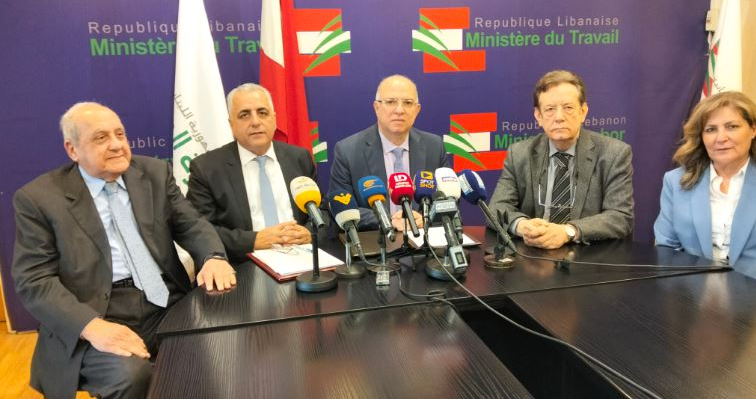
The Minister of Labor Mohammad Haidar, in the center, surrounded by the Director General of the CNSS, Mohammad Karakeh (on the left), and the President of the Private Hospitals Syndicate, Sleimane Haroun (on the right). (Credit: NNA)






Labor Minister Mohammad Haidar announced Wednesday that he had signed off on "new rates for the National Social Security Fund (NSSF), which will allow a greater share of hospital bills to be covered."
"Some services will now be reimbursed at 60 to 80 percent of actual rates," he said, adding that coverage is gradually returning to pre-crisis levels from before Lebanon’s 2019 financial collapse.
The NSSF insures a large portion of Lebanon’s workforce and their families, using a pricing system negotiated with hospitals. Since the start of the economic crisis in 2019 and the sharp depreciation of the Lebanese lira, plummeting from 1,500 pounds to nearly 90,000 per dollar, coverage has drastically declined as hospital fees became pegged to the dollar.
In a statement released March 21, the NSSF said Director General Mohammad Karakeh would soon issue executive decisions on the updated rates, aiming to restore medical coverage "to near pre-crisis levels." The fund intends to reimburse 80 percent of medication costs and 90 percent of hospital expenses — including regular stays, intensive care, isolation, and all lab and radiology procedures — based on a revised rate list issued by the NSSF for each treatment and medication.
Reimbursement rates will now be calculated using an exchange rate of 89,500 Lebanese liras per U.S. dollar.
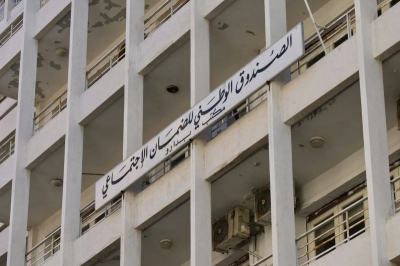
Temporary limits on coverage
Speaking at a press conference at his office, Haidar — flanked by NSSF Director General Karakeh and Private Hospitals Syndicate President Sleimane Haroun — clarified that, until further notice, the NSSF will continue covering medications and surgeries but is still unable to reimburse medical equipment costs.
"A committee has been formed to resolve this issue, and it will be settled in the coming months," he said.
To streamline payments, Haidar announced that contribution settlements will soon be possible through financial institutions or banks. He also said he is "working to increase family allowances and health coverage," with a decision expected in the coming weeks from the NSSF Board of Directors.
Addressing tensions between the NSSF and private hospitals over pricing disputes, Haidar said a recent meeting between both sides involved "frank discussions," resulting in an agreement to facilitate procedures. He added that a new system of advanced payments was established to ease delays in reimbursements to hospitals.
Crackdown on salary underreporting
Haidar also tackled fraudulent salary declarations by companies that deliberately underreport employee wages to lower their NSSF contributions. "These fraudulent reports impact the overall state of the NSSF and employees’ end-of-service benefits. It is not credible that all employees in Lebanon only earn the minimum wage," he said, announcing that "frank dialogue" would begin with the private sector to encourage accurate salary declarations.
On the minimum wage, Haidar acknowledged that the current rate is "grossly inadequate" given Lebanon’s soaring cost of living. He said the government would begin reviewing the wage level on April 7 but stressed that "figures circulating in the media do not reflect the ministry’s position, which will determine a wage that ensures a decent standard of living for employees."
For his part, Karakeh said NSSF reimbursements have seen clear improvement since October and that the institution is steadily reducing health care costs for its members.
