






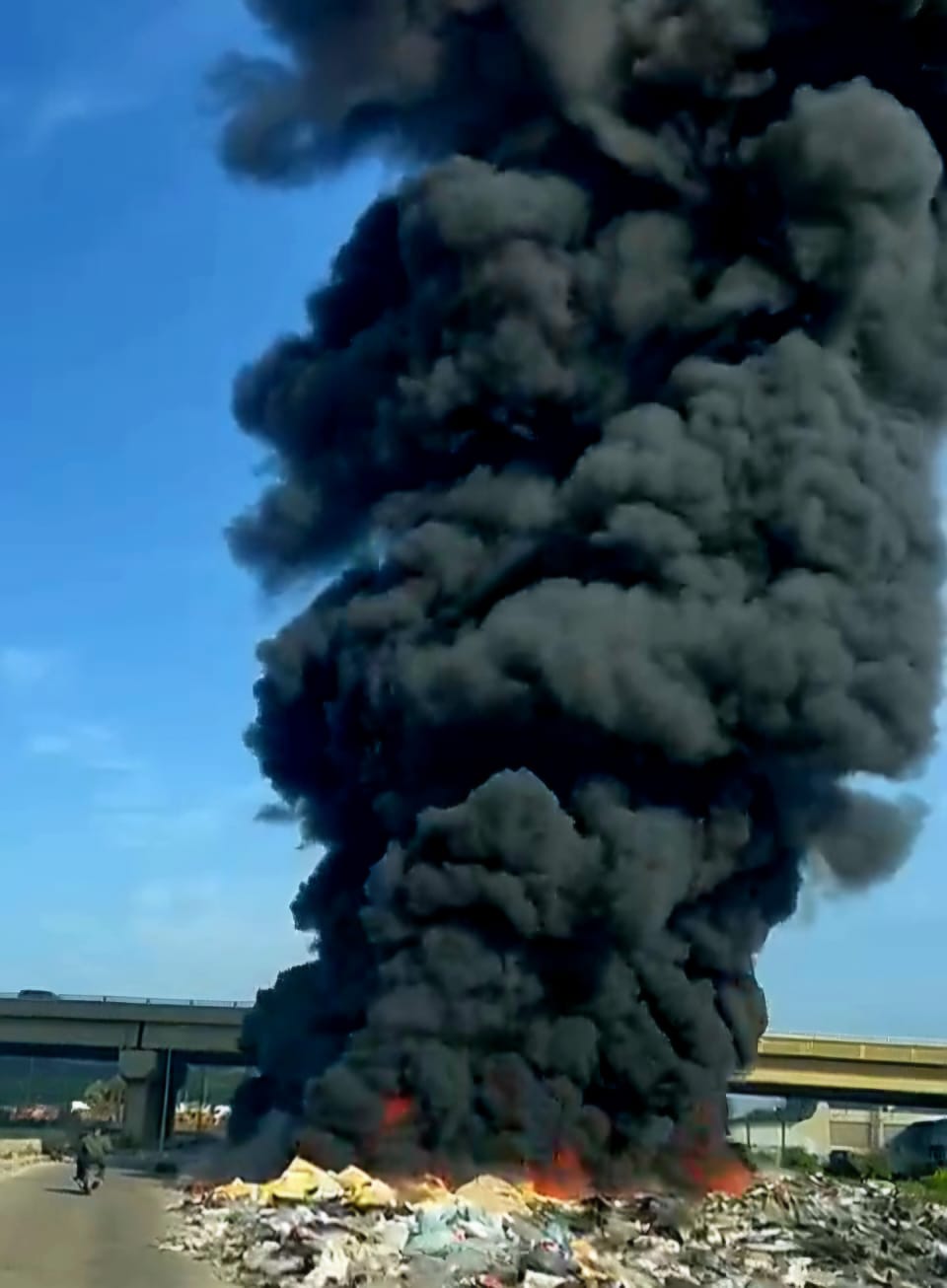
Black smoke emanating from the city of Tripoli on Monday, March 17, 2025. (Credit: Michel Hallak)






The plague of intentional fires –– aimed at recovering copper and iron through waste incineration –– continues in Tripoli (Northern Lebanon). Engineer Mohammad Nour al-Ayoubi, a member of the municipal council and president of the city's environment and energy committee, called on Monday for the state to end this practice, reports our correspondent in the North Michel Hallak.
Speaking to the Interior and Municipalities Minister, General Ahmad Hajjar, the elected official of the capital of Northern Lebanon explained that "despite repeated calls and meetings with the concerned parties [the governor, security forces, and municipal police], as well as calls from citizens and journalists and the organization of conferences explaining the dangers of this phenomenon to public health, unfortunately, the fires in all their forms continue to persist, and we have not been able to find a solution to this problem."
This "plague" is well known to Tripolitans: a mix of tires, electrical cables, scrap metal, or plastic and metal waste incinerated in urban areas to extract some veins of copper or iron, before selling them for a few handfuls of dollars. Over time, this illegal practice has become commonplace for the city's ragpickers, much to the dismay of residents, forced to regularly breathe the foul emissions from combustion fires that have multiplied throughout Tripoli.
'Find a radical solution'
It is in this context that Mohammad Nour al-Ayoubi personally calls on Ahmad Hajjar to find a "radical solution."
Under Environmental Protection Law No. 444, which came into effect in 2002, any offender is supposed to be subjected to financial and penal sanctions. However, Narimane Shamaa, a journalist and activist involved in gender equality and environmental issues, explained this week to our publication that "around twenty implementing decrees are missing for this law to be applied," adding that "no decree specifies the amount of these fines or possible imprisonment sentences." She also mentioned "political interference" hindering the work of justice.
A security source confirmed to our publication this week that an investigation has been initiated by the regional department of the Internal Security Forces (ISF) and "one of the alleged perpetrators of these recent fires has been apprehended."

