






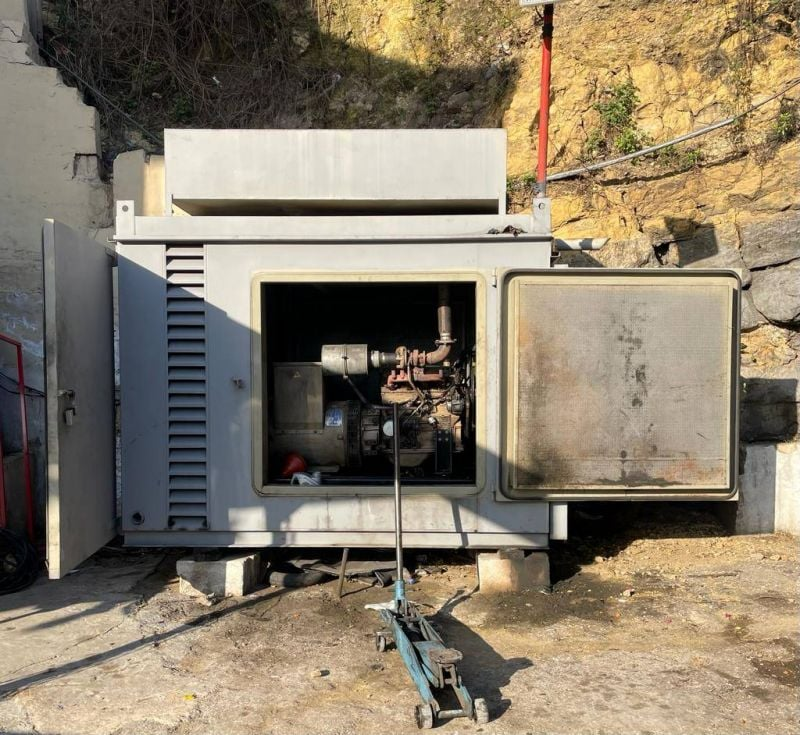
A private generator in a garage in the Mansourieh area, in Metn. (Credit: P.H.B.)






The price of a kilowatt-hour (kWh) produced and sold by private or neighborhood electric generators increased by a few hundred Lebanese pounds in February, continuing an upward trend that began in December, according to the latest tariff schedule published by the Ministry of Energy and Water.
After four consecutive months of decline, the rate recorded its first increase in December 2024, though slightly — by about LL 30. The tariff for February is set at LL 30,884 per kWh, up from LL 30,436 in January, marking a 1.47 percent increase. At an exchange rate of LL 89,700 to the dollar, this amounts to $0.34.
This new price is based on an average mazout price of LL 1,435,109 per 20 liters — an increase of 1.8 percent from January’s LL 1,409,783. The per-kWh price is typically 10 percent higher for operators in mountainous areas (above 700 meters in altitude) and rural regions, bringing it to LL 33,972 (nearly $0.38).
Other pricing components remain unchanged. The monthly flat rate for a maximum intensity of 5 amperes (A) is still LL 385,000 ($4.29), while the 10 A rate remains LL 685,000 ($7.64). The ministry also imposes a surcharge of LL 300,000 ($3.34) for each additional 5 A beyond 10 A. These rates include a 10 percent margin for operators.
For installations connected to a three-phase meter — such as elevators — an additional flat rate is applied based on basic capacity. For example, an elevator with three phases supporting 15 A each should be charged LL 985,000 ($10.98) rather than LL 2,785,000 ($31.05).
Private generators have been tolerated for decades and serve as an alternative to Lebanon’s struggling state utility, Électricité du Liban (EDL), which has long faced financial and technical difficulties preventing it from supplying 24-hour electricity, despite recent improvements.
To calculate their bills, subscribers must multiply the fixed price by the number of kWh recorded on an individual meter, which operators have been required to install since 2017. Enforcement of this rule accelerated in October 2018, but many operators continue to charge flat rates regardless of actual consumption. Some also require payments in U.S. dollars.
