





A farmer in the Bekaa packages potatoes. (Credit: João Sousa/L'Orient Today)






BEIRUT — “Current weather conditions lead to lower production, which means less market supply and, consequently, a price hike.” That’s how Ibrahim Tarshishi, president of the Federation of Farmers’ Unions in the Bekaa, explained the impact of scarce rainfall and the latest snowstorm on vegetable and grain prices.
So far, Lebanon has experienced an arid winter, with only 25 percent to 30 percent of annual precipitation recorded, according to Hassane Makhlouf, a professor at the Lebanese University. In the Bekaa, for instance, rainfall has reached only 190 millimeters, while the annual average is 470 millimeters, according to Tarshishi. By this time in 2024, the Bekaa had already received 600 millimeters.
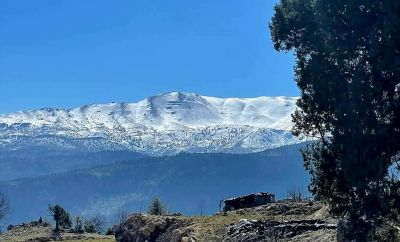
During the last storm, named Adam, temperatures dropped significantly, reaching 6 degrees Celsius in Beirut — an event Lebanon had not seen in a long time. However, the storm brought only limited rainfall. In Zahleh, for example, just a few millimeters of rain fell, according to Makhlouf.
Storm Adam causes short-term price Hike
“Many greenhouses in the Bekaa and even along the coast have been affected by frost during Storm Adam,” Tarshishi told L’Orient Today.
He said potatoes were hit particularly hard, as some were still in the 30-to-40-day growth stage when the storm struck.
Low temperatures also slow plant growth, further reducing yields. “For example, what you would normally harvest today takes 10 more days to be ready in cold weather, and the yield is much lower than under normal conditions,” Tarshishi said.
According to Makhlouf, winter crops were hit hardest since they could not withstand extreme cold. These include lettuce, potatoes, and greenhouse-grown tomatoes and cucumbers.
Antoine Hoyek, president of the Farmers’ Association, told L’Orient Today that “with Ramadan approaching, we have more demand and less supply, which could create a problem for consumers.”
Looking ahead to the holy month, Tarshishi warned: “I fear that during Ramadan — which starts on March 1 — people will complain about shortages and high demand. Unfortunately, they won’t be able to find everything they need. I apologize in advance to all consumers, as emergency circumstances, low temperatures, and increased demand during fasting will all contribute to this situation.”
Makhlouf said buying legally imported products could help those struggling with rising prices.
Tarshishi expects prices to stabilize somewhat after the first week of Ramadan as temperatures rise, allowing for larger harvests and increased supply. He also noted that demand is typically highest in the early days of Ramadan before declining later in the month.
Hoyek predicted that prices would stabilize around March 10 but remain higher than the annual average.
However, Tarshishi warned that any stabilization would be short-lived, as prices are likely to rise again due to Lebanon’s ongoing dry conditions.
Dry season likely to cause long-term price increases
Tarshishi told L’Orient Today that drought conditions are preventing farmers from cultivating large areas of land, leading to reduced production.
“In the long run — two, three, or four months from now — prices will surely be higher than the same period last year,” he said.
“Drought is a serious issue for strategic reserves,” Makhlouf said. “The lack of rainfall reduces available water for irrigation, which in turn impacts production.”
He warned that wheat and barley crops are in a precarious state and that wheat production could decline by more than 50 percent.
Hoyek said that because of the lack of rain, Bekaa farmers have already had to irrigate their wheat fields in the middle of winter.
Both Hoyek and Tarshishi expressed hope that additional rainfall could prevent further scarcity.
“The rainy season isn’t over yet — maybe a storm will bring enough rain to compensate. It’s still too early to say there will be a scarcity problem,” Hoyek said.
“We’re still hopeful for rain in the coming days. We have until around March 22,” Tarshishi added. “Maybe, God willing, it will come and change the situation.”

 Evening recap: Netanyahu announces West Bank offensive; 7 killed in Jordan church shooting; tents burned in south Lebanon
 US strike on Iran this weekend? ‘Absolutely,’ says Barrack; ‘I have no idea,’ says Trump