






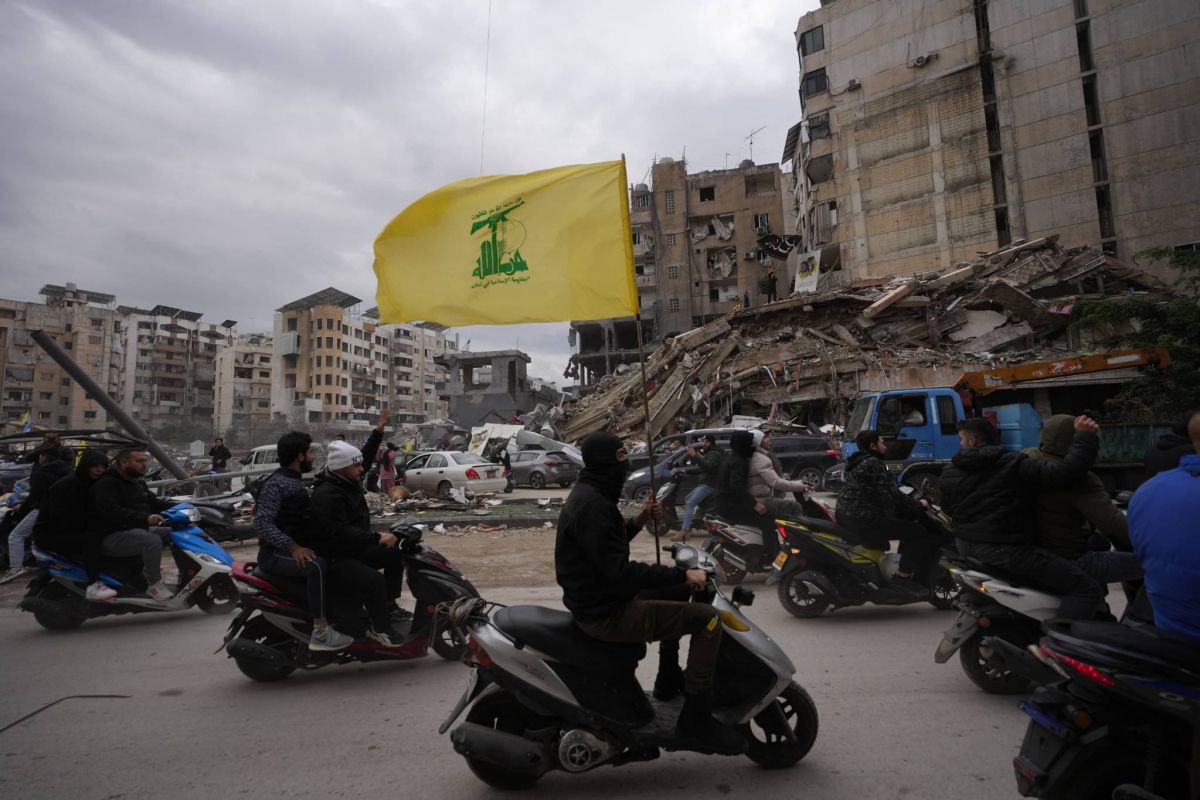
Hezbollah supporters return to the southern suburbs of Beirut a few hours after the cease-fire came into effect, on Wednesday, Nov. 27, 2024. (Credit: Mohammad Yassine/L'Orient-Le Jour)






A person close to Hezbollah told the Wall Street Journal (WSJ) that the group ordered its militants who were not originally from areas in southern Lebanon to vacate their positions, according to a report published by the American newspaper on Sunday.
Contacted by L'Orient Today, Hezbollah's spokesperson Rana al-Sahili denied WSJ's info without providing further details. A security source and UNIFIL, deployed in southern Lebanon, were not immediately available to comment.
In a report titled "Hezbollah, Once Dominant in Lebanon, Shows New Signs of Weakness," the anonymous source close to Hezbollah said that "an internal memo was distributed to its combat units, ordering militants who weren’t originally from areas in southern Lebanon to vacate their positions, and that Lebanese army troops would be allowed to take control of the area in accordance with the cease-fire."
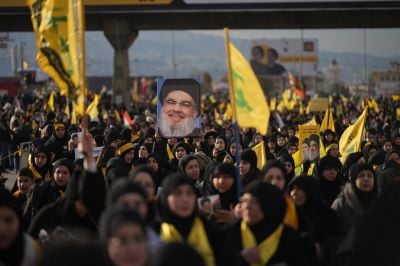
The Lebanon-Israel cease-fire agreement, reached in late November following more than 13 months of conflict between Hezbollah and Israel, stipulates that the Lebanese security forces and the Lebanese Army will be the only entities authorized to carry weapons or deploy troops in southern Lebanon.
The same source said “The party has suffered heavy losses," with some military units completely dismantled. However, they added that Hezbollah has partially replenished its ranks with fighters who had been stationed in Syria with some restructured units ready for any resumption of fighting.
“The group has been weakened, but it is not defeated,” the source said.
Hezbollah's 'impossible' payments
The newspaper also reported that the spiraling bill from the latest war has rendered it impossible for Hezbollah to fulfill its financial obligations, including payments for relatives of the group's fighters killed as well as followers who lost homes or businesses during conflicts.
In November, the World Bank estimated the damage to physical infrastructure to be $3.4 billion, with around 100,000 homes either partially or completely destroyed.
On Monday, Lebanese Forces MP, Fadi Karam, said that if "Hezbollah's Secretary-General Naim Qassem remains stubborn and continues to refuse to hand over the group's weapons ... he should completely forget about reconstruction."
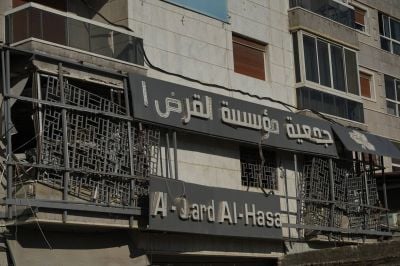
WSJ added, citing residents, that the group’s primary financial institution Al-Qard Al-Hassan has recently "frozen payments for compensation checks that had already been issued."
Israel accused the Iranian Revolutionary Guard of providing funds to Hezbollah via civilian flights from Teheran, threatening Beirut airport with strikes if Iranian aircraft landed there. In response to these threats, the Lebanese authorities decided to suspend all flights from Iran, which may also have exacerbated Hezbollah's financial difficulties.

