






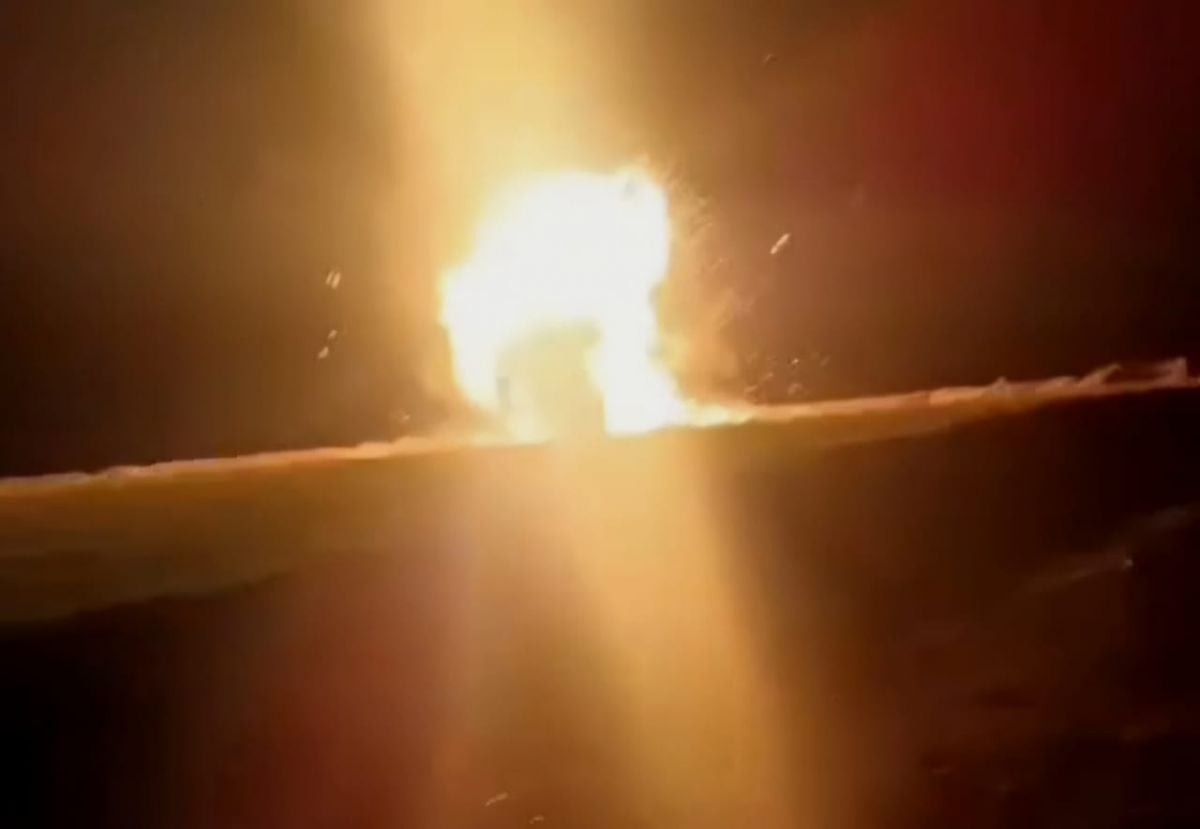
A car in flames after being hit by shrapnel from a missile in Wadi Khaled, North Lebanon, following Israeli strikes on the night of Feb. 20, 2025. (Photo obtained by Michel Hallak)






The Israeli air force struck the Syrian-Lebanese border between Thursday night and Friday, targeting the northern Lebanon area and the Syrian province of Homs, claiming to have aimed at illegal border crossings "used by Hezbollah" to bring in weapons. According to information from L'Orient Today's northern correspondent, the strike targeted the Syrian side of the clandestine crossing of Wadi al-Wawiyat, facing Wadi Khaled, with several missiles.
Although there have been no casualties so far, the damage caused by the Israeli strike was clearly visible on Friday morning. Shrapnel hit a school called “The Buds of the Future,” near the Wadi Khaled railway station. One of its walls was hit by shrapnel, and damage was seen inside. Similarly, shrapnel and rocks, detached by the force of the explosion, fell on the roof of a house near the crossing point in question on the Lebanese side of the border. Part of the roof collapsed. Some cars were damaged.
'Violation of the cease-fire between Israel and Lebanon'
In a statement, the Israeli army said that it had struck "points of passage in the area of the Lebanese-Syrian border used by the terrorist organization Hezbollah to attempt to smuggle weapons into Lebanese territory."
"These activities constitute a flagrant violation of the ceasefire agreements between Israel and Lebanon," it added.
A cease-fire has been in place in Lebanon between Israel and Hezbollah since Nov. 27, after more than a year of hostilities, including two months of total war. Israel has continued to conduct strikes in Lebanese territory, and both parties have repeatedly accused each other of violating the truce.
Earlier this month, the Israeli army stated that it carried out an airstrike targeting a tunnel at the Syrian-Lebanese border, accusing Hezbollah of using it for weapons smuggling. In January, Israel already conducted a series of strikes on smuggling routes at the border with Syria, which is 330 kilometers long with no official demarcation. The Shiite militia, which fought alongside the ousted dictator Bashar al-Assad, controls much of this border.

