






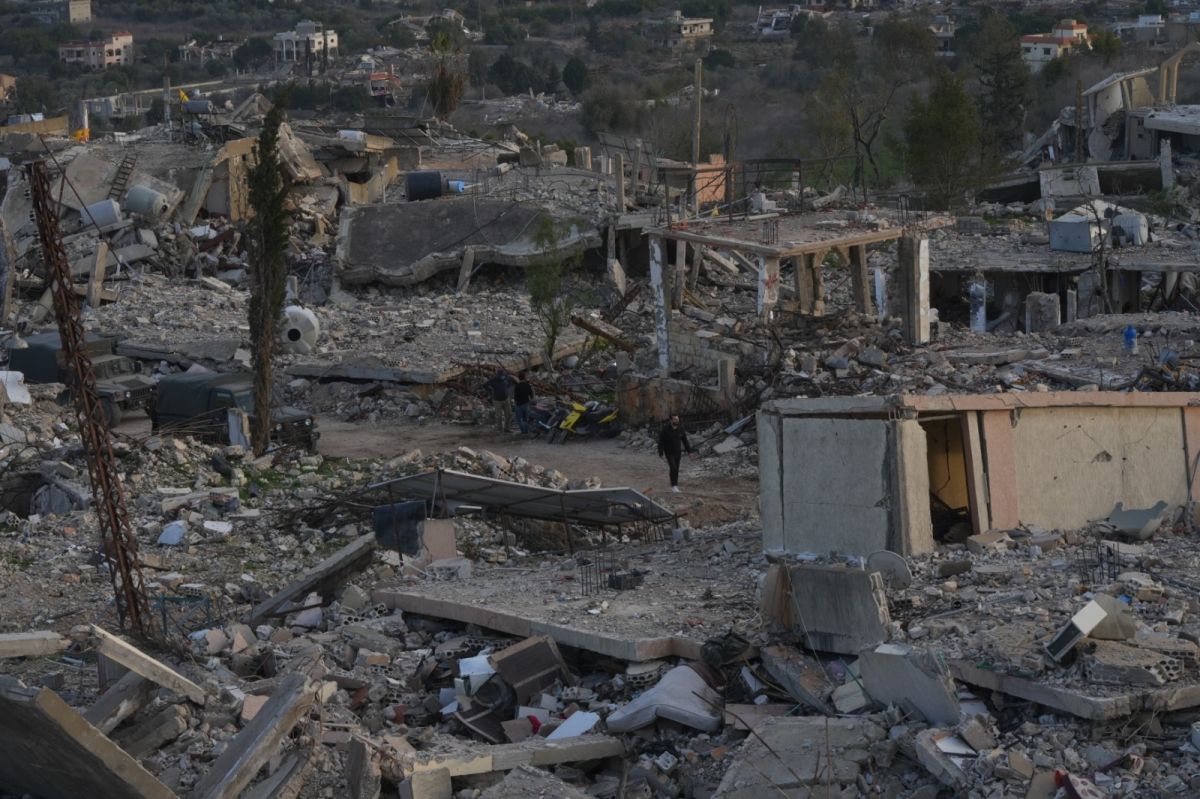
The destructions in Aita al-shaab, Jan. 28, 2025. (Credit: Mohammad Yassine/L’Orient-Le Jour)






Israeli fire towards residents of south Lebanon, kidnapping of fishermen, the entry of residents into their homes in Aitaroun (Bint Jbeil). Events and tensions at the border escalated throughout Sunday, according to L'Orient Today's correspondent.
In the morning, the Arabic-language spokesperson of the Israeli army, Avichay Adraee, issued his usual warning to south Lebanon residents, advising them to "wait" and delay their return. The previous day, a social media statement called on south Lebanon residents to "revolt against the enemy occupying the border villages" on Sunday and to gather at the entrance of the occupied villages starting at 9 a.m.
Preventing Hezbollah from 'rebuilding strength'
The Israeli army "redeployed in various locations in south Lebanon, according to the cease-fire agreement, to allow the Lebanese army to gradually deploy," wrote the spokesperson on X, addressing south Lebanon residents Sunday morning. "Some areas require a delay in withdrawal and more time to ensure Hezbollah cannot rebuild its strength on the ground ... We ask you to wait, prevent Hezbollah from returning, and from using you to conceal themselves," noting that this warning remains "until further notice."
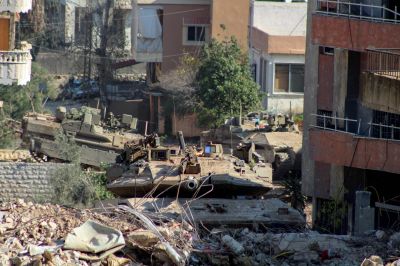
In the Marjayoun district, residents gathered early in the morning at the entrances of the western neighborhoods of Mais al-Jabal and Houla and at the Deir Mimas intersection. Israeli army forces opened fire towards residents gathered near the western neighborhood of Houla, without causing injuries.
In the Bint Jbeil district, Israeli forces fired at residents, also shooting at journalists. A television camera from al-Mayadeen was hit by a bullet at the northern entrance of Yaroun. The filming team was not injured.
Shootings and sound grenades
Israeli forces also fired at residents of Yaroun to prevent them from entering the village, yet without causing injuries. Between 10:45 a.m. and 11:40 a.m., an Israeli drone launched five sound grenades on the sand barrier north of the village, near where villagers were. Later in the day, an Israeli drone again launched two sound grenades near Lebanese army soldiers and residents gathered at the entrance to the village.
Following the deployment of the Lebanese army in Aitaroun on Saturday, the municipality warned residents in a statement on Sunday against any contact with leftover war items or unexploded munitions. They were urged not to "move or touch suspicious objects, toys or wires until inspected" and not to "try to remove a mine or shell until competent authorities are present ... not to open closed boxes or suspicious containers, not to consume food from enemy [Israeli] leftovers, not to touch materials that may be toxic or harmful without gloves," the statement continued. The municipality finally called on residents to inform the Lebanese army if they found a suspicious object.
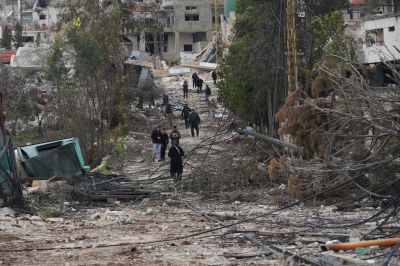
However, on Sunday morning, while residents were urged not to approach the area before receiving "official authorization" from the army, some began to enter the village on foot – Israeli soldiers were still stationed at Jabal al-Bat and on the road leading to Blida (Marjayoun), areas very close to Aitaroun. Residents who entered the village performed the Muslim midday prayer in the village square.
During the day, the Lebanese army dismantled barriers installed by the Israeli army west of Aitaroun, enabling residents to start accessing the area by car. In Maroun al-Ras (Bint Jbeil), the number of participants in the gathering increased throughout the day, with the Israeli army shooting in the air to scare them off.
Abduction
Meanwhile, Israeli forces aboard a boat intercepted a Lebanese fishing vessel off Ras Naqoura (Sour) and detained two fishermen aboard, according to Abbas Awada, head of the local border municipality. The Israeli army later released one of them, who returned to port on the fishing boat, while one man, M.H., remains detained by the Israelis. Awada added that "the Lebanese army is following the matter and making the necessary contacts for his release."
Additionally, search operations for bodies continue. The bodies of three people were recovered from the rubble on Saturday afternoon, including two in Khiam (Marjayoun) and one in Aita al-Shaab (Bint Jbeil), according to a statement released by Civil Defense. According to the statement, the bodies were transferred to the governmental hospital in Marjayoun, where they "will undergo the necessary medical and legal examinations, including DNA tests, under the supervision of the competent authorities, to determine their identity."
The Secretary-General of Hezbollah, Naim Qassem, is expected to speak on Sunday at 6:30 p.m. addressing "the latest developments in south Lebanon and the funerals of Sayyed Hassan Nasrallah," according to a statement from the party. The former Hezbollah leader was killed on Sept. 27 in extremely heavy Israeli strikes on the southern suburbs of Beirut. The party said that "grand funerals" would be organized in his honor, but without specifying their exact date.
The search for remains continues. The bodies of three people were recovered from under the rubble late Saturday afternoon, including two in Khiam (Marjayoun) and one in Aita al-Shaab (Bint Jbeil), according to a statement issued by the Civil Defense, relayed by our correspondent in the region. According to the statement, the bodies have been transferred to the government hospital in Marjayoun, where they “will undergo the necessary medical and legal examinations, including DNA tests, under the supervision of the competent authorities, in order to determine their identity.” The Civil Defense also announced that it had found five bodies under the rubble in Deir Serian (Marjayoun). The bodies were taken to the Ragheb Harb hospital.
The Israeli army also triggered an explosion on the southern outskirts of Mais al-Jabal (Marjayoun), according to our correspondent.
Speaking on Sunday evening, Hezbollah Secretary General Naim Qassem announced that Hassan Nasrallah's funeral would be held on Feb. 23 and that he would be buried in a plot between the old and new airport roads. The former Hezbollah leader was killed on Sept. 27 in extremely heavy Israeli strikes on Beirut's southern suburbs. Sheikh Qassem also called on the Lebanese state “to assume its responsibilities” in the face of Israeli violations of the cease-fire, which was due to end on Jan. 26 but has been extended until Feb. 18.
