






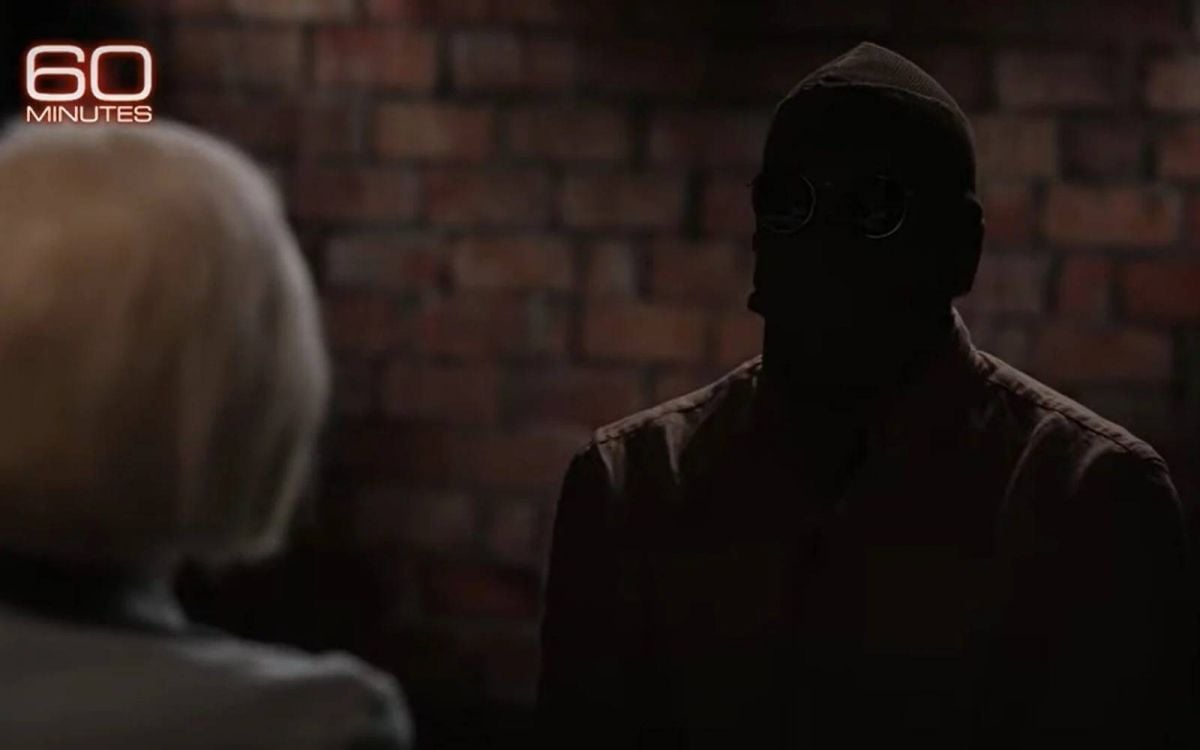
An alleged recently retired Mossad agent speaks on CBS News' 60 Minutes, December 22, 2024. (Screenshot: YouTube/CBS News)






Two recently retired Mossad agents, speaking anonymously, were interviewed on CBS News’ 60 Minutes on Sunday, recounting a covert operation that led to the detonation of thousands of handheld communication devices used by Hezbollah. The explosions resulted in the deaths and injuries of thousands of Hezbollah operatives.
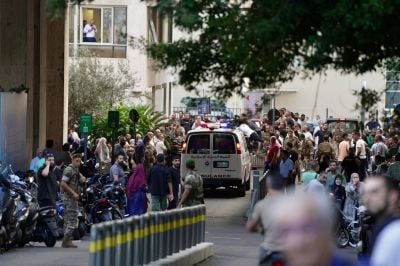
In the interview, the two former agents shared details about the elaborate operation, which involved selling explosive-laden devices to Hezbollah under false pretenses. In two consecutive days, on Sept. 17 and 18, 2024, thousands of pagers and walkie-talkies purchased by Hezbollah a decade earlier exploded, killing and injuring numerous individuals.
One agent said the operation started 10 years ago using walkie-talkies laden with hidden explosives, which Hezbollah didn’t realize it was buying from Israel.
In November, Israeli Prime Minister Benjamin Netanyahu said he had approved the pagers operation, AFP reported.
'Zero clue that they are buying from the Mossad'
According to Michael, one of the agents interviewed anonymously with a fake name, Hezbollah unknowingly bought over 16,000 pagers walkie-talkies at “a good price” from a fake company set up by Mossad. “We have an incredible array of possibilities of creating foreign companies that have no way of being traced back to Israel,” Michael said. “Shell companies over shell companies to affect the supply chain to our favor. We create a pretend world. We are a global production company. We write the screenplay, we’re the directors, we’re the producers, we’re the main actors and the world is our stage.”
The operation expanded two years ago to include pagers. Mossad agents discovered that Hezbollah was buying pagers from a Taiwanese company called Gold Apollo. Mossad then created a fake company under the name of Gold Apollo and rigged the pagers with explosives, unbeknownst to the parent company. “When they are buying from us, they have zero clue that they are buying from the Mossad,” Gabriel, the second agent, said. “We make like [movie] Truman Show, everything is controlled by us behind the scene.”
The pagers were designed to cause minimal damage — only to the user. Gabriel claimed that Mossad thoroughly tested the devices to ensure the explosions would only injure the wearer, not bystanders. “We test everything triple, double, multiple times in order to make sure there is minimum damage,” Gabriel said. Mossad also created ads and brochures for the pagers to attract Hezbollah’s interest while simultaneously making the prices unattractive to other potential buyers.
By September 2024, Hezbollah had bought over 5,000 of the booby-trapped pagers, which were detonated remotely by Mossad once they suspected Hezbollah might be onto them. The explosions sent shockwaves throughout Lebanon, with detonations occurring in supermarkets, hospitals and other public places. “The day after the pagers exploded, people were afraid to turn on the air conditioners in Lebanon because they were afraid that they would explode,” Michael said. “We want them to feel vulnerable, which they are.”
'Tipping point of the war'
Gabriel claimed that during the operation, several of Hezbollah’s operatives were injured right next to their leader, Hassan Nasrallah. “Nasrallah, when we operate the beeper operation, just next to him in the bunker, several people had a beeper receiving the message. And in his own eyes, he saw them collapsing,” Gabriel said. “If you look at his eyes, he was defeated. He already lost the war.”
“This was the tipping point of the war,” Gabriel asserted.
Mossad’s operation had not only caused physical harm to Hezbollah but had also shaken their morale. Michael added, “We want them to feel vulnerable, which they are. We can’t use the pagers again because we already did that. We’ve already moved on to the next thing. And they’ll have to keep on trying to guess what the next thing is.”
The operation was a key moment in the Israel-Hezbollah conflict, ultimately leading to a full-scale war with intense waves of Israeli airstrikes against Hezbollah targets across Lebanon, followed by a ground invasion of Lebanon. A cease-fire was reached on Nov. 26, 2024.
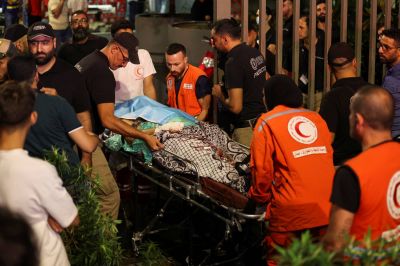
The Israeli operation drew international condemnation. The Lebanese government strongly condemned the attacks, while the U.N.’s human rights chief, Volker Turk, expressed being “appalled” by the method of the attacks. According to Turk, the operation “violates international human rights law and, as applicable, international humanitarian law.”

