


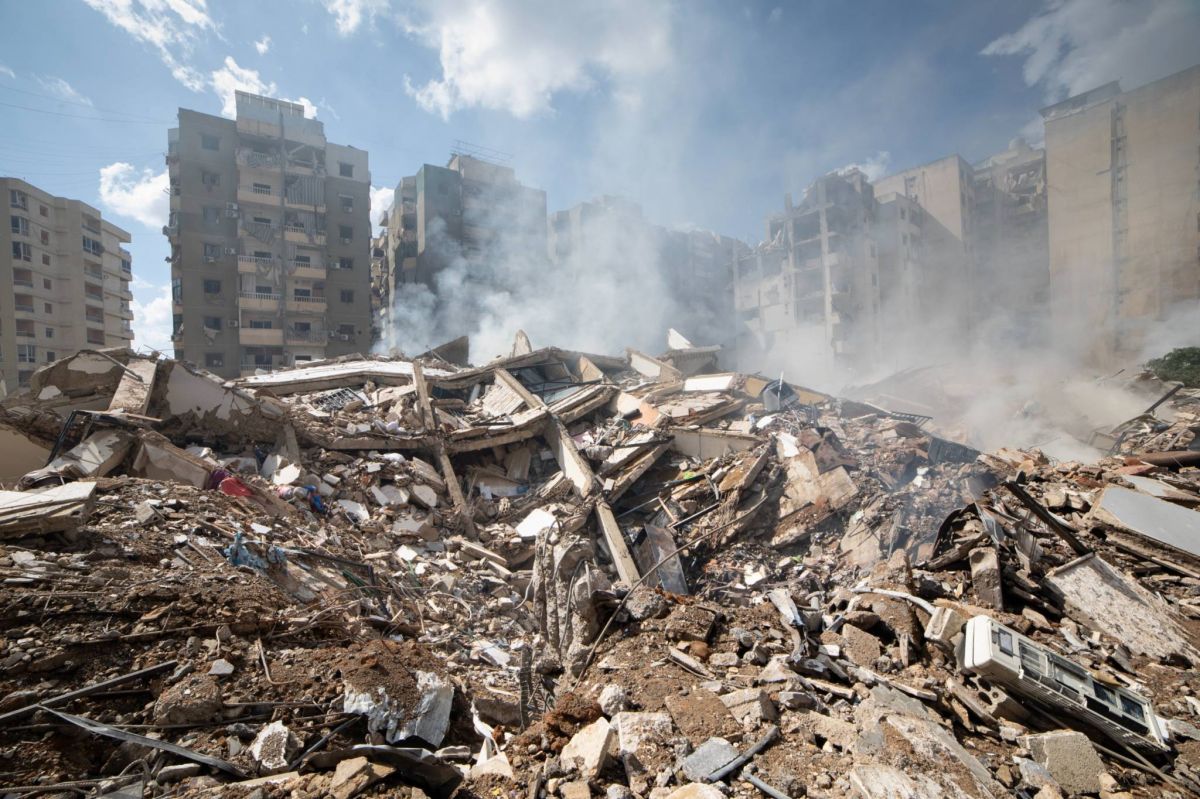
Buildings flattened by bombing in the southern suburbs of Beirut. (Credit: Mohammad Yassine)






After two months of intense conflict between Israel and Hezbollah, images of gray streets where collapsed concrete buildings lie in shapeless heaps have become increasingly familiar.These scenes, particularly from the densely populated southern suburbs of Beirut, as well as from South Lebanon, Nabatieh and Baalbeck-Hermel, evoke not only the horror of the human lives lost but also stir a deep, recurring anxiety among the Lebanese.This is a concern that first emerged during the Israeli war of 2006 and resurfaced after the 2020 explosion at the port of Beirut: What to do with the massive volumes of demolition debris?This time, however, the scale of the destruction is unprecedented. Preliminary estimates cited in a report by the AUB Nature Conservation Center (AUBNCC), which several experts consider realistic, suggest that the volume of...
After two months of intense conflict between Israel and Hezbollah, images of gray streets where collapsed concrete buildings lie in shapeless heaps have become increasingly familiar.These scenes, particularly from the densely populated southern suburbs of Beirut, as well as from South Lebanon, Nabatieh and Baalbeck-Hermel, evoke not only the horror of the human lives lost but also stir a deep, recurring anxiety among the Lebanese.This is a concern that first emerged during the Israeli war of 2006 and resurfaced after the 2020 explosion at the port of Beirut: What to do with the massive volumes of demolition debris?This time, however, the scale of the destruction is unprecedented. Preliminary estimates cited in a report by the AUB Nature Conservation Center (AUBNCC), which several experts consider realistic, suggest that the volume of...