






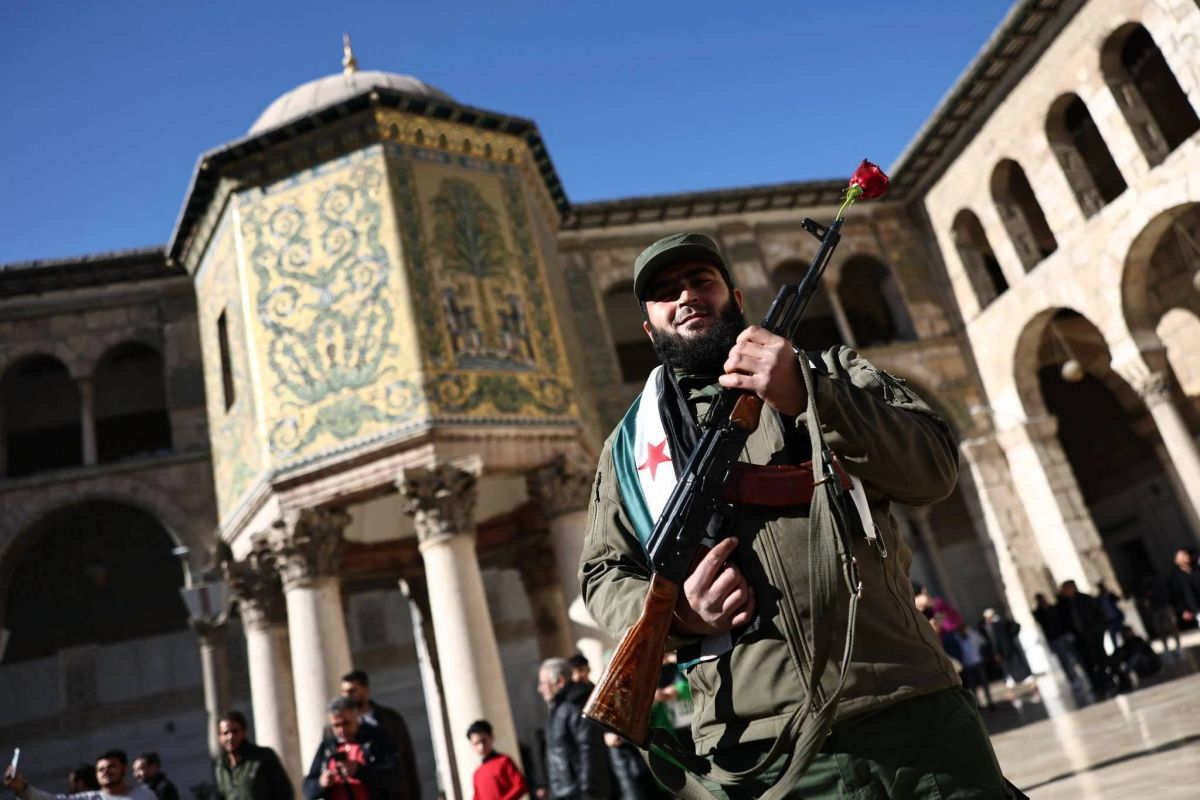
A rebel fighter poses in front of the Umayyad Mosque in Damascus, Dec. 13, 2024. (Credit: Sameer Al-Doumy/AFP)






The Syrian Islamist rebels, who shocked the world by toppling President Bashar al-Assad in a lightning offensive, had been planning the operation for over a year, according to one of their military commanders interviewed by The Guardian.
In the interview published Friday by the British newspaper, Abu Hassan al-Hamwi, military commander of Hay’at Tahrir al-Sham (HTS) and former head of the group’s military wing, provided detailed insights into the operation that ended Assad’s 24-year reign of unrelenting rule.
Codenamed "Repelling Aggression," preparations for the operation began a year ago, though the group had been laying the groundwork for years. It was only in late November that HTS determined the time was right. A key step was unifying the various rebel groups operating across the country.
"The fundamental problem was the lack of unified leadership," said Al-Hamwi, 40.
An operations room was established, bringing together commanders from approximately 25 rebel groups in the south. They coordinated movements between their fighters and HTS forces in the north.
Once the coalition was consolidated, with HTS leading the charge, the focus shifted to training fighters and developing a cohesive military strategy. "We studied the enemy in depth, analyzing their tactics day and night, and used this knowledge to strengthen our forces," Al-Hamwi explained.
The group, initially made up of insurgents, slowly transformed into a disciplined fighting force, according to the newspaper. HTS also began producing its own weapons, vehicles, and ammunition. However, its resources remained limited compared to those of President Assad, who enjoyed support from Russia and Iran.
Within this framework, a specialized drone unit was created, composed of engineers, mechanics, and scientists. "We unified their expertise and set clear objectives: we needed reconnaissance drones, attack drones, and explosive drones, focusing on range and endurance," Al-Hamwi emphasized, noting that production began in 2019. These explosive drones were deployed this month against Assad's forces.
After an 11-day offensive, the HTS-led rebel coalition overthrew Bashar al-Assad’s regime on Sunday. Assad fled to Russia with his family, according to Russian agencies. On Tuesday, Mohammad al-Bashir was appointed as Prime Minister to lead a transitional government until March 1.

