






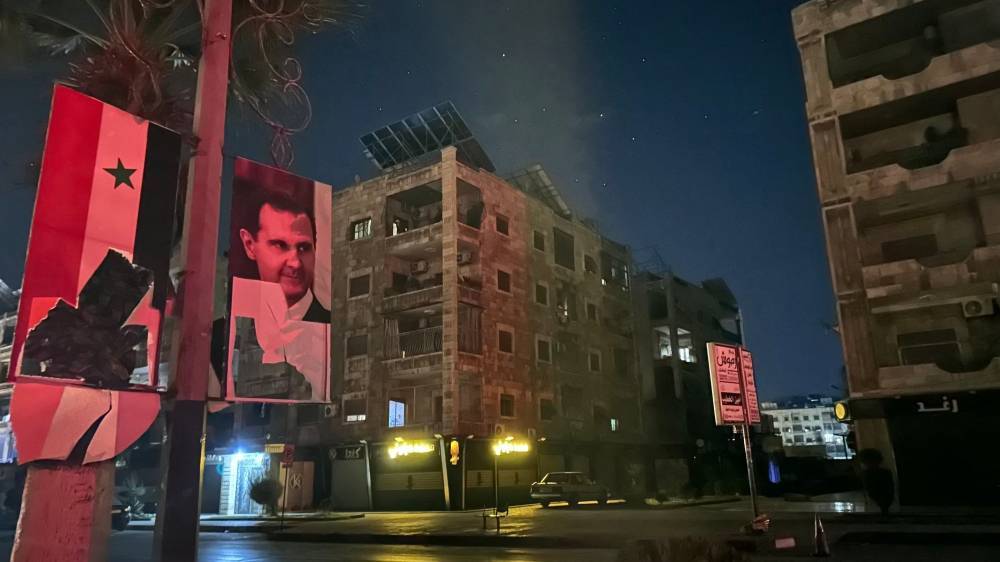
A deserted street in Aleppo, northern Syria, as Syrian jihadists entered the city on Nov. 30, 2024. (Credit: Bakr Al Kassem/ AFP)






Jihadists and allied rebel factions have seized control of most of Aleppo, Syria’s second-largest city, following a lightning offensive against Bashar al-Assad’s regime forces that has left more than 300 dead, an NGO reported Saturday.
The Syrian Observatory for Human Rights (SOHR), based in Britain but with an extensive network of sources in Syria, also reported overnight Russian airstrikes on Aleppo—the first since 2016. The offensive, launched Wednesday by jihadists from Hay’at Tahrir al-Sham (HTS), dominated by al-Qaeda’s former Syrian branch, and their allied Syrian rebels, represents a major blow to the regime.
These are the largest hostilities in years in Syria, where fighting between factions backed by various regional and international powers had largely subsided. With critical military support from Russia, Iran, and Lebanese Hezbollah, the Assad regime regained control of much of the country in 2015 and recaptured Aleppo entirely in 2016.
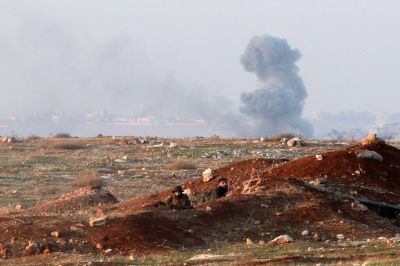
Russian airstrikes overnight coincided with "the arrival of significant [rebel] military reinforcements" in the area, the NGO added. Jihadist fighters and their allies entered Aleppo on Friday after two days of an offensive, ending years of relative calm in northwest Syria.
During the civil war that began in 2011 — resulting in more than half a million deaths and displacing millions — HTS, dominated by the former Syrian branch of al-Qaeda, seized control of vast parts of Idlib province and neighboring territories in Aleppo, Hama and Latakia. The Syrian regime regained control of much of the country in 2015 with support from Russian and Iranian allies. A ceasefire brokered by Moscow and Ankara after a regime offensive in March 2020 had brought a fragile calm to the northwest.
Large swaths of territory remain outside regime control: HTS and its allies hold significant parts of Idlib province (northwest), neighboring areas in Aleppo, and sectors of Hama and Latakia provinces. Additionally, vast regions in northeastern Syria are controlled by Kurdish forces. On Friday, "HTS and allied factions seized most of the city, government buildings, and prisons," SOHR reported after fighters entered Aleppo.
Jihadists and rebels celebrated their entry into Aleppo, with some posing in front of the city’s historic citadel and others planting their flag outside a police station displaying a large portrait of President Assad, according to AFP correspondents on the ground.
The Syrian army confirmed the presence of anti-regime fighters in "large parts" of Aleppo and reported "dozens" of soldiers killed or wounded in the jihadists’ offensive. According to SOHR’s latest figures, 311 people have been killed since Wednesday: 183 HTS and allied fighters, 100 regime soldiers and pro-government forces, and 28 civilians.
'Incredible Pace'
State media reported that four civilians were killed in a bombing on a student residence in Aleppo, a city of approximately two million people and a historic hub before the war. "Most civilians remain in their homes, and public and private institutions are almost completely closed," said pro-government Sham FM radio.
SOHR director Rami Abdel Rahman told AFP that jihadists and rebels, some supported by Turkey, had quickly taken vast sections of Aleppo with little significant resistance. "There were no battles," he said, adding that regime forces, as well as "the governor of Aleppo and police and security commanders, withdrew from the city center."
The offensive also allowed jihadists and rebels to capture at least 50 localities, including the key city of Saraqeb, south of Aleppo, which sits at the intersection of two highways linking Damascus to Aleppo and Latakia, SOHR reported. "The regime's lines collapsed at an incredible pace, taking everyone by surprise," said Dareen Khalifa, an analyst at the International Crisis Group.
The head of the "government" declared by HTS in Idlib, Mohammad al-Bachir, said Thursday that the offensive was launched after "the regime massed forces on the frontlines and bombarded civilian areas."
Turkey, Russia, Iran
The Turkish army, which controls several areas in northern Syria, called Friday for an end to "attacks" on Idlib and its region following a series of Russian and Syrian airstrikes. The Russian military said its air force bombed "extremist groups."
Northwest Syria had experienced years of relative calm thanks to a ceasefire brokered in March 2020 by Moscow and Ankara after a regime offensive.
The jihadist offensive coincided with the announcement of a ceasefire between Hezbollah and Israel, which had been engaged in over two months of open warfare. Israel also bombed Hezbollah sites in Syria.
Iran, a Hezbollah ally, and Russia have reiterated their support for the Syrian regime, which they have militarily backed throughout the civil war. Triggered in 2011 by the brutal repression of pro-democracy protests, the complex Syrian conflict has claimed over half a million lives and displaced millions.
