






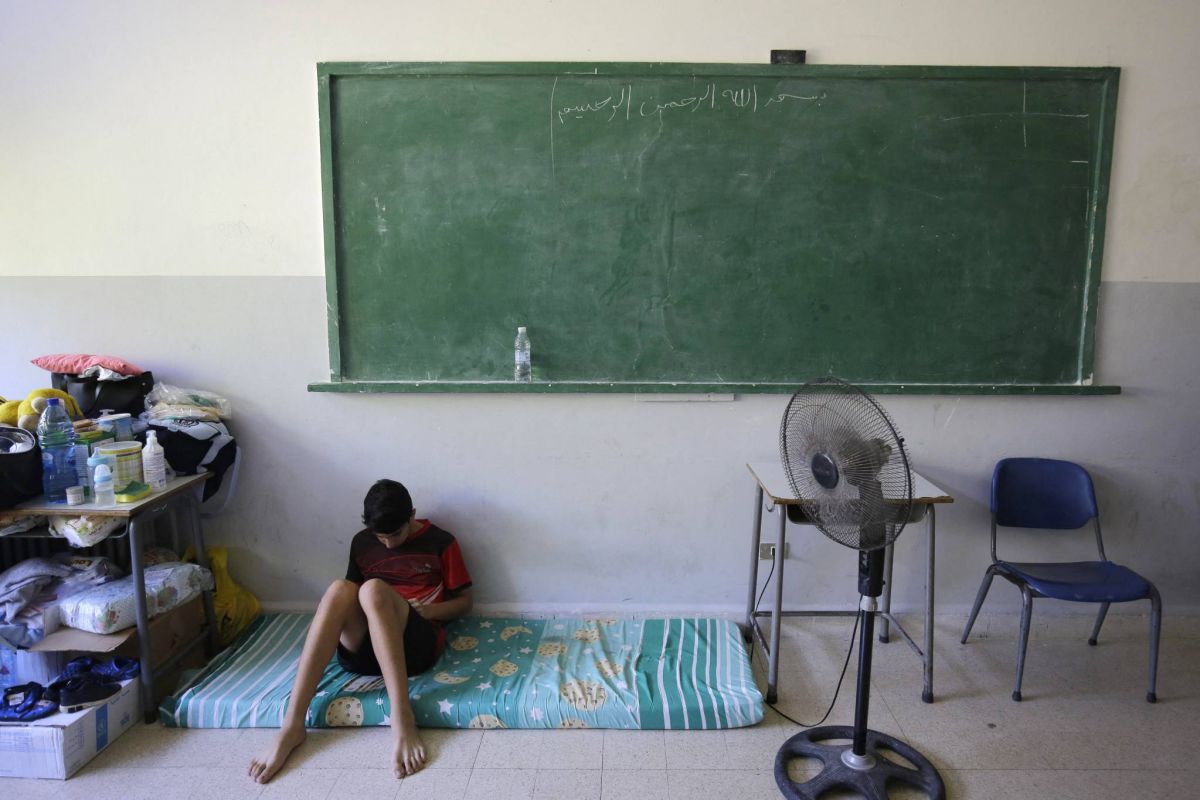
A displaced Lebanese sits inside a classroom at a school, housing displaced Lebanese, in the town of Deir Ammar in northern Lebanon on Oct. 17, 2024. (Credit: Ibrahim Chalhoub/AFP)






Education is universally recognized as a fundamental right. However, its status as a priority is questioned amid the madness of war. Parents wonder: What comes first, education or safety?
Israel is carrying out airstrikes in the Bekaa, the southern suburbs of Beirut, known as "Dahieh," and in the southern villages of Lebanon. There are also attacks taking place across the rest of the country. In response to the escalating violence, many families, including mine, have relocated from Beirut to ensure the safety of our children.
In a city that is shattered both emotionally and physically, we received an email from the school that began with the statement, " We have some positive news to share.”
What positive news does the school have for us when, according to the Lebanese authorities, there are currently over a million displaced people in Lebanon? Most are sheltered in public schools, and half of displaced individuals are children. While Israel asserts that its military actions are targeted at Hezbollah and its infrastructure, the impact is felt across all of Lebanon. What is framed as a war against Hezbollah is a war against Lebanon.
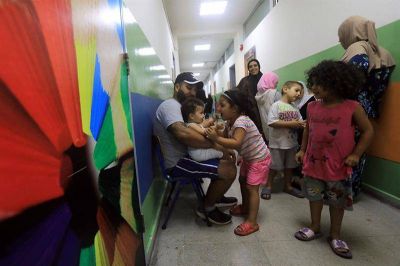
In light of this conflict, Abbas al-Halabi, Lebanon's caretaker Minister of Education and Higher Education, has closed all public schools until November. Private schools, however, may open at their discretion, regardless of their location within the country. This decision stands in stark contrast to Israel's approach, which has seen the closure of all at-risk schools.
The minister's decision, coupled with ongoing requests from school administrations to resume in-person attendance, puts children in harm's way, adds social pressure on parents and students alike and heightens socioeconomic disparities in a country already struggling from its worst economic crisis since 2019. This crisis has pushed a significant number of families into poverty.
The risks faced by students extend beyond physical safety. Those attending in-person classes in Beirut are also vulnerable to pollution. Although there are currently no definitive studies confirming Israel's use of white phosphorus or other chemicals, a June 2024 report by Human Rights Watch indicates that Israel has illegally deployed this substance in populated areas of Southern Lebanon. The schools in question are located in central Beirut, the capital of Lebanon.
Not only that, the reopening of schools raises critical concerns about whether Lebanon's healthcare system can accommodate sick children. With hospitals overwhelmed by mass casualties, the capacity to manage non-urgent cases has diminished significantly. The healthcare infrastructure has been fragile since 2019.
The school shared positive news that they will be open for face-to-face learning. That's great, but airstrikes have targeted two buildings in Beirut, specifically in the Nweiri and Basta areas—both densely populated and in the heart of Beirut — killing at least 22 people, among them children. I can't help but wonder about the school's management board during this time; might they be sleeping?
Private schools and the Minister of Education should prioritize the safety and well-being of their staff and students. While education continues to be a fundamental and necessary right, the Minister of Education and higher education should make a straightforward and absolute decision to prioritize the safety of students by allowing only online and asynchronous education. This decision is better made before Israel repeats the same atrocities of targeting schools and hospitals in Gaza.
It is heartbreaking, isn't it? I urge all parents, students, school staff, and teachers to stop normalizing these days of war and terror. We should not accept what is not normal. Given the current situation, online learning is the only suitable education format until our country is safe and secure again.
My response to the school is no, I am not sending my children, and no, you are not proving that you can provide an excellent education in times of war. During my sleepless nights, I think to myself, pity the schools; I revisit Robert Fisk’s book “Pity the Nation," wondering if history will repeat itself albeit in worse circumstances.
