


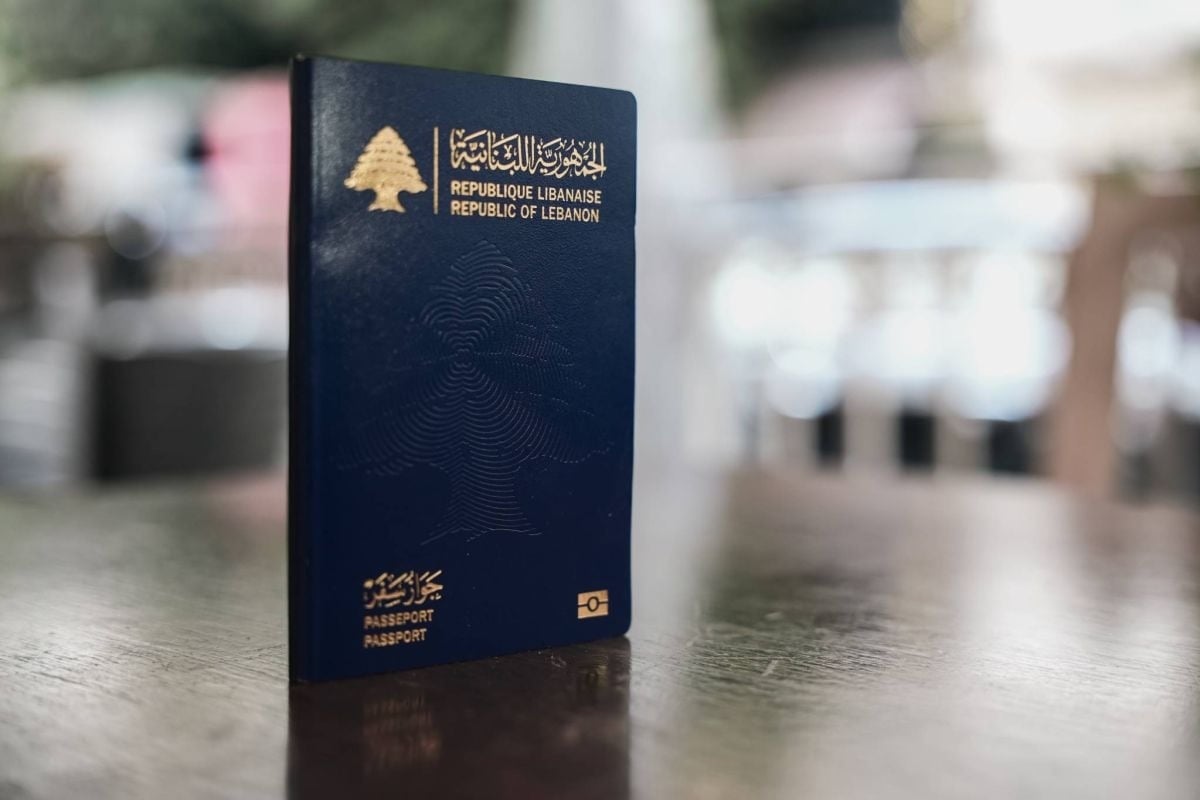
A Lebanese biometric passport. (Credit: Mohammad Yassine)






The French consulate in Lebanon announced on its X account that non-biometric Lebanese passports are no longer accepted for Schengen visa applications through the TLS center in Beirut, which processes visa requests for France and provides other consular services.
The consulate specified that "the General Directorate of General Security has announced that Lebanese passports issued according to the 2003 model, including those with passport numbers starting with RL, are no longer valid as of June 25, 2026."
"If you currently hold a non-biometric passport, you must obtain a biometric passport before submitting a visa application," the message continued. It added: "If you have registered your application on TLScontact with your non-biometric passport number, you may reschedule your appointment."
General Security (GS) had announced that non-biometric passports are no longer accepted for entry into Lebanese territory. "This measure is part of a global shift toward the adoption of biometric travel documents, and due to several countries refusing to accept non-biometric passports for entry or transit through their territories, in accordance with International Civil Aviation Organization standards," the GS said at the time.
The institution also announced that, starting Oct. 1, 2026, the use of 2003-model passports in Lebanon will be discontinued, and their holders will no longer be allowed to leave the country with these documents.
A Schengen visa is a short-stay travel authorization (maximum 90 days per 180-day period) that allows its holder to enter and move freely throughout the member countries of the Schengen area for tourism, business or visits.
The Schengen area includes most European Union countries as well as a few associated countries.
Even though biometric passports are now the norm, several countries do not yet have them or are only beginning to adopt them, such as Pakistan, which began its transition in 2024.

 7 p.m. recap: 1 person killed near border with Lebanon; 200 kilos of explosives carried by mules; Riyadh shuts its airspace