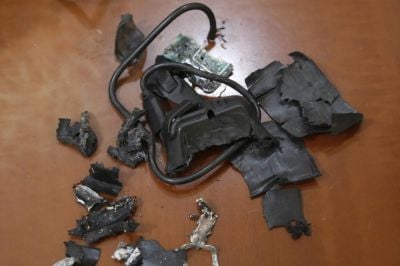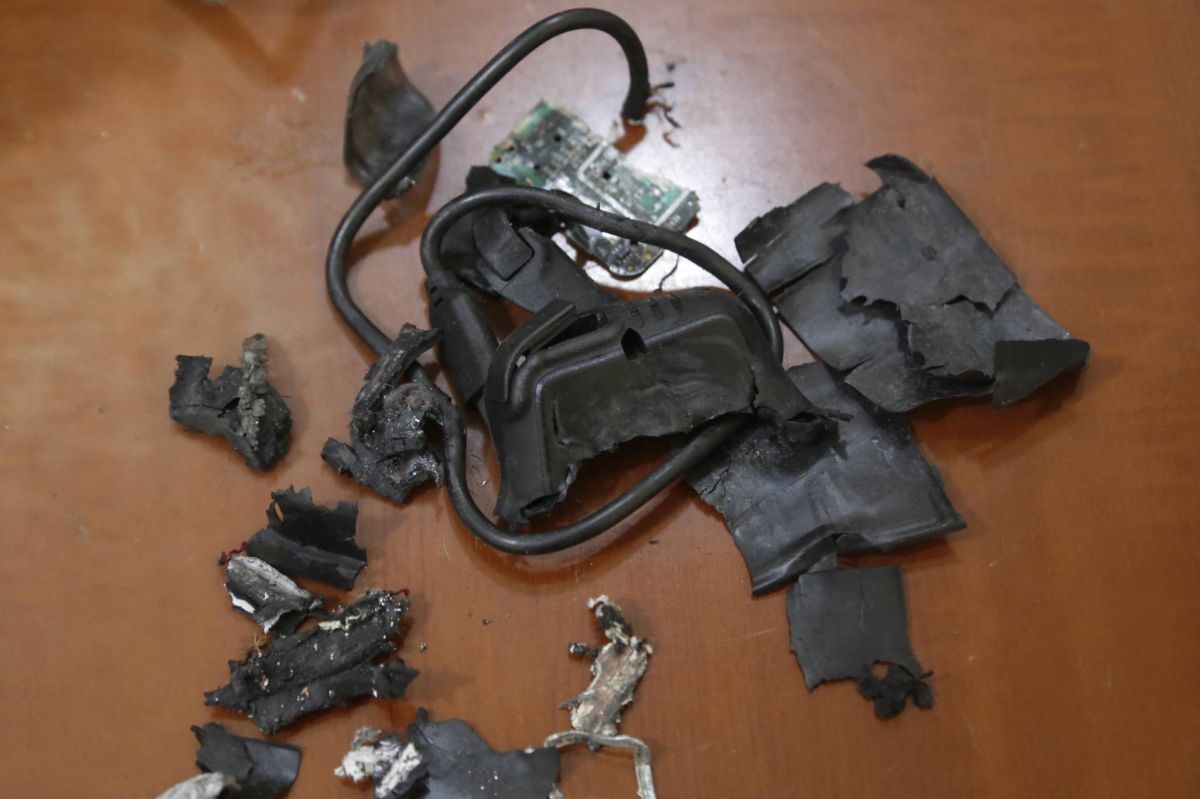
The remains of beepers that exploded on September 17, 2024, as part of an operation attributed to Israel by Hezbollah. (Credit: AFP)






In its Oct. 5 edition, the Washington Post (WP) provides new details on the Israeli operation involving booby-trapped pagers and walkie-talkies used by Hezbollah members that exploded on Sept. 17 and 18, resulting in dozens of deaths and thousands of injuries.
The American daily obtained this information from Israeli, Arab and American security officials, politicians and diplomats familiar with the events, as well as from Lebanese officials and individuals close to Hezbollah. These officials wished to remain anonymous due to the sensitivity of the subject.

While the idea of booby-trapping Hezbollah's pagers originated in 2022, the hacking of walkie-talkies dates back to 2015.
For nine years, Israeli intelligence simply listened to Hezbollah
The plan to hack communication devices unfolded in two phases. The first part of the plan involved booby-trapped walkie-talkies that had started to be introduced into Lebanon by Mossad nearly 10 years ago. The WP reports that explosives were concealed in the batteries of the devices, which were also equipped with "a transmission system that gave Israel full access to Hezbollah's communications." According to the officials interviewed, Israeli intelligence simply listened to Hezbollah for nine years.
When the opportunity arose to exploit the pagers later, the Israelis seized it. This was the second part of the plan. At the time, Mossad was still looking to infiltrate Hezbollah, which was already concerned about its vulnerability to Israeli surveillance and hacking. "This is how the idea of creating a sort of Trojan horse in communications was born," the officials told the WP. At that time, the newspaper continues, Hezbollah was trying to establish a secure communication network to transmit messages. "Mossad developed two strategies that would lead the group to buy devices that seemed perfect for this purpose," the WP adds. The equipment was, in fact, designed by Mossad and assembled in Israel.
In 2023, the party "began receiving solicitations for the bulk purchase of Taiwanese brand Apollo pagers, a well-known brand offering global distribution with no discernible ties to Israeli or Jewish interests," the American daily explains, noting that the Taiwanese company was unaware of the Israeli plan.
A marketing manager at the heart of it all
The WP mentions a woman, whose identity and nationality were not disclosed but who had established trusted connections with Hezbollah and had obtained a license to sell Apollo pagers online. She made an offer to the party for one of the products sold by her company: The AR924. One of the main selling points of the AR924 was that it was "rechargeable with a cable and had longer-lasting batteries," an Israeli official familiar with the details of the operation stated.

What the marketing manager did not know, the WP continues, was that the production of the devices was outsourced and that they were "physically assembled in Israel under the supervision of Mossad," according to the officials interviewed for the article. In Mossad's factories, a small amount of undetectable explosive was added to each battery. Another feature of the pagers was remote access, which was also invisible.
To trigger the explosion, all Mossad had to do was send an electronic signal. Aiming to cause maximum damage, "it required pressing two buttons to read the triggering message sent," an official stated. This meant using both hands.