






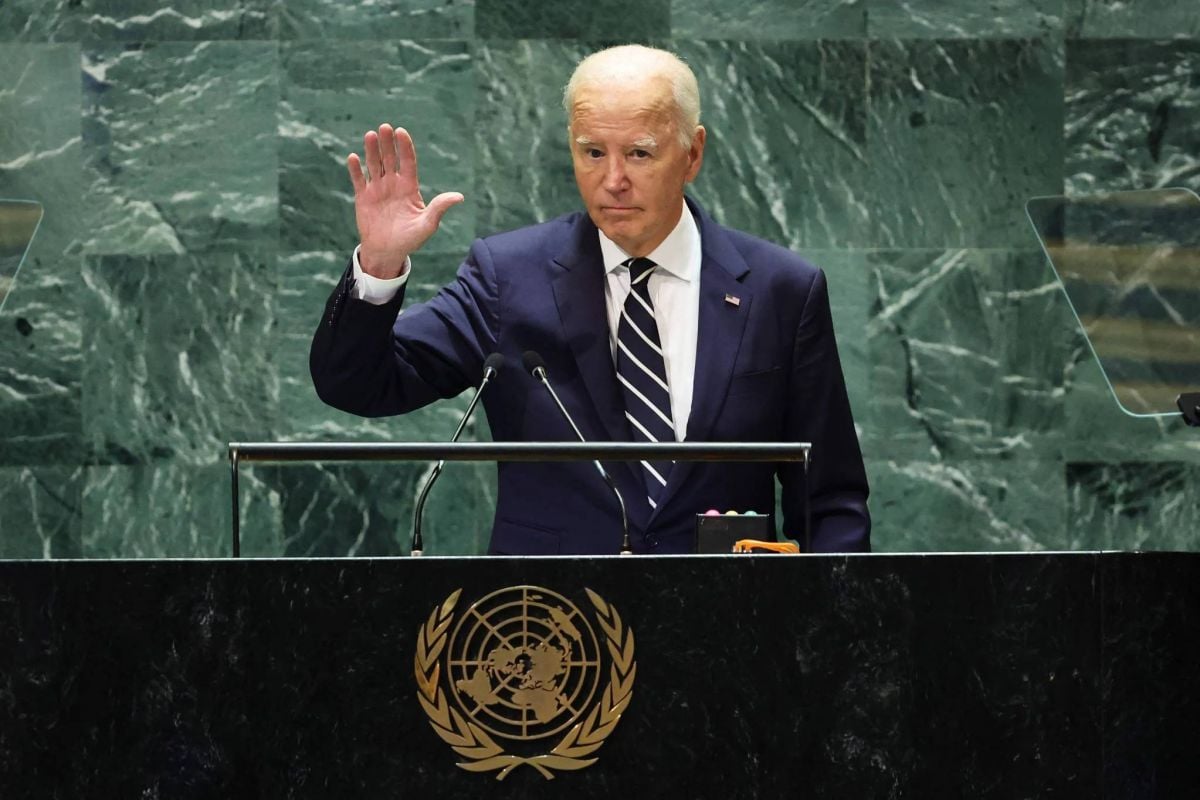
U.S. President Joe Biden salutes the U.N. General Assembly for his last speech at this rostrum as U.S. head of state, on Sept. 24, 2024. (Credit: Michael M. Santiago/Getty Images/AFP)






Where is the usual diplomatic activity? Compared to the past escalations — when in April, Iran was preparing its retaliation for the Israeli strike on Tehran’s consular annex in Damascus, or at the end of July, after the assassination of Hamas’ political bureau chief Ismail Haniyeh in the Iranian capital — the current Israeli escalation against Hezbollah in Lebanon seems to lack significant mobilization of diplomatic efforts.
In the past, when Teheran and its “axis of resistance” were urged to contain their retaliation, there were countless calls for restraint and visits by Western diplomats.
Since last week, only the French president’s special envoy, Jean-Yves Le Drian, arrived in Beirut on Monday for a previously planned trip to discuss the Lebanese presidential elections. Although the 79th session of the U.N. General Assembly is being held in New York in the presence of regional leaders, Israeli Prime Minister Benjamin Netanyahu has, once again, delayed his possible trip to New York until Thursday evening.
No U.S. officials have announced plans to visit the region to ease tensions. Yet, the unfolding sequence of events could plunge the Middle East into an all-out conflict that all parties have sought to avoid since the outbreak of the Gaza war — almost a year ago.
All-out war ‘in nobody’s interest’
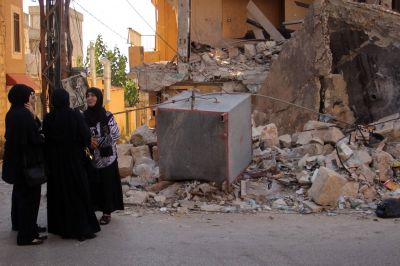
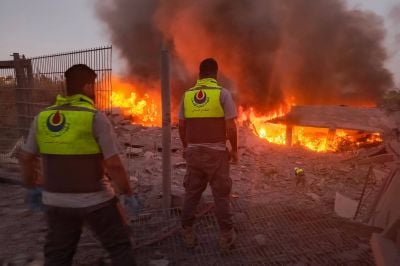
“It is striking, indeed, just how silent Washington has been as this long-feared scenario explodes,” posted American analyst Alex Simon on X, on Sept. 24 — the day after the deadliest day in Lebanon since the Civil War, with a death toll exceeding 500 due to Israeli strikes.
This tragic day, in which the country recorded almost half the casualties of the summer 2006 war, had also been preceded by the detonation of pagers and walkie-talkies on Sept. 17 and 18 — which Hezbollah’s secretary general Hassan Nasrallah described as “massacre” — and the assassination of a dozen Hezbollah cadres and senior commanders in Beirut’s southern suburb, including Ibrahim Aqil and Ahmad Mahmoud Wehbe.
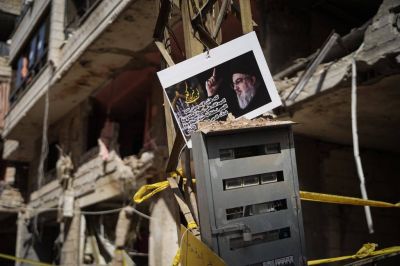
If Hezbollah’s responses are unlikely to trigger a regional war for the time being, how long will the party continue to endure these blows that could bring it to its knees? How much longer can Iran afford to wait before getting directly involved?
Addressing the U.N. on Sept. 24, U.S. President Joe Biden said that “full-scale war is in nobody’s interest” and that a “diplomatic solution is still possible.” Biden reiterated his commitment to a Gaza cease-fire agreement, even though talks have stalled.
“It’s looking like now the administration is not willing to push for a really vigorously for a ceasefire deal and to push for an end to this conflict,” said Delaney Simon, researcher at the International Crisis Group.
She, nevertheless, considered such a deal in the Palestinian enclave as “the simplest and clearest path towards a cessation of hostilities between Hezbollah and Israel.” Nasrallah had reiterated in his Sept. 19 speech that he would not abandon his Gaza “support front,” which started on Oct. 8 and has since led to almost daily exchanges of fire with the Israeli army.
Support or pressure on Israel ahead of the U.S. presidential election?
According to high-ranking U.S. officials, cited by the Israeli Haaretz daily, Biden’s administration supports its ally’s airstrikes against Hezbollah, which Washington has designated as a terrorist organization, although it remains unconvinced that the operation will achieve its objectives — primarily the cessation of fighting along the northern border and the return of displaced persons.
“The U.S. support for Israeli policies is unprecedented,” said Joe Macaron, a researcher at the Wilson Center. “The U.S. and Israel differ on how to achieve them, but they share the same goals.”
This may partly explain why, despite this volatile context, Netanyahu’s government does not seem to be under intense pressure from its U.S. ally.
“It’s very difficult for the Biden administration to take a tough line on Israel in the lead up to the elections,” added Simon. “But, I have to say it will be much worse for the Democrats politically if there's an all-out war in the Middle East. All of this can spiral out of control.”
In anticipation of a worst-case scenario that could benefit Republican candidate Donald Trump in the Nov. 5 ballot, the U.S. administration has reportedly asked its Israeli ally to facilitate the potential evacuation of its nationals from Lebanon, according to Axios. This comes as Republicans have revisited the chaotic U.S. withdrawal from Afghanistan in August 2021 during the election campaign. Similarly, dozens of additional soldiers have been deployed to the region to bolster the U.S. presence there, the Pentagon announced on Sept. 23.
American red lines to avoid a regional war
Rejecting the Israeli notion that “escalation can lead to de-escalation,” Washington is, nevertheless, trying to avoid a regional conflagration and is already urging Israel not to launch a ground invasion of southern Lebanon.
So far, the Americans believe that Netanyahu, the Israeli defense minister and other security officials have not taken such a decision and have been warned of the possible consequences. Some observers also pointed to other potential American red lines, such as civilian infrastructure or the Lebanese Army.
“So far, it’s been focusing on Hezbollah-controlled areas. So I think the U.S. indirectly has put some limitation on this Israeli campaign on where it should target or not,” said Macaron.
“It seems to me that red lines aren't going to be credible unless the threat is delivered upon,” said Simon, recalling the invasion of Rafah in early May, which Biden had briefly set up as a line not to be crossed.
Nevertheless, Washington cannot overlook the risk of being drawn into a regional war despite its will. On Monday, an American official said on condition of anonymity that the United States had “concrete ideas” to calm the situation and intends to present them this week to its “allies and partners” on the sidelines of the U.N. General Assembly in New York.
“Obviously, Israel is increasing pressure on Hezbollah to negotiate,” Macaron said. “The U.S., I think at some point, will relaunch its mediation to basically see if the parties now are ready for an acceptable compromise.”
This article was originally published in French in L'Orient-Le Jour.
