





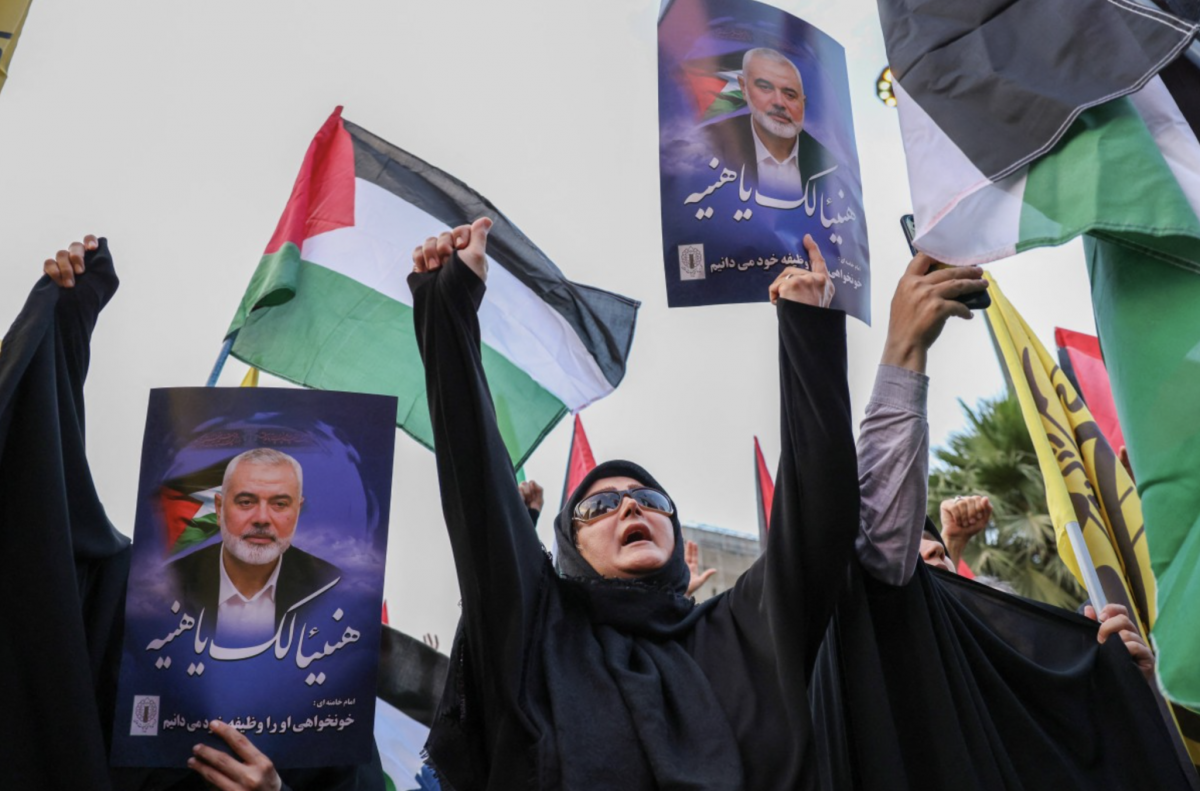
Funeral of Ismail Haniyeh in Tehran on July 31, 2024. (Credit: AFP)






To avenge the assassination of Hamas leader Ismail Haniyeh in the heart of Tehran, Iran might use a similar approach. According to the Kuwaiti newspaper al-Jarida, Tehran has prepared a list of 128 potential assassination targets, both in Israel and abroad.
Citing a source within the Quds Force, the elite unit of Iran's Revolutionary Guards, the media states that this blacklist includes officials at various levels — political, security, and military. The source also mentions that Iranian intelligence is monitoring these targets and is waiting for a political decision to eliminate them. The source added that when Quds Force commander Ismail Qaani presented the list to Iran's Supreme Leader Ali Khamenei, Khamenei suggested that the assassination of Israeli Prime Minister Benjamin Netanyahu would improve the situation, citing Netanyahu’s refusal to end the Gaza war and his risk of regional war to maintain power. However, the article does not specify if Netanyahu’s name is on the list. It does include the most extreme members of his government, such as Itamar Ben-Gvir and Bezalel Smotrich, as well as officials from the Mossad and the Israeli military, including drone officers and military intelligence bases used for assassination operations. The source also noted that the Iranian Ministry of Security has identified over 50 security figures working for Israel and intelligence centers affiliated with Tel Aviv outside Israel as potential targets.
According to the source, the drones monitoring these individuals are of the “Shahab” type, a sophisticated Iranian model that has not been officially disclosed. Its unique feature, according to the source, is that radars can only detect these drones — capable of carrying two 20-kilogram missiles, which can destroy armored vehicles or penetrate concrete — after they have fired. The source also noted that Qa'ani informed Khamenei that assassinating these targets requires time and patience and that they need to wait for a small mistake on the part of these targets to act.
Following the assassination of Ismail Haniyeh, there were reports of a disagreement between Iranian President Massoud Pezeshkian and the Revolutionary Guards over the response to this Israeli provocation. The newly elected Pezeshkian, running on a platform of openness and moderation, preferred a security-based response, such as the assassination of an Israeli official, to avoid regional escalation. However, the military wing of the Iranian regime favored a stronger retaliation, seeing it as the only way to preserve the prestige of the Islamic Republic.
In the same vein, Israel Hayom reported over the weekend that a reconnaissance drone belonging to Hezbollah—also promising to avenge the assassination of its military commander Fouad Shukur in the southern suburbs of Beirut — filmed a private residence of Benjamin Netanyahu. According to this media, picked up by al-Ahed, one of Hezbollah’s media outlets, Israeli “defense systems” issued an alert on Sunday about the presence of a drone near a villa belonging to the Israeli PM, located in Caesarea, 37 kilometers south of Haifa on the Mediterranean coast. The Israeli army added that “radars and defense systems sometimes produce false alerts due to technical malfunctions.”

 Evening recap: Netanyahu announces West Bank offensive; 7 killed in Jordan church shooting; tents burned in south Lebanon
 US strike on Iran this weekend? ‘Absolutely,’ says Barrack; ‘I have no idea,’ says Trump