



The mosaic of boxers Alexandre and Helix. (Credit: Creative Commons)






The first Olympic Games originated in the Greek city of Olympia in 776 BCE. These games, along with other major sporting and artistic competitions, continued and proliferated until they were interrupted at the end of the forth century, likely under Emperor Theodosius, who was responsible for banning pagan cults. These contests, or agones, took place throughout the Mediterranean world, with the Near East holding a significant place, starting from the Hellenistic period. Indeed, it was after Alexander's conquest of Sour in 332 BCE that the first games were introduced into the Phoenician sphere and spread to neighboring cities, lasting until the end of the Roman period. These competitions had a highly political aspect, helping to spread Greek and then Roman ways of life. They were also closely tied to local deities, being dedicated to the patron gods of each city.
The Herakleia of Sour
The games of Sour, established by Alexander the Great, were perpetuated under the name Herakleia, in honor of the city's god, Heracles. In the Roman period, they were known as Actia Herakleia, likely to celebrate Augustus's victory over Mark Antony at Actium, and also as Herakleia Kommodeia, referring to Emperor Commodus. The games were organized in Sour under the presidency of Flavios Septimios Heraclitos Nepos. These famous games were held every four years, in a gymnasium mentioned in a 2nd-century BCE inscription, which likely corresponds to the arena identified by layers of sand found by archaeologists in the center of the "stadium monument" at the maritime archaeological site.
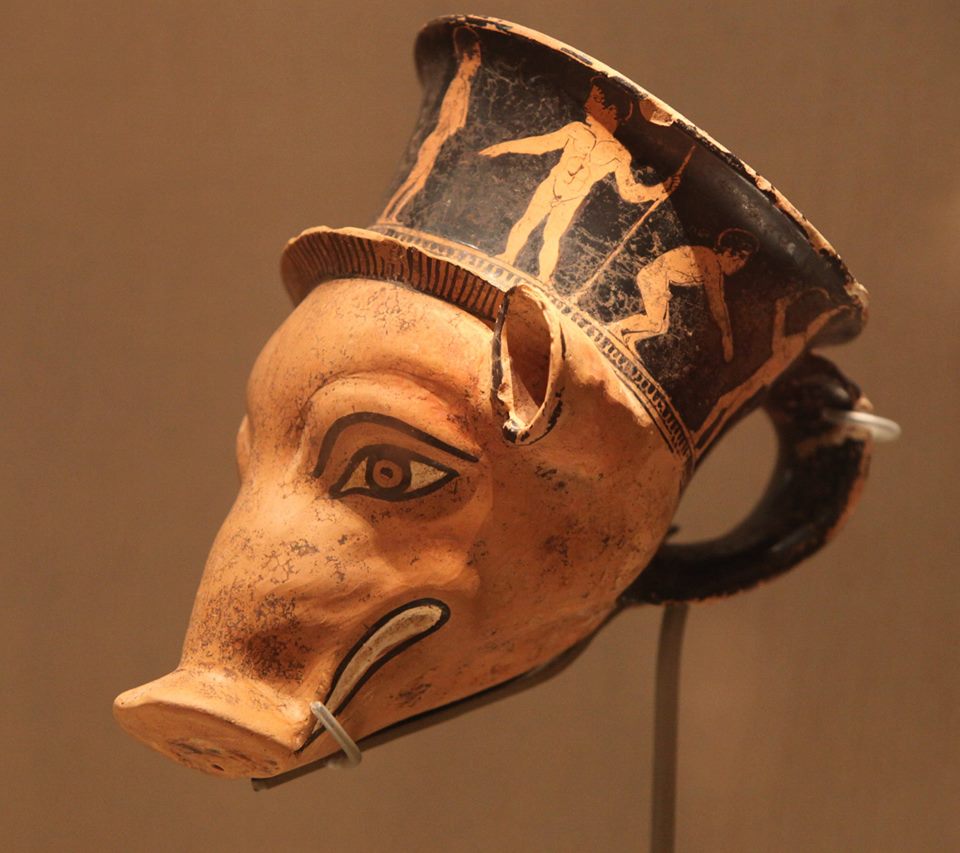
Echmoun, Apollo, and Purple Honored in Saida
Three types of contests were held in Saida: the first was dedicated to the god Apollo, as indicated by a 3rd-century BCE inscription; the second was organized in honor of Asclepius, identified with the god Echmoun, as evidenced by a votive urn inscription dated to 44-43 BCE, discovered in the Astarte chapel at the Echmoun site at the entrance to Saida; the third contest is known from Roman coins issued in the third century by Emperor Elagabalus, described as periporphyros or "clad in purple," a term likely referring to the purple robe awarded to winners. This is not surprising given Saida's reputation for producing this dye from its famous murex shells.
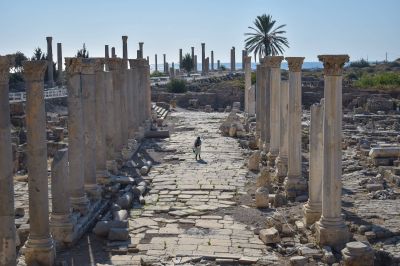
Baalbek, Beirut and Tripoli
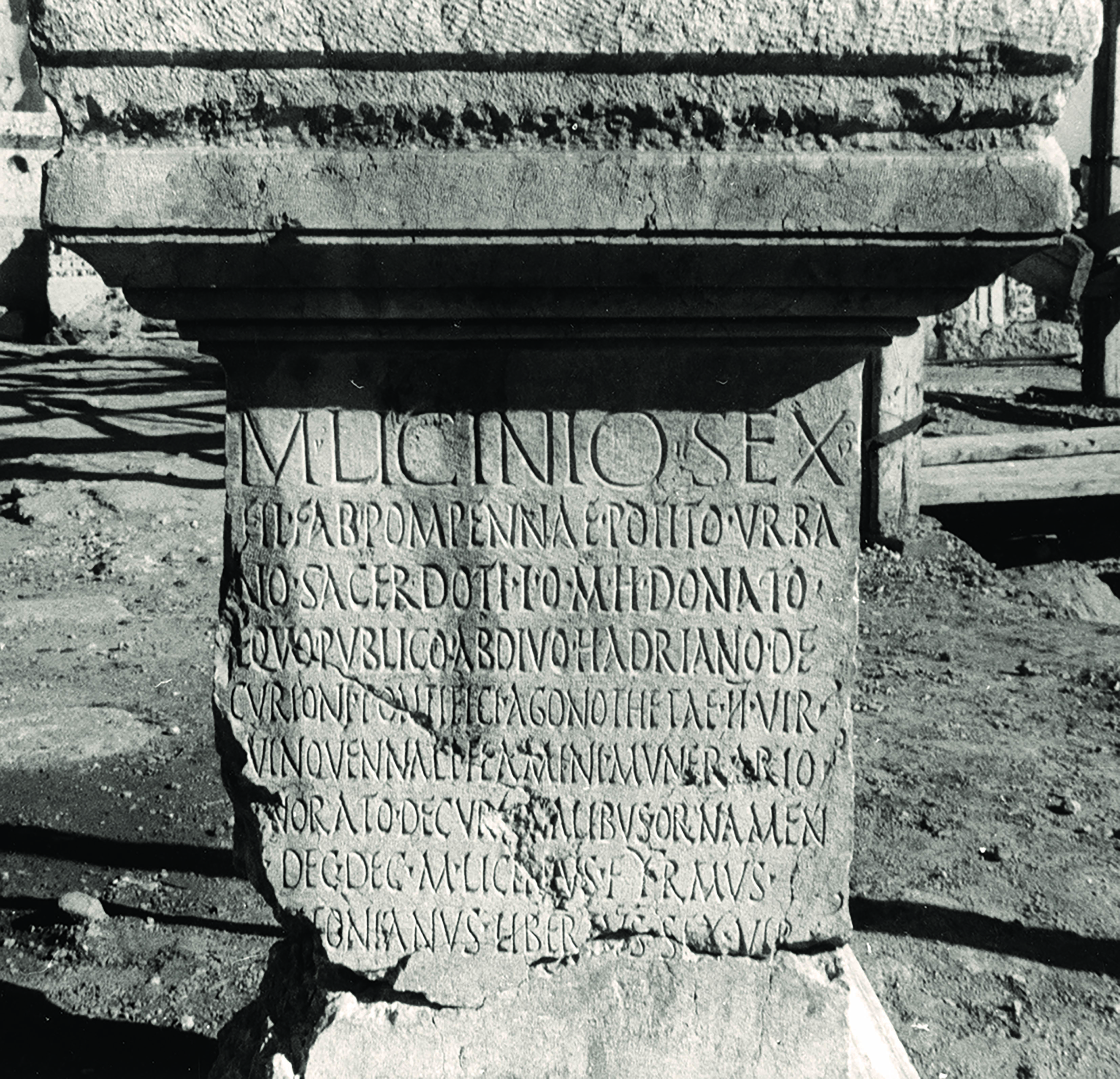
An inscription from the second century found in the courtyard of the Temple of Jupiter in Baalbek reveals that a priest of Jupiter named Marcus Licinius Pompenna sponsored a gladiatorial show. In the following century, coins minted by Emperor Gallien and his son Valerian II in Heliopolis mention "sacred, ecumenical, Capitoline and Iselastic contests" in honor of the local triad of Jupiter, Mercury and Venus. The cities of Beirut and Tripoli were also prominent, appearing on the lists of some champions recording their victories. In Beirut, the games likely took place in the theater or the recently unearthed hippodrome at Wadi Abou Jmil.
Sporting Events
Traditional Olympic Games included the pentathlon, which comprised: running, long jump with weights, discus throw, javelin throw and wrestling. Other sports events also featured, such as boxing, pankration, and horse racing. The armed race usually concluded the games.
In Phoenicia, some of the practiced disciplines are documented. In Sour, the pentathlon, running, armed racing, wrestling, and pankration were observed; in Sidon, wrestling, boxing and pankration; and Beirut and Tripoli, pankration as well. Chariot races and gladiator shows, attracting large crowds, were also held in the hippodromes of Sour, Beirut and Baalbek.
These games, held on our lands, featured not only local athletes but also foreigners. The foot races and armed races organized by Alexander in Sour were won by a Macedonian named Antigonus. A certain Marcus Claudius Heracleides won at the Herakleia in Sour and the Periporphyros in Saida. A famous pankratiast, Menander of Aphrodisias, was a champion in Beirut.
Sidonian Champions at the Olympic Games
Among the winners at the ancient Olympic Games, athletes from Saida were prominent. In the second century BCE, several competitors distinguished themselves: Diotimos, winner of the chariot race at the prestigious Nemean Games in the Peloponnese, as attested by an honorary inscription found in Sad; Poseidonios, winner of a race at the Panathenian Games; Dionysios, winner of wrestling at the Thesean Games; Sillis, winner of wrestling at the Apollo Games in Delos; and Asclepiades, winner of the stadion at the 189th Olympic Games. In the Roman period, according to Eusebius of Caesarea, four other Sidonians succeeded in the stadion event at the Olympics: Asclepiades, Callicles, Callistus, and Eustolus. Two athletes from Beirut, Dionysios and Asklepiodoros, were named winners of the stadion at Kos in 169 BCE. Finally, a Phoenician, Aurelius Helix, whose exact origin is unknown, was renowned as the best boxer and pankratiast of his time in the second and third centuries.

