





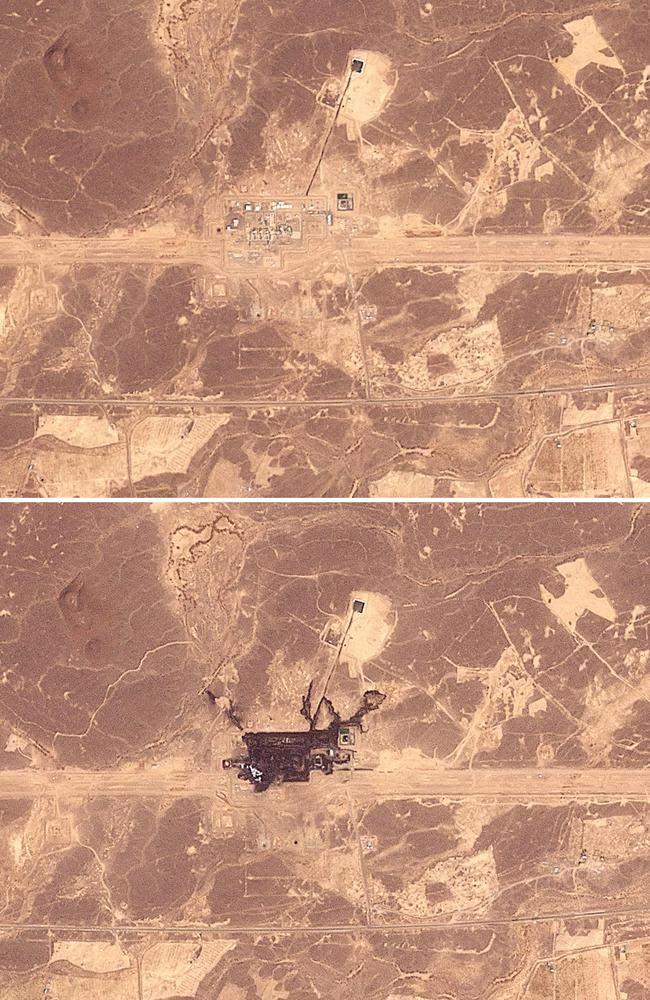
These satellite images, provided by Planet Labs PBC and taken on September 11, 2026, show an overview of an infrastructure site southeast of Medina, along the general route of Saudi Arabia's East-West Pipeline (Petroline), on September 6, 2026 (top), and the same site on September 11, 2026, after it was damaged by fire. (Credit: Planet Labs/AFP)






Saudi Arabia temporarily shut down its East-West oil pipeline Friday after attacks attributed to drones launched from Iraq, raising concerns over the kingdom’s ability to export crude while the Strait of Hormuz remains blocked, AFP reported.
The 7 million-barrel-per-day pipeline is a key alternative export route, carrying oil from Abqaiq near the Gulf to the Red Sea port of Yanbu on the kingdom’s western coast.
“The pipeline was shut as a precaution,” a Saudi Energy Ministry official told the state-run Saudi Press Agency, adding that the attacks caused several injuries.
Satellite images released by Eumetsat showed thick black smoke rising over the strategic pipeline Thursday morning.
Saudi Arabia’s Foreign Ministry said the East-West pipeline had been targeted by several drones in the Riyadh and Medina regions, causing injuries and damage that was being repaired.
Iraqi Prime Minister Ali al-Zaidi’s office confirmed that the attacks originated from Iraqi territory and announced on X that the commander responsible for the southern province of Maysan had been dismissed.
The Iraqi government condemned the attacks, saying they targeted “the brotherly Kingdom of Saudi Arabia,” and reiterated its rejection of any aggression threatening the kingdom’s security and stability.
Riyadh said it had decided, “at the request of the Iraqi prime minister,” not to retaliate for now and to support Baghdad’s efforts to prevent attacks launched from Iraqi territory against Saudi Arabia and neighboring countries.
Saudi Arabia had previously accused Iran-backed Iraqi militias of targeting its oil infrastructure.
Lebanon condemns attack
Saudi Arabia, along with several other U.S.-allied Gulf states, has faced repeated attacks by Iran in recent months in retaliation for U.S. strikes. The kingdom also leads a military coalition supporting Yemen’s internationally recognized government against the Iran-backed Houthis, who launched a major attack on Saudi territory this week.
Bahrain, Jordan and Qatar condemned the attacks on the Saudi pipeline, while the Gulf Cooperation Council described them as “a dangerous escalation and an unacceptable threat to the security of the kingdom.”
Lebanon also condemned the attack in statements by the Foreign Ministry and the presidency.
President Joseph Aoun described it as a “criminal aggression” and said it was “a blatant attack on the resources of the brotherly kingdom and its national security, as well as a desperate attempt to destabilize the region and threaten the interests of its peoples,” according to the Baabda Palace.
Aoun called on the international community “to assume its responsibilities” and said Lebanon stood “alongside Saudi Arabia,” renewing his “full and unwavering solidarity” with Crown Prince and de facto Saudi ruler Mohammed bin Salman.
Earlier, the Lebanese Foreign Ministry, headed by Joe Raggi of the Lebanese Forces, appeared to allude to the Lebanese state’s efforts to disarm Hezbollah, saying that “combating military activities carried out by non-state actors, particularly in Iraq, Lebanon and Yemen, is a common and ongoing struggle” aimed at enabling those states to extend their authority and sovereignty over their entire territories using their own forces.
Key oil route
Since the start of the war between the United States and Israel and Iran, Saudi Arabia has increased the amount of crude transported through the East-West pipeline, using it to bypass the closure of the Strait of Hormuz.
The disruption has added to pressure on global oil markets. Brent crude prices crossed the symbolic $100-per-barrel mark again Wednesday, with the international benchmark ending the week at around $104.
The Houthis announced a maritime blockade of Saudi Arabia in July, targeting Saudi oil tankers in the Red Sea in response to Riyadh’s support for Yemen’s government.
The Iran-backed group also seized control Friday of Yemen’s Red Sea coast and islands around the Bab al-Mandeb Strait, strengthening its hold over the strategic passage linking Europe and Asia.
Houthi authorities said Friday that navigation through Bab al-Mandeb was “safe” for everyone except Saudi Arabia.
Saudi oil production also fell slightly in August to 6.24 million barrels per day from 8.1 million barrels per day in July, according to a monthly report released Thursday by the Organization of the Petroleum Exporting Countries.

 Evening recap: Netanyahu announces West Bank offensive; 7 killed in Jordan church shooting; tents burned in south Lebanon
 US strike on Iran this weekend? ‘Absolutely,’ says Barrack; ‘I have no idea,’ says Trump