






This handout image release by the Iran-backed Houthi forces on Sept. 7, 2026, purportedly show a ballistic missile strike on trucks carrying military equipment from Saudi Arabia to the Al-Wadiah military camp in Yemen’s Hadhramaut province. (Credit: Ansarullah Media Center/AFP)






After claiming responsibility for attacks on economic and military sites in Saudi Arabia that wounded 73 civilians, the Houthi rebels threatened to continue their operations until “the end of the Saudi aggression” and the lifting of the blockade imposed on Yemen. The Iran-backed rebels described the attacks as retaliation for strikes they attributed to Riyadh in recent days.
A series of Houthi attacks wounded 73 civilians in southwestern Saudi Arabia, the Riyadh-led coalition allied with the Yemeni government said Tuesday, vowing to retaliate against the rebel group. The strikes targeted “civilian and economic sites” in the cities of Abha, Khamis Mushait, Jazan and Najran, coalition spokesman Gen. Turki al-Maliki wrote on X, pledging to take “all necessary measures and actions to respond to the sources of the threat and neutralize the danger they represent.”
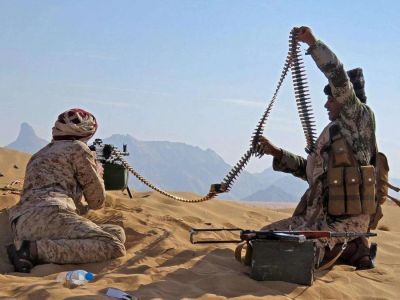
The Houthis said they had targeted economic and military sites in Saudi Arabia using dozens of missiles and drones, in response to strikes they attributed to Saudi forces in Yemen. “The Yemeni armed forces carried out a large-scale and far-reaching military operation” targeting facilities belonging to oil giant Aramco as well as King Khalid Air Base, “using dozens of ballistic missiles and drones,” the rebels’ military spokesman, Yahya Saree, said. He said the operation was in retaliation for “121 strikes” carried out by Riyadh in Yemen over the past three days.
In a separate statement, the Houthis held Riyadh responsible for the escalation and warned that “any attack” on Yemen would trigger a “decisive response,” threatening to carry out “even more powerful and widespread” strikes against Saudi Arabia. The Houthis also said they would continue their operations “deep inside Saudi territory,” particularly against troop concentrations, until “the end of the aggression” and the lifting of the blockade imposed on Yemen.
Riyadh asserts its 'legitimate right' to take all necessary measures to defend its sovereignty
Saudi Arabia swiftly condemned the Houthi attacks, saying it would take all necessary measures to defend its sovereignty. “The Kingdom reaffirms its legitimate right to take all necessary measures to defend its sovereignty,” the Foreign Ministry said in a statement, stressing “the need to immediately end all forms of escalation carried out by this militia, as well as its continued threats to maritime navigation.”
The Saudi Energy Ministry, meanwhile, said attacks on energy sites had caused some operations to be temporarily suspended.
Earlier, Houthi-affiliated outlet Ansarollah reported that the rebels had used drones and missiles to strike Abha International Airport, King Khalid Air Base and Aramco facilities in Abha and Jazan. The Houthis, who have launched a deadly offensive in Yemen in recent days, accused Saudi Arabia on Monday of bombing several areas of the country, as the war intensifies. Strikes reportedly hit al-Hazm prison in Jawf province, killing 11 people, a provincial official told AFP.
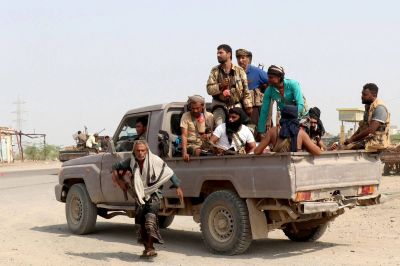
In the impoverished country, which was plunged back into war in July amid a wider regional conflagration, the rebels launched a new offensive last week aimed in particular at advancing toward areas bordering the strategic Bab al-Mandab Strait.
The attacks were condemned across the region, including by Lebanese President Joseph Aoun. He denounced them as “terrorist attacks,” saying he was following with “deep concern a dangerous escalation.” He also condemned a “flagrant violation” of Saudi sovereignty and affirmed Lebanon’s “full solidarity” with the Saudi kingdom.
Lebanese Prime Minister Nawaf Salam also condemned the strikes, saying that “targeting civilians as well as economic and vital infrastructure not only threatens the security and stability of the Kingdom, but could also destabilize the entire region.”
More than 300 killed since Thursday
The clashes with pro-government forces in southwestern Yemen have killed more than 300 people since Thursday and displaced numerous families, according to sources on both sides interviewed by AFP.
Bab al-Mandab, which links Asia to Europe via the Red Sea and the Suez Canal, has gained importance since the outbreak of the war in the Middle East and Iran’s blockade of the Strait of Hormuz on the other side of the Arabian Peninsula.
Yemen is the latest country to be drawn into the regional conflict triggered by the U.S.-Israeli offensive against Iran in late February.
The cease-fire in place since 2022 collapsed in July, with the Houthis challenging Riyadh’s dominance over Yemeni airspace. Since then, the rebels, backed by the Islamic Republic, have stepped up attacks on military sites and government-controlled areas.
They have also announced a maritime blockade of Saudi Arabia, the world’s largest crude oil exporter, and targeted its oil tankers and infrastructure on its territory, including a refinery.
The war in Yemen, which began in 2014, has killed hundreds of thousands of people and plunged the poorest country on the Arabian Peninsula into a severe humanitarian crisis.
