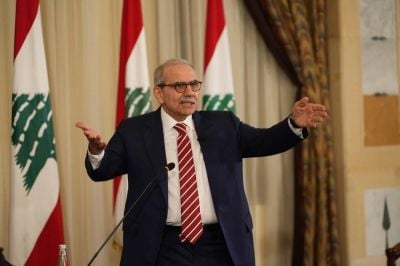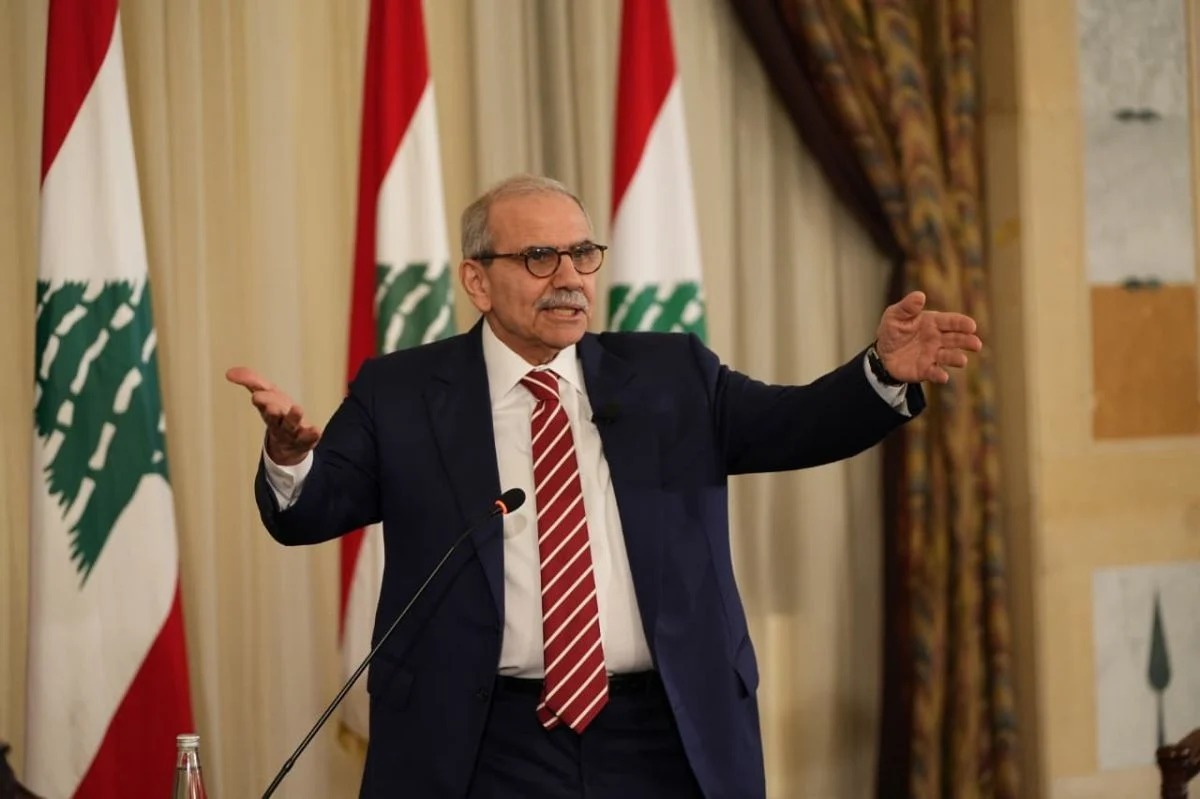
Prime Minister Nawaf Salam at the Grand Serail, during an interview with L'Orient-Le Jour, on Sept. 14, 2025. (Credit: Mohammad Yassin/L'Orient-Le Jour)






BEIRUT — Prime Minister Nawaf Salam issued a clarification Sunday evening after criticism earlier the same day from Lebanese Forces (LF) leader Samir Geagea, who had accused President Joseph Aoun and the government head of having "sidelined" Foreign Minister Joe Rajji, an LF ally. Salam rejected the idea the foreign minister had been marginalized, assuring he was in "constant coordination and cooperation" with him and reminding that Lebanon's foreign policy is determined by the Cabinet and cannot be conducted "by one person or ministry independently of the government."
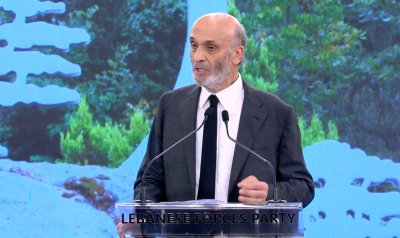
“Forget his name and the individual himself. Joe Rajji represents an institution, the Foreign Ministry,” the Christian leader had emphasized in a speech delivered during the annual Mass for his party’s “martyrs,” insisting his protege was paying the price for his stances. “His only fault is that he has adhered to the true policy of the state, where others have chosen not to act,” he said. The LF chief also referred to the Bustros Palace decision to declare Iran’s ambassador Mohammad Reza Shibani persona non grata, a measure that reportedly caused tensions with President Aoun, while General Security had renewed the diplomat’s residency permit in August. In mid-August, Geagea had already expressed “astonishment” at Rajji’s absence during Aoun's visits to Washington and to Ankara. This notable omission sparked much commentary, coming amid reports that the president wanted to retain sole control over negotiations between Lebanon and Israel.
In a statement published on X, Salam recalled that, according to the Constitution, the Cabinet “defines the government’s general policy in all domains, including foreign policy,” while each minister implements this policy within his mandate. “Therefore, the foreign policy of the Lebanese state is not that of a single person or ministry independently of the government,” he stressed.
Salam specified in his post that the makeup of official delegations and the participation of ministers in overseas trips depended “on the nature of each visit, its agenda, and its requirements.” He assured that he is in "constant coordination and cooperation" with Rajji regarding all matters of foreign policy and announced that the latter would accompany him to the upcoming session of the United Nations General Assembly, followed by a meeting with the U.S. Secretary of State in Washington. “There is therefore no question of reducing his role or marginalizing him,” he declared. His comments came as the Lebanese foreign minister traveled Monday morning to Cairo to participate in the 166th session of the Arab League Council, held at the level of foreign ministers. Rajji is set to deliver Lebanon’s opening speech and hold a series of meetings on the sidelines of the gathering.
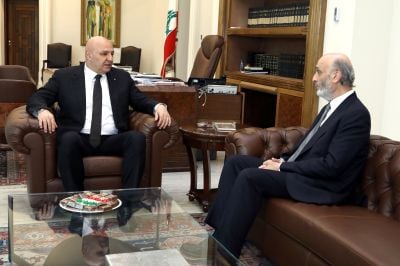
Salam also responded to Geagea’s criticism concerning the slow pace of reforms, especially financial ones. He recalled that his government had prepared three bills relating to banking secrecy, restructuring the banking sector, and the “financial gap,” meaning the law to regulate the distribution of billions of dollars in financial losses and the recovery of deposits. The first two were adopted, while the third has been “in the hands of Parliament for more than nine months,” he pointed out.
The prime minister denied reports that the government was considering withdrawing this bill, stating to the contrary that he hoped it would be reviewed and adopted "as soon as possible.” “The Lebanese, and particularly depositors, can justifiably no longer bear any further delay,” he added, warning that any procrastination would jeopardize Lebanon’s credibility with the International Monetary Fund (IMF). Salam also assured that his government is in "almost daily" contact with the IMF to accelerate the conclusion of an agreement. “There is, on our side, no procrastination, no dithering, no delay,” he concluded.