





Search
Search
Voices from the Middle East

Voices from the Middle East

How the lack of sidewalks further isolates women in southern Iraqi cities


How the lack of sidewalks further isolates women in southern Iraqi cities

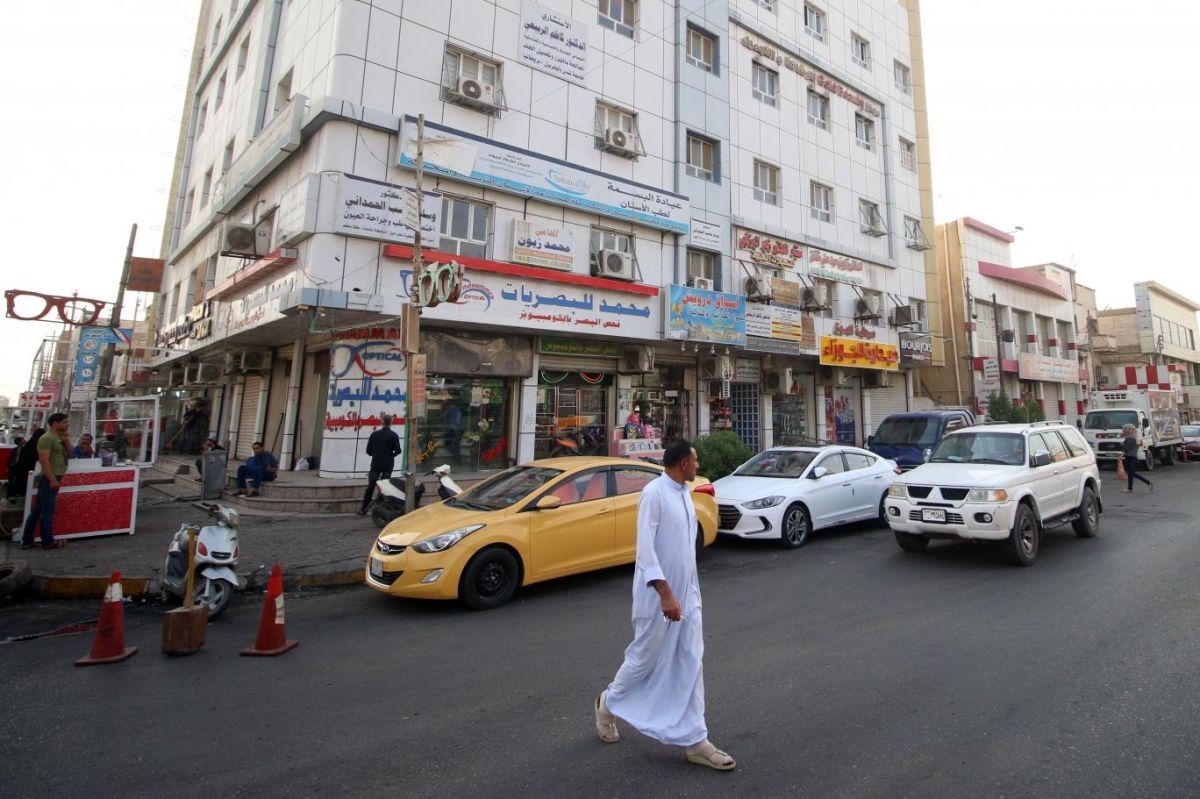
A man crosses a busy commercial street in Basra, Iraq's main southern oil city, in September 2018. (Credit: Haidar Mohammed Ali/AFP)


I’ve visited several southern cities, but I rarely felt free to actually walk around them. Every time I get ready to step outside, I feel an instant weight on my chest. Going out feels like navigating a hostile zone, I just want to get where I’m going safely, quietly, and without drawing attention. The streets feel completely dominated by men, some areas force me to hurry, others put me on high alert, and every step feels tense. In our cities, simply leaving the house becomes a battle against the environment itself.

It is clear that as young women, public spaces are never neutral for us, we are constantly watched, judged, and measured against everyone’s expectations, that’s why, leaving the house has become strictly practical for me, I only go out when there is an urgent task, moving mechanically from point A to point B. I live in an environment that doesn't welcome me, see me, or acknowledge my right to exist.

Before heading out, I often hesitate behind the door, breathing heavily as I peek through the curtain or the narrow gap of the iron gate. Outside, I see dusty roads that blow choking dust into the air during summer and turn into muddy swamps in winter, surrounded by plain concrete with no sidewalks or clear boundaries. In that heavy moment, I realize I have to set aside my personal identity and my simple desire to walk freely or clear my head. Instead, every harsh detail of the city's chaotic design reminds me that my presence here is nothing more than an intrusion, just an inconvenience that should end as quickly as possible.

A built environment of exclusion

The total lack of basic infrastructure in these southern cities isn't just a minor service failure or a temporary municipal issue that can be fixed with a quick layer of asphalt. It is a systematic exclusion that pushes women out of public spaces, making our presence feel like an exception rather than the norm. I don't even have the luxury of complaining about bad, uneven sidewalks like people do in busy capitals like Baghdad, I am dealing with the total absence of sidewalks altogether.

Losing the sidewalk isn't just a technical problem, it is strict isolation. A sidewalk is a physical buffer that protects a woman’s body and a symbolic proof that she has a right to her city. When a city lacks sidewalks, well-lit paths, and quiet neighborhood parks where a woman can sit with a book or meet a friend, it uses its dreary, silent design to slowly shut its doors on us.

The city doesn't kick me out with physical force, but through pure neglect. It makes going out just to clear my head completely exhausting, because the streets are built exclusively for cars and men. This one-sided design turns walking into a task that requires proof and a deadline, a woman can't just wander or look for inspiration here. If I even pause for a second, I instantly feel like I have to prove I have a good reason to be there, which creates a deep feeling of alienation, making me feel like a stranger in the very city where I was born and raised, without a single inch of street to call my own.

Trapped between four walls and malls

Faced with a city that completely shuts us out, our choices shrink, and home becomes the only safe refuge. Even when we do have options, they aren't free public spaces. They are massive, enclosed commercial malls that only welcome us as consumers, draining women financially and mentally just to give us a temporary reason to be outside.

Staying home or going to malls isn't a genuine choice to isolate ourselves, it's because the city offers no free, open space where we can just breathe on my own terms. The small room behind thick curtains becomes the only place where I truly have the right to exist without conditions, while the vast outside world feels like a cold, gray concrete wall, something I can only observe from the safety of my window.

Cities that don't give young women a sidewalk to walk on are cities that erase their identity and strip meaning from their lives. We aren't asking for grand, luxury projects, we don't need isolated private spaces, but open paths to walk on, streets that don't force us to brace ourselves before taking a single step. We are asking for basic urban citizenship and human equality: paved sidewalks, well lit streets that cut through the dark, and safe, open spaces that welcome us. We want a city that doesn't treat us as an intrusion waiting anxiously to run back behind closed doors.


I’ve visited several southern cities, but I rarely felt free to actually walk around them. Every time I get ready to step outside, I feel an instant weight on my chest. Going out feels like navigating a hostile zone, I just want to get where I’m going safely, quietly, and without drawing attention. The streets feel completely dominated by men, some areas force me to hurry, others put me on high alert, and every step feels tense. In our cities, simply leaving the house becomes a battle against the environment itself.It is clear that as young women, public spaces are never neutral for us, we are constantly watched, judged, and measured against everyone’s expectations, that’s why, leaving the house has become strictly practical for me, I only go out when there is an urgent task, moving mechanically from point A to point B. I live in...



