







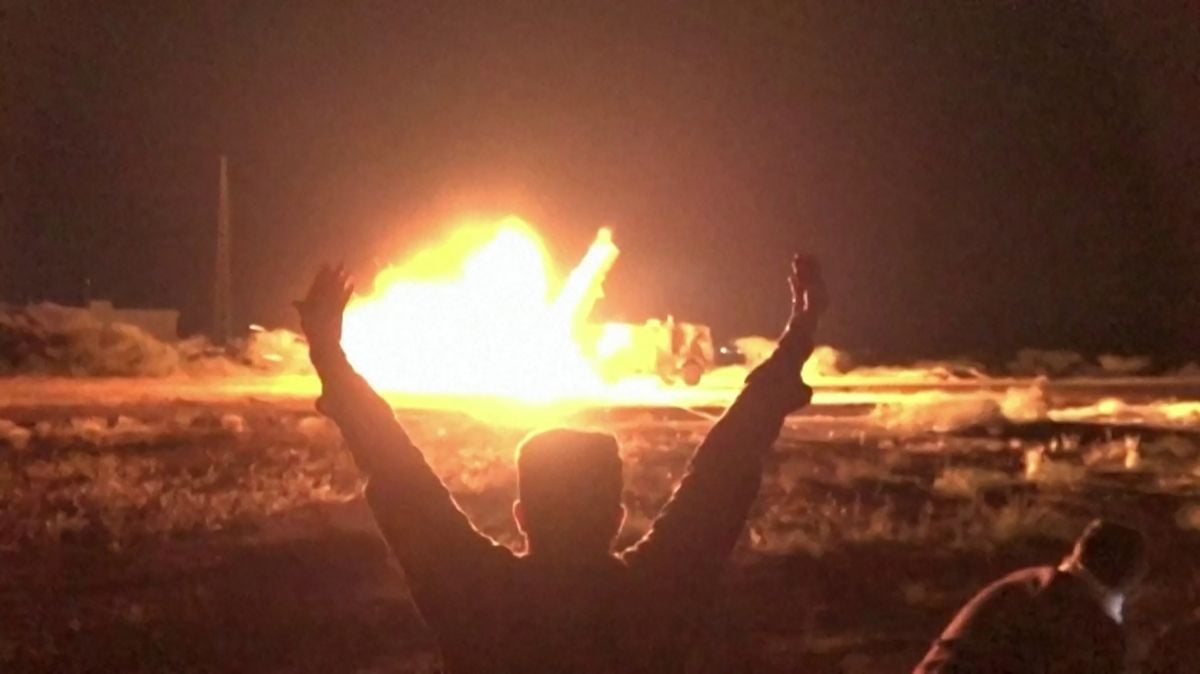
This screenshot, taken on July 15, 2026, from a video released the previous day by Sepah News, the media outlet of IRGC, purports to show a missile being launched from an undisclosed location toward U.S. targets in Bahrain and Kuwait. (Credit: Sepahnews/AFP)






Iran said it launched fresh strikes on U.S. facilities in the Middle East on Friday, including the first direct attack in Syria, after a sixth straight night of U.S. strikes on Iranian military facilities.
A truce reached last month has descended into daily attacks and counterattacks, largely halted shipping traffic in the vital Strait of Hormuz and sparked fresh investor concerns about the repercussions for the global economy of the war the U.S. and Israel launched in February.
The U.S. military said it completed another night of strikes on Iran "to further degrade Iranian military capabilities", including on Qeshm Island and near Bandar Abbas, home to Iran's largest port, as well as key naval and Revolutionary Guards facilities.
"U.S. forces, including fighter jets, aerial drones, and warships, launched precision munitions that hit dozens of Iranian military targets such as coastal surveillance and air defense sites, military logistics infrastructure, and maritime capabilities," the U.S. Central Command said in a statement.
Shipping halted in Strait of Hormuz
The escalation in attacks has once again largely halted traffic through the Strait of Hormuz, the world's most important shipping route for oil and gas, pushing up oil prices and raising fresh concerns about the knock-on effect on inflation.
Tehran resumed its blockade of the strait, and Washington has again blockaded Iranian ports since Wednesday.
Iran has signalled it could prod its Houthi allies in Yemen to close another key strait: the Bab al-Mandeb at the mouth of the Red Sea, sources told Reuters, if Washington attacks Iran's infrastructure.
Iran last week hit ships moving through a corridor in the strait. White House press secretary Karoline Leavitt told a briefing on Thursday that President Donald Trump would not "sit by and allow these active acts of terrorism to take place in the strait without ensuring Iran pays consequences for that".
But she added the president was "always open to diplomacy at the very same time".
Iranian sources said Iran's aim was to establish its authority over the strait, although Tehran was not keen on an escalation that would torpedo June's memorandum of understanding, which it still regards as giving it most of what it sought.
'You cannot live like this'
Within Iran, the renewed bombing has unnerved residents.
"Living with this fear that war could start again is very exhausting. You cannot live like this ... Personally, I want diplomacy to prevail," Mahlegha, 46, a government employee told Reuters from Tehran, asking that her family name to be used due to security concerns.
Iran wants all ships using the Strait of Hormuz to travel through a channel close to its shores and intends to charge passage fees at the end of a 60-day negotiation period set in last month's memorandum.
Washington had encouraged ships to use an alternative route to the south, along the Omani coast.
U.S. forces said their airstrikes have hit military targets along the coast to cripple Iran's ability to control the strait. Iranian Army spokesperson Brigadier General Mohammad Akraminia said on Thursday this would not work because Iran could strike the strait from anywhere on its territory.
Trump has not ruled out the possibility of using ground forces, including to seize Kharg Island, the site of Iran's main oil export terminal. He has repeatedly threatened to hit Iranian power plants and bridges next week unless Tehran resumes negotiations.

 8 p.m. recap: Israel again threatens Beirut’s south suburbs; 2 ships hit near Hormuz; Riyadh football matches canceled