


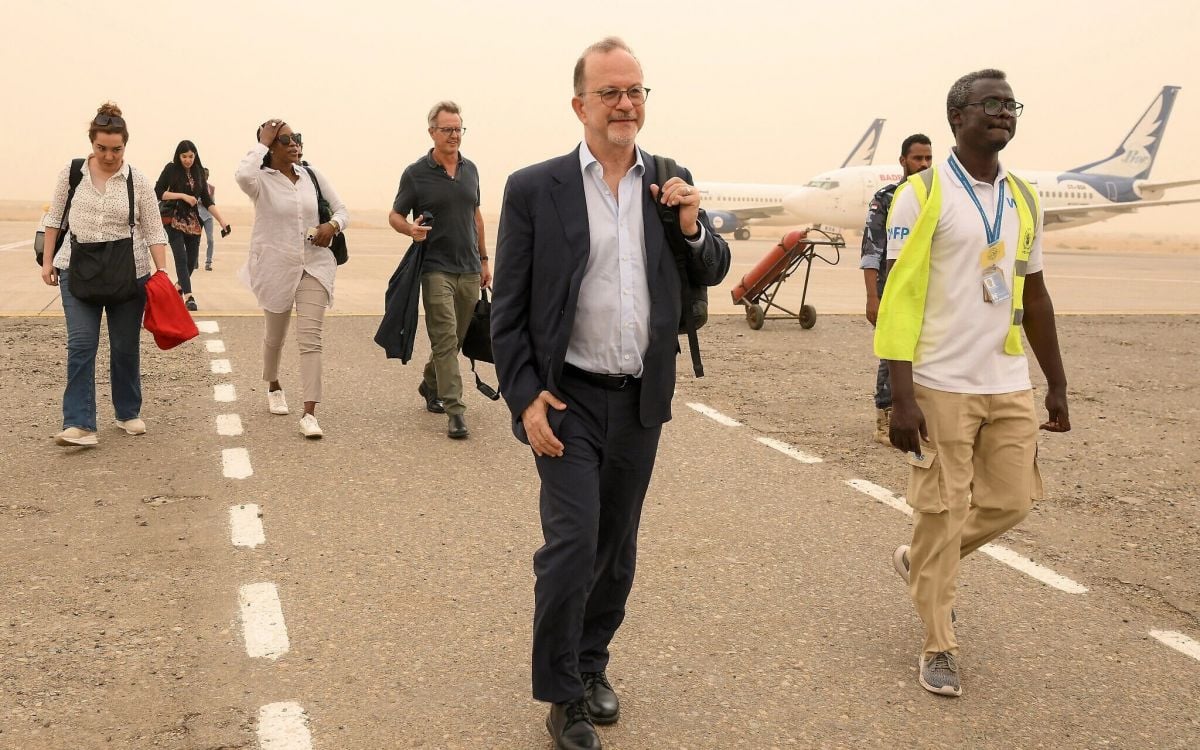
Ted Chaiban, Executive Director of UNICEF, on the tarmac of Port Sudan airport, July 23, 2023. (Credit: AFP)






U.N. Secretary-General António Guterres has appointed Lebanese Edward "Ted" Chaiban as UNICEF's deputy executive director for programs, effective Jan. 1, 2027. The appointment comes at a pivotal time for the United Nations agency for children, which is facing growing humanitarian needs, shrinking international funding, and the most ambitious reform undertaken by the U.N. in several decades.
Currently responsible for UNICEF's humanitarian action, Chaiban will now oversee all of the organization’s programs in more than 190 countries and territories in key areas such as maternal and child health, vaccination, nutrition, education, child protection, access to safe water and sanitation, early childhood development, social protection, and programs for adolescents.
Guterres entrusted one of UNICEF's most experienced leaders with a portfolio that goes far beyond managing humanitarian operations. As of Jan. 1, 2027, Ted Chaiban will succeed Canadian Omar Abdi, who is set to retire on Dec. 31, 2026.

This promotion marks a new step in a career spanning more than thirty years with UNICEF. Since 2023, Chaiban has led the agency's global humanitarian action and supply operations, one of the largest logistical chains in the United Nations system. He previously coordinated country preparedness and the global rollout of COVID-19 vaccines, and successively served as regional director for the Middle East and North Africa, program director, emergency programs director, and UNICEF representative in Ethiopia, Sudan, and Sri Lanka. He holds a biology and political science degree from Tufts University and a master's in development and Arab studies from Georgetown University. He speaks fluent Arabic, English, and French.
Multiple crises and shrinking budgets
Chaiban's appointment comes at an especially challenging time for the U.N. agency. Conflicts in Sudan, Gaza, Ukraine, Haiti, the Democratic Republic of Congo, Myanmar, and Afghanistan continue to deprive millions of children of regular access to health care, education, adequate nutrition, or even basic protection. These crises are compounded by the effects of climate change, which worsen population displacements, water shortages, food insecurity, and health risks.
In response to this increase in needs, UNICEF must contend with a much more constrained financial environment. Since 2026, several major donor countries have reduced their development aid budgets, directly affecting humanitarian organizations’ capacity to respond. UNICEF is particularly vulnerable to this trend. Unlike the U.N.’s regular budget, it relies almost entirely on voluntary contributions from states, international organizations, foundations, businesses, and individuals. Any reduction in these resources forces the organization to make difficult decisions about which programs to maintain, which populations to prioritize, and which emergencies to address.