


Search
Search

NORTH LEBANON

Tripoli special economic zone: Has the time for revival finally come?

Established in 2008 but stuck in limbo for years, the TSEZ could select a private operator in the first quarter of 2027.

Tripoli special economic zone: Has the time for revival finally come?

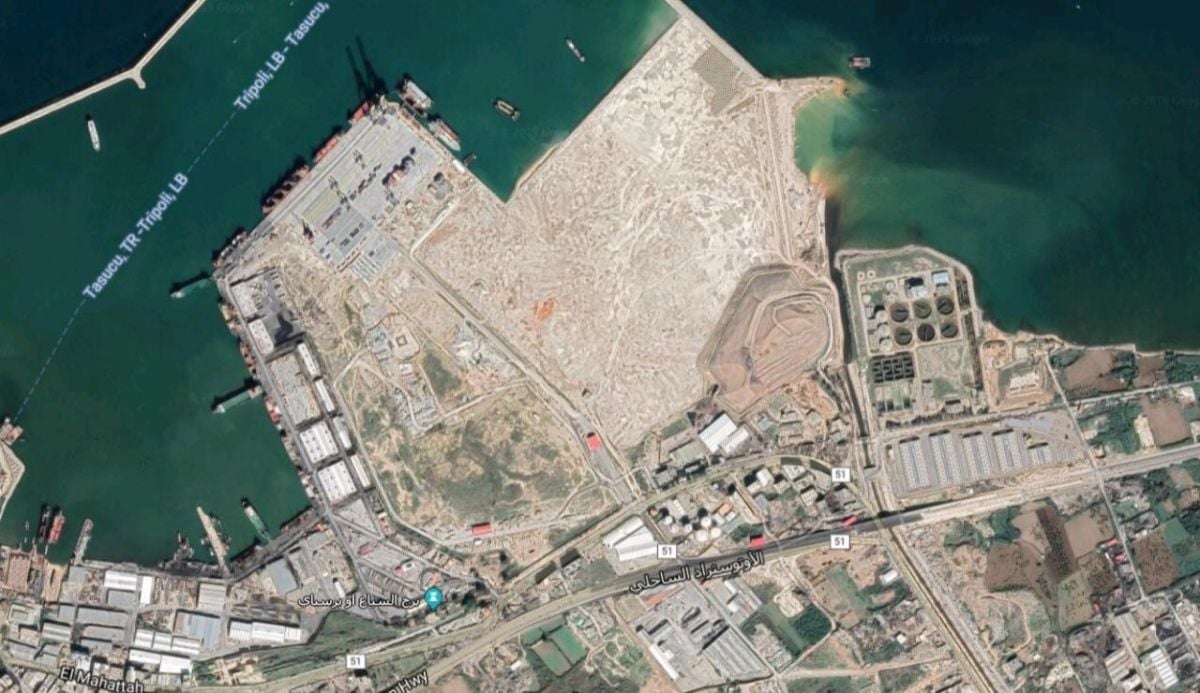
Satellite view of the Tripoli Special Economic Zone (North Lebanon), photo provided by its board of directors.


BEIRUT — As attention turned in recent weeks to North Lebanon, amid renewed talk of rehabilitating Rene Moawad Airport in Qleiaat and strengthening Tripoli Port’s logistics capacity, Tripoli’s special economic zone (SEZ) is also back in the spotlight.

Established in 2008, the zone is designed to host industrial, logistics, and export-oriented activities within a more business-friendly fiscal, customs, and administrative framework.

It’s also meant to serve as a lever for Tripoli’s economic revival. The city, Lebanon’s second largest and one of its most impoverished, could benefit from a more competitive regulatory and business environment to attract investment and support its local productive sectors. This could, in turn, promote a more balanced development north of Beirut.

Nearly 18 years later, the 513,000-square-meter site, adjacent to the Port of Tripoli, remains vacant. But renewed attention to North Lebanon, and to the complementarity between its public facilities, has brought the project back into economic conversations. Especially since it figures among the priorities listed in Prime Minister Nawaf Salam’s ministerial declaration.

Map of the Tripoli Special Economic Zone (North Lebanon) provided by its board of directors.


$250,000 raised for advisory work

The Tripoli SEZ is “Lebanon’s first special economic zone,” according to Abdel-Majid Rafei, a member of its board of directors.

In 2026, “as part of a 100-day plan,” the board sought to finance the advisory work needed to set up a public-private partnership (PPP) structure. Around $250,000 was secured from several contributors, including the Tripoli Chamber of Commerce, the Port of Tripoli, Fattal Group, and others, he says.

In May, international audit and advisory firm KPMG was selected to support the preparation of a PPP framework for the planned Industrial and Logistics Centre (ILC). The current objective is to select a private operator during the first quarter of 2027, pending the required preparatory work and approvals.

The selected private partner would be expected to participate in the development, operation, and promotion of the project, including attracting investors and economic activities to the zone.

The World Food Programme has also inquired about the possibility of running a storage space in the zone.

Rafei stresses that the opportunity extends beyond Tripoli, in a context where Beirut has become saturated, while the North still offers room for expansion.

‘Lack of political will’

Several factors contributed to delays in the implementation of the project over the years, Rafei says, including political and economic instability, administrative and institutional challenges, and delays in advancing key infrastructure and regulatory components.

Former minister Raya Hassan, who chaired the zone’s board of directors between 2015 and 2019, recalls that since 2015, “the board had prepared the studies, master plan and necessary regulations, but the site still lacked basic infrastructure — roads, electricity, sewage, public utilities and internal networks — estimated at between $70 million and $80 million.” The funds were ultimately never released, which stalled operations “on top of bureaucratic obstacles,” Hassan says.

Hassan adds that Tripoli was not really on “the national agenda at the time,” while “some actors feared that strengthening its port and economic role could create competition with Beirut.”

The government’s recent strong and unexpected support, according to Rafei, and “its willingness to move forward with the activation of these key economic sites, as well as the current institutional momentum, are now helping advance the regulatory, governance, and operational frameworks needed.”

Illustrative photo of the Tripoli Special Economic Zone (North Lebanon), provided by its board of directors.


Economic integration and complementarity

The strategic value of TSEZ “lies largely in its integration within a broader logistics and economic ecosystem,” Rafei notes. Together with the Port of Tripoli and the potential reactivation of Qleiaat airport, the zone could contribute to strengthening North Lebanon’s connectivity and “position Tripoli as an important gateway for trade, logistics, and value-added economic activities.”

The possible revival of the railway line between the Port of Tripoli and Abboudieh, near the Syrian border, announced in May by Public Works and Transport Minister Fayez Rassamny, could further reinforce its role. If implemented, the link would connect Tripoli to Syria and potentially to Turkey, granting access to regional markets by both land and sea.

Tripoli and Akkar could also eventually benefit from activities linked to regional trade and reconstruction, particularly in Syria, depending on the evolution of political and economic conditions.

“The context has changed from a decade ago, when the zone was seen as potentially competing with Syrian ports such as Tartus and Latakia,” Hassan says. Today, there may be more room for complementarity “if each side knows how to specialize in what it does best.”

Beyond logistics and infrastructure, TSEZ is intended to support investment, create employment opportunities, strengthen local value chains, and stimulate demand for technical, professional, and business services. It also has the potential to help small and medium-sized enterprises integrate into broader supply chains and contribute to the economic revitalization of Tripoli and the wider region.

The SEZ’s board of directors is also preparing several cooperation agreements with public and private institutions, including the Port of Tripoli, the Tripoli Chamber of Commerce, the Order of Engineers in North Lebanon, the Rachid Karami International Fair, and the Lebanese Center for Arbitration and Mediation, in order to support the zone’s long-term development.

BEIRUT — As attention turned in recent weeks to North Lebanon, amid renewed talk of rehabilitating Rene Moawad Airport in Qleiaat and strengthening Tripoli Port’s logistics capacity, Tripoli’s special economic zone (SEZ) is also back in the spotlight.Established in 2008, the zone is designed to host industrial, logistics, and export-oriented activities within a more business-friendly fiscal, customs, and administrative framework.It’s also meant to serve as a lever for Tripoli’s economic revival. The city, Lebanon’s second largest and one of its most impoverished, could benefit from a more competitive regulatory and business environment to attract investment and support its local productive sectors. This could, in turn, promote a more balanced development north of Beirut. Read more Timeline, destinations, contract: What to...

Comments (0) Comment

Comments (0)

Back to top


