





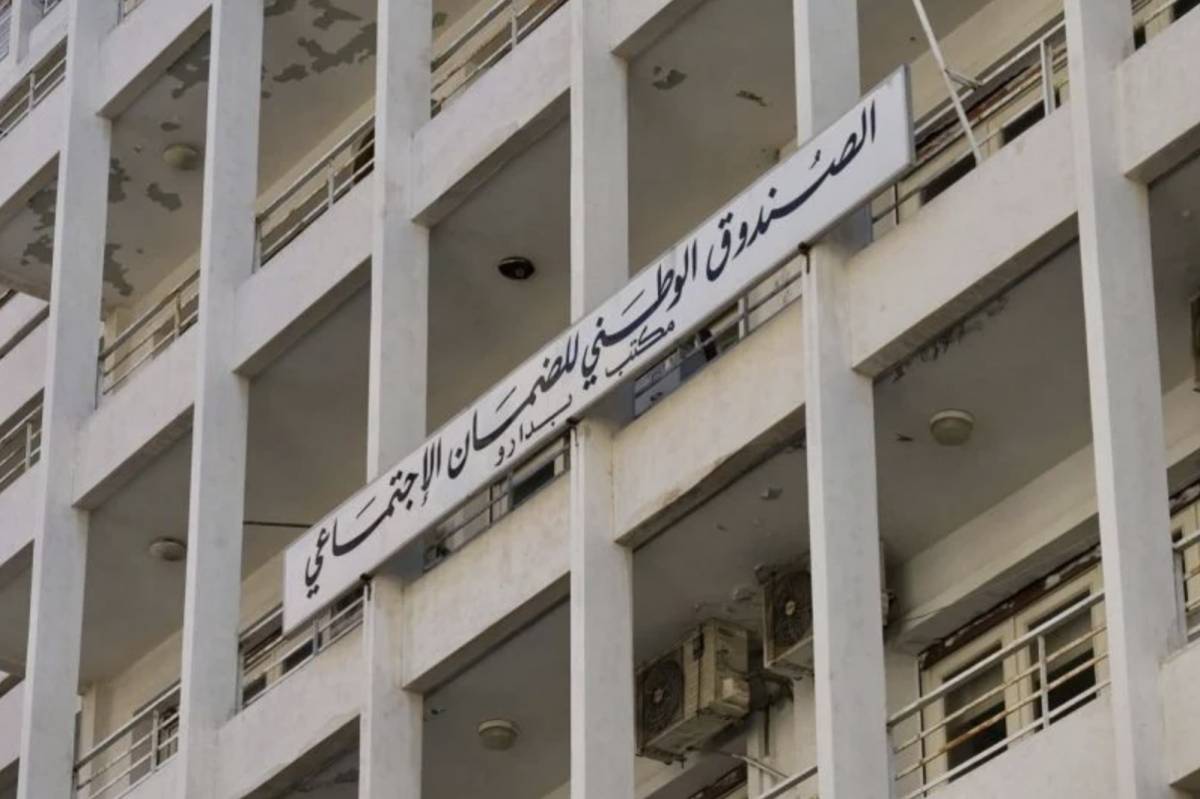
The National Social Security Fund (NSSF) headquarters in Beirut, in September 2023. (Credit: Mohammad Yassine/L'Orient-Le Jour archives)






Labor Minister Mohammad Haidar held a press conference Thursday at the main headquarters of the National Social Security Fund (NSSF) in Beirut to announce a list of medical benefits newly included in Social Security coverage, now including a large number of interventions and technologies.
"Since I took office, the government and the Labor Ministry have set as a goal to restore the NSSF as an essential pillar for social and health protection, after concerns about a decline in its role in recent years," Haidar said.
The NSSF is one of the most important third-party payers in Lebanon, mainly covering employees and their relatives. It is also one of the institutions hit hard by the financial and economic crisis since 2019, particularly with the sharp depreciation of the Lebanese lira by more than 90 percent. The NSSF also suffers from inherent problems, including delays in digitalization, disorganization, and slow formalities.
For Haidar, this expansion of coverage is the most significant in years, and "it was decided in coordination with the Orders of Physicians of Beirut and Northern Lebanon, scientific associations, hospitals, and all relevant stakeholders to ensure it matches medical advancements."
What are the new covered benefits?
The minister announced some of the main benefits now covered by the NSSF. "The fund has modernized its coverage for tumor treatments and radiotherapies, now including new radiotherapy treatments," he specified.
The list of benefits also includes, for the first time, cochlear implant surgeries for the inner ear. "This measure will allow many patients to regain hearing through costly treatments covered by the NSSF," Haidar assured.
Good news for patients needing dialysis: the NSSF will now cover the costs of at-home peritoneal dialysis, sparing patients the constant trips to the hospital, especially at night.
Heart disease coverage is also seeing a major overhaul, with new specialized surgical interventions now recognized, including the installation of stents (tubes placed in arteries to help blood flow), pacemakers (devices that provide electric impulses to stimulate cardiac muscles), and electronic cardiac assist therapies.
The minister also praised the NSSF's progress in covering medical supplies, assuring that "the majority is now included on the list." "We are working to further reduce the costs borne by citizens, to minimize their financial burden," he added.
Rate review and reduction of penalties
The Labor minister discussed the often tense relationship between hospitals and the NSSF, mainly due to delays in settling unpaid bills and the significant gap between hospitals’ rates and those set by Social Security.
"NSSF management has decided to reintroduce the system of financial advances for hospitals and doctors, to provide the medical sector with the liquidity it needs," he explained.
He also said that advances, previously capped at 62% of the bill, will now reach 90 percent, to help hospitals and doctors continue their work, while establishing an audit system to ultimately resolve all cases.
The minister did acknowledge, however, that "the issue of differences in hospitalization and medical consultation rates is still being studied by a committee including NSSF officials, the technical committee, and the two Orders of Physicians." He also reminded that "service charges have seen significant changes in recent months, aiming for a final solution."
Financially, Haidar announced "a draft law sent to Parliament, aiming to reduce penalties imposed on employers and institutions by up to 65%, with mechanisms allowing for installment payments concerning end-of-service indemnities." This is of great importance for business owners who, because of the crisis, have been unable to settle what they owe.
The Labor minister also mentioned "an ongoing digitalization process for the NSSF," pointing out that several digital services are already in place, expediting formalities and easing administrative complications. He assured that "modernizing the NSSF is a near-term priority."

 Evening recap: Netanyahu announces West Bank offensive; 7 killed in Jordan church shooting; tents burned in south Lebanon
 US strike on Iran this weekend? ‘Absolutely,’ says Barrack; ‘I have no idea,’ says Trump