


Meeting between Lebanese President Joseph Aoun (L) and the US Ambassador to Lebanon Michel Issa in the Baabda Palace on June 8, 2026. (Credit: Lebanese Presidency)






BEIRUT — After meeting President Joseph Aoun at the Presidential Palace in Baabda on Monday, U.S. Ambassador Michael Issa said that "what happened yesterday was a political message," noting that the U.S. has "decided that the confrontation should not expand further," one day after Israel attacked the southern suburbs of Beirut.
Hours after the deadly strike on a residential building in the densely populated area of Mreijeh, Iran retaliated by firing missiles onto two military bases in Israel, leading to an ongoing exchange of fire between Iran and Israel.
Issa noted that he discussed with Aoun the "course of the Lebanese-U.S.-Israeli negotiations and what they include regarding ending the current situation in Lebanon." "The talks are expected to resume" despite the escalation, Issa added, insisting that the that the continuation of the negotiations between Lebanon and Israel "positively impacts the overall trajectory in Lebanon and the region." "We believe we are on the right track," he assured.
The negotiations, which supposedly reached a "cease-fire" on June 3 that was however never respected, are set to resume on June 22.
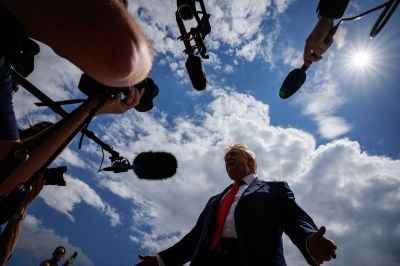
"We attach great importance to the Lebanese file, and President Donald Trump always speaks about Lebanon. This is something Lebanese people should take into account, as the U.S. president follows the Lebanese situation daily — especially since President Aoun has chosen negotiations, a path we support and which helps us make progress toward ending the suffering of the Lebanese," Issa noted, adding that "negotiations may take time, as it is not expected that all issues will be resolved in a single meeting." "We have reached a point of no return — the ice has been broken — and we will continue to help Lebanon emerge from its crisis," he continued.
Issa also commended the Lebanese negotiating team, which includes former Ambassador to the U.S. Simon Karam and Lebanon's current ambassador to Washington Nada Moawad, noting that the team "demonstrates high professionalism and effectiveness," according to a statement released by the Lebanese Presidency. "Its members speak clearly and frankly about the Lebanese file," he added.
Issa also noted that he expressed to Aoun his country’s appreciation for the positions he outlined during his interview with CNN a few days ago in which the president notably accused Iran of using Lebanon as a "bargaining chip" in its standoff with Washington, urging Tehran, Hezbollah's sponsor, to end its interference in Lebanon's domestic affairs, while reminding it: "This is not your country, it's ours."
"It is very important for an official to choose what he wants and move forward with it, especially if it is the only option to end a painful and harsh situation like the one Lebanon is experiencing," Issa continued.
The U.S. Ambassador to Lebanon also met on Monday with Prime Minister Nawaf Salam at the Grand Serail and discussed with him the "dangers of escalation in the region and its repercussions on Lebanon, as well as preparations for the upcoming round of negotiations in Washington."
According to a statement released by the Grand Serail, Salam reiterated to Issa that “no one negotiates on behalf of Lebanon except the Lebanese state.”

 1 p.m. recap: Salam in Nabatieh; up to 10,000 more US troops heading to Middle East