


Search
Search

war on lebanon 2026

Will Lebanon hold or cancel baccalaureate exams amid war?

“We cannot keep canceling exams," a source at the Education Ministry told L'Orient Today on Tuesday.

Will Lebanon hold or cancel baccalaureate exams amid war?

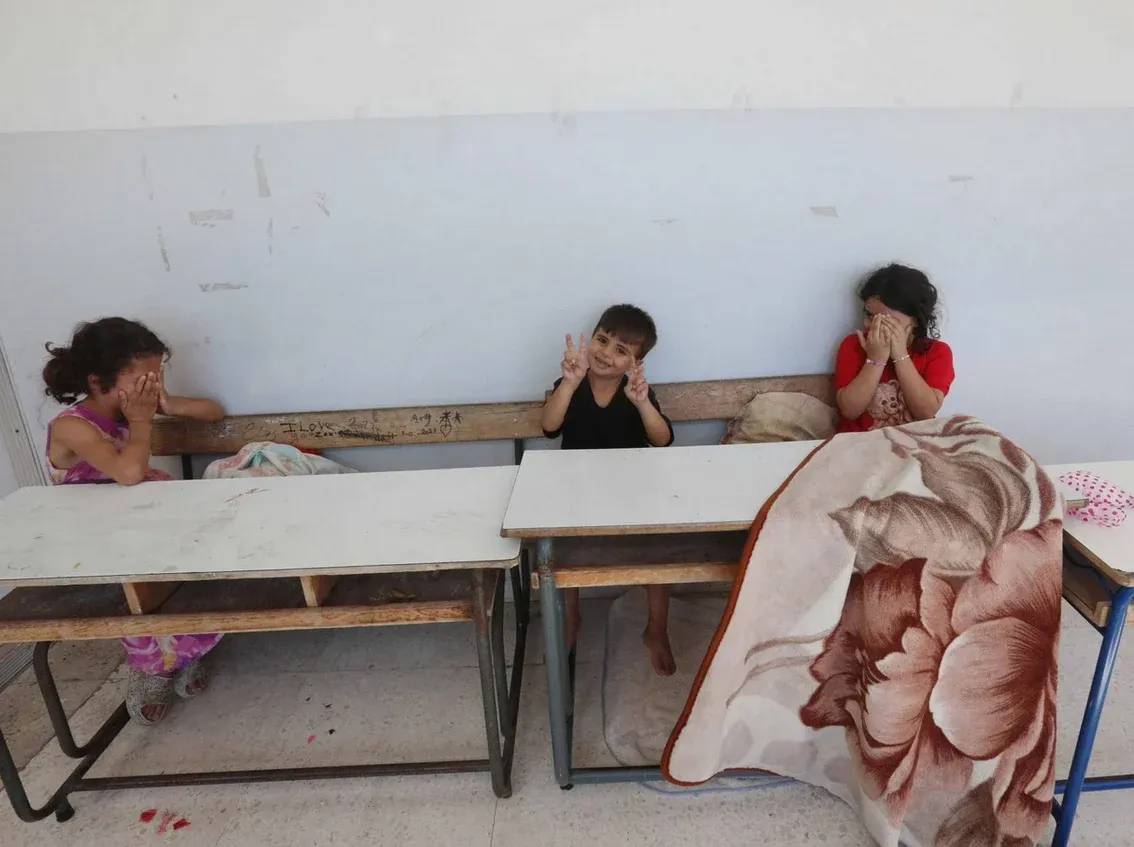
Displaced children in a school in Sour, southern Lebanon. (Credit: Mohammad Yassine/L'Orient Today)


The controversy over the fate of the official baccalaureate examinations continues, with attention turning to the parliamentary Education Committee’s meeting with Education Minister Rima Karameh scheduled for Thursday, where a recommendation is expected on whether to proceed with the exams, postpone them, or introduce modifications.

The debate unfolds against the backdrop of deep political and geographic divisions over Lebanon’s education response during wartime, with the Hezbollah-Amal alliance reportedly opposed to proceeding with the exams under current conditions, given the scale of displacement and disruption affecting their constituencies, although no formal position has been officially announced.

On the ground, the situation remains highly volatile: More than one million people have been displaced from the South and the Bekaa, entire villages have been damaged or rendered inaccessible, and despite a fragile and repeatedly extended cease-fire framework, security conditions remain unstable and unpredictable. Public schools have also been used as shelters for displaced people fleeing fighting in the South, the Bekaa, and the southern suburbs of Beirut.

Karameh did not respond to repeated requests for comment from L’Orient Today.

Committee to issue recommendation ahead of government decision

A source at the Education Ministry told L’Orient Today on Tuesday that discussions are ongoing ahead of Thursday’s meeting.

“Everyone has a different opinion,” the source said. “We are still holding meetings within the education committee. No one knows yet what the final decision is. It has not been made yet,” the source added. “The minister is abroad and will return Wednesday. On Thursday, the education committee will meet in her presence and issue a recommendation to the government on whether the exams will be held or not.”

The source stressed that the committee does not take binding decisions, but rather submits recommendations to the government, which retains final authority.

A second source at the Education Ministry said that “this is a public examination process that falls under the responsibility of the Ministry,” adding that students are expected to continue studying and preparing accordingly. “If the minister announces the cancellation of exams, students will stop studying. Students should continue fulfilling their responsibility to prepare for their exams and let the Education Ministry do its job,” the source said.

The same source added that if security conditions prevent the exams from taking place, the decision would not be taken by the Ministry alone. “Other authorities will have to be involved, like the government and the Defense Ministry,” the source said.

Curriculum remains anchored on material covered up to March 2

According to the source, coordination is ongoing with the Center for Educational Research and Development (CRDP) and school administrations across both public and private institutions. The curriculum remains anchored on material covered up to March 2, the date marking the escalation of the war between Hezbollah and Israel, which continues to serve as the reference framework for exam preparation.

The source also pointed to targeted arrangements in particularly affected areas.

“In some surrounding areas such as the southern villages of Rmeish, Dibil, and Ain Ibl, there are only 77 students,” the source said. “The Ministry says it will make an exception for them and find a way to ensure they can sit for the exams.”

The source added that “Lebanon has been in turmoil since 2019 — COVID-19, the economic collapse, and now war,” the source said. “We cannot keep cancelling exams. Many students need grades for university admissions, scholarships, or travel abroad. It is not fair to cancel them. And what about next year — who guarantees the situation will be stable? We cannot keep undermining Lebanon’s educational credibility.”

'We are still operating without a strategy'

The debate over holding exams has raised concerns about safety, access, and inequality between students across different regions.

Education researcher Nehme Nehme, a fellow researcher at the Center for Lebanese Studies, explained the crisis has exposed structural weaknesses in Lebanon’s education system and its emergency response capacity.

He argued that the key issue is not only whether exams should be held, but whether students are actually able to sit for them under current conditions. “We are in a state of war,” he said. “How are students supposed to go and take exams? Are they psychologically able to do it, and how much can they actually give?”

Nehme warned that a single national exam framework may not reflect realities on the ground. “In situations like this, there are areas that are considered safe and others that are not,” he said, pointing to the South and parts of the Bekaa. “These are places where exams should not be held because of security risks and population gatherings.”

He also raised concerns over displacement and mobility risks. “People from Rmeish, Sour, Zahrani… Where are they supposed to go? There are risks in transportation and displacement,” he said.

Nehme also highlighted widening inequalities between students across regions and school systems. “There is inequality,” he said. “Some students continued learning, others lost access completely.” He criticized the absence of a coherent emergency education plan since the escalation of war in October 2023.

“There was supposed to be an emergency education plan, but it was not fully implemented,” he said. “Schools were used as displacement centers, but they should remain educational spaces.” He added that coordination gaps have left the system without a unified crisis framework. “There was no clear plan for education during emergencies,” he said. “We are still operating without a structured strategy.”

The controversy over the fate of the official baccalaureate examinations continues, with attention turning to the parliamentary Education Committee’s meeting with Education Minister Rima Karameh scheduled for Thursday, where a recommendation is expected on whether to proceed with the exams, postpone them, or introduce modifications.The debate unfolds against the backdrop of deep political and geographic divisions over Lebanon’s education response during wartime, with the Hezbollah-Amal alliance reportedly opposed to proceeding with the exams under current conditions, given the scale of displacement and disruption affecting their constituencies, although no formal position has been officially announced. More from Ghadir In war-torn Lebanon, fewer beachgoers south of Beirut, but no empty shores On the ground, the situation remains...




